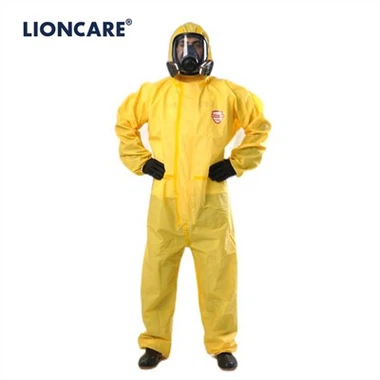
What Certifications Are Required For Disposable Coveralls in EU Market?
Jul 02, 2026
In the European Union, disposable coveralls are not treated as simple workwear-they are classified as Personal Protective Equipment (PPE) and are strictly regulated under EU law. For manufacturers, importers, and safety procurement teams, understanding the required certifications is essential not only for compliance but also for market access, customs clearance, and worker safety assurance.
Whether you are sourcing disposable protective coveralls for chemical protection, medical isolation, or industrial safety, EU certification requirements determine whether the product can legally enter the market.
This guide explains the full certification framework for disposable coveralls in Europe, including EU PPE Regulation 2016/425, CE marking rules, and key EN standards, and how Lioncare disposable coveralls meet these requirements for global buyers.
1. EU PPE Regulation 2016/425 – The Legal Foundation
All disposable coveralls sold in Europe must comply with Regulation (EU) 2016/425 on Personal Protective Equipment.
This regulation defines PPE as any product worn to protect users against health and safety risks, and it establishes strict requirements for:
- Product design and risk assessment
- Technical documentation and testing
- CE marking authorization
- Conformity assessment procedures
- Ongoing production quality control
Under this regulation, disposable coveralls used in industrial, medical, or hazardous environments must demonstrate compliance before they can be placed on the EU market.
For buyers, this means:
No CE certification = no legal EU market access.
2. PPE Risk Categories – Why Category III Matters Most
EU PPE is divided into three risk categories:
Category I – Minimal Risk
Basic protection (light cleaning work, low exposure environments)
Category II – Intermediate Risk
Standard protective clothing without extreme hazards
Category III – High-Risk Protection (Most Important for Coveralls)
This category includes protection against:
- Chemical exposure
- Biological hazards
- Infective agents
- Radioactive particles
- High-risk industrial environments
Most disposable coveralls used in healthcare, chemical industry, oil & gas, and biohazard protection fall into Category III.
Category III PPE requires:
- EU Type Examination by a Notified Body
- Continuous production surveillance
- Strict CE marking control
3. CE Marking – Mandatory Entry Ticket into the EU Market
The CE mark is not just a label-it is a legal declaration that the product complies with EU safety standards.
For disposable coveralls, CE marking confirms:
- Compliance with EU PPE Regulation 2016/425
- Verified EN standard testing results
- Approved technical documentation
- Conformity assessment by a Notified Body (for Category III)
Without CE marking, disposable coveralls cannot be sold or used legally in European workplaces.
4. Key EN Standards for Disposable Coveralls in Europe
To achieve CE certification, disposable coveralls must comply with multiple harmonized EN standards, depending on the application.
4.1 EN ISO 13688 – General Requirements
This is the baseline standard for all protective clothing.
It covers:
- Material safety and harmlessness
- Ergonomics and sizing
- Labeling and user information
- General product durability requirements
Every EU-certified disposable coverall must comply with EN ISO 13688.
4.2 EN ISO 13982-1 – Type 5 Particle Protection
This standard applies to protection against airborne solid particles, including:
- Asbestos dust
- Construction dust
- Powder contamination
It is widely required in:
- Construction industry
- Industrial maintenance
- Hazardous dust environments
These are often called Type 5 disposable coveralls in EU market.
4.3 EN 13034 – Type 6 Limited Chemical Protection
This standard applies to light chemical spray or low-risk liquid exposure, such as:
- Industrial cleaning
- Maintenance operations
- Low-intensity chemical handling
These are classified as Type 6 chemical protective coveralls.
4.4 EN 14126 – Protection Against Infective Agents
One of the most critical standards for medical and biohazard protection.
It tests resistance against:
- Bacteria
- Viruses
- Contaminated liquids
- Infectious aerosols
Common applications:
- Hospitals and isolation wards
- Epidemic response
- Laboratory environments
- Medical waste handling
A certified EN 14126 disposable coverall is essential for healthcare procurement in Europe.
4.5 EN 1149-5 – Antistatic Protection
Required for environments with explosion or ignition risks.
Used in:
- Oil & gas industry
- Chemical plants
- Flammable atmospheres
This ensures electrostatic charge is safely dissipated.
4.6 EN 1073-2 – Radioactive Particle Protection
Applies to environments with radioactive dust exposure (non-gas).
Used in:
- Nuclear maintenance
- Decontamination operations
- Industrial safety zones
5. How EU Certification is Structured for Disposable Coveralls
To legally enter the EU market, disposable coveralls must pass a structured compliance process:
Step 1: Product Testing
Testing against relevant EN standards (Type 5, Type 6, EN 14126, etc.)
Step 2: Technical File Preparation
Includes:
- Material specifications
- Risk assessment
- Production process documentation
Step 3: EU Type Examination
Conducted by a Notified Body for Category III PPE
Step 4: Production Control
Ensures batch-to-batch consistency
Step 5: CE Marking Declaration
Final authorization for EU market entry
6. Why Certification Matters for EU Buyers
For importers and procurement managers, certification is not just compliance-it directly affects:
- Customs clearance success
- Workplace safety compliance
- Legal liability reduction
- Hospital procurement approval
- Industrial safety audits
Non-compliant coveralls can be rejected at customs or banned from use in regulated environments.
7. Lioncare Disposable Coveralls – Fully EU Compliant PPE Solutions
As a professional PPE manufacturer, LIONCARE produces a full range of EU-certified disposable coveralls designed for industrial and medical applications.
Our products include:
- EN ISO 13982-1 Type 5 coveralls
- EN 13034 Type 6 chemical protective suits
- EN 14126 certified medical protective coveralls
- EN 1149-5 antistatic disposable coveralls
- Microporous and SMS protective suits for industrial use

👉Explore Lioncare Disposable Coveralls: https://www.lioncare.net/industrial-protection/disposable-coveralls/
Why EU Buyers Choose Lioncare
- Full compliance with EU PPE Regulation 2016/425
- Verified EN standard test reports
- Category III certified production capability
- Stable factory supply chain
- Cost-efficient alternative to premium EU brands
- Strong export experience to Europe, Middle East, and Africa
For distributors and wholesalers, Lioncare provides not only products-but also certification reliability and long-term supply stability.
8. Conclusion
Understanding what certifications are required for disposable coveralls in the EU market is essential for any company involved in PPE sourcing or distribution.
The EU system is built around:
- PPE Regulation (EU) 2016/425
- CE marking requirements
- EN ISO and EN performance standards
- Category II & III classification system
Among all standards, EN 14126, EN 13982-1, and EN 13034 are the most critical for industrial and medical applications.
For buyers seeking a reliable and compliant supplier, Lioncare disposable coveralls offer fully certified solutions that meet strict European safety expectations while maintaining competitive pricing.
FAQ – Disposable Coverall Certifications in EU Market
Q: Are disposable coveralls mandatory to have CE marking in Europe?
A: Yes. Any disposable coverall classified as PPE must carry CE marking under EU Regulation 2016/425 before being sold or used in the EU market.
Q: What is the most important certification for medical disposable coveralls?
A: The most important standard is EN 14126, which ensures protection against bacteria, viruses, and infectious fluids.
Q: What is the difference between Type 5 and Type 6 coveralls?
A: Type 5 (EN ISO 13982-1): Protection against dust and solid particles, Type 6 (EN 13034): Protection against light chemical spray
Q: Are all disposable coveralls considered Category III PPE?
A: No. Only high-risk protective coveralls used in hazardous environments (chemical, biological, radioactive) fall under Category III.
Q: Can non-certified coveralls be used in Europe?
A: They may be used for low-risk private purposes, but cannot be used in regulated workplaces or sold as PPE in the EU market.
Q: How does Lioncare ensure EU compliance?
A: Lioncare ensures compliance through EN-tested materials, CE certification support, and production aligned with EU PPE Regulation 2016/425 requirements.