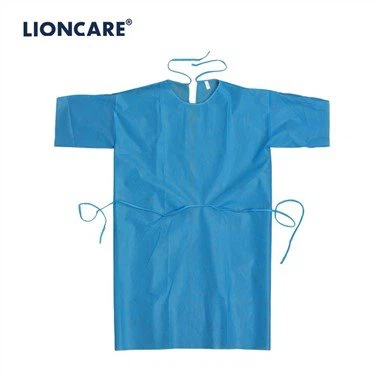
Disposable Coveralls Vs Reusable Coveralls: Which Is Better For EU Companies?
Jul 02, 2026
For companies operating in Europe-especially in construction, chemical handling, pharmaceuticals, food processing, and industrial maintenance-choosing the right protective workwear is more than a procurement decision. It directly impacts compliance with EU safety regulations, operational efficiency, worker safety, and long-term cost control.
One of the most common debates in PPE procurement is disposable coveralls vs reusable coveralls. Both options have clear advantages, but the "better" choice depends heavily on the work environment, risk level, hygiene requirements, and cost structure.
In this guide, we break down the real differences from a practical EU industry perspective, so procurement managers, safety officers, and distributors can make informed decisions.
Understanding Disposable Coveralls in the EU Market
Disposable coveralls are single-use protective garments designed to be worn once and then safely discarded. In Europe, they are widely used in environments where contamination control and hygiene are critical.
Typical materials include:
- PP (polypropylene)
- SMS nonwoven fabric
- Microporous film laminate
- PE coated materials

👉Explore LIONCARE Disposable Coveralls: https://www.lioncare.net/industrial-protection/disposable-coveralls/
Common EU Applications:
- Asbestos removal projects
- Pharmaceutical cleanrooms
- Paint spraying and surface treatment
- Food processing plants
- Medical and isolation environments
- Chemical spill response
For many EU buyers, products like CE certified disposable coveralls Category III are essential to meet EU PPE Regulation (EU) 2016/425 requirements.
Brands like LIONCARE provide a full range of disposable protective suits designed for European compliance, including EN14126 infectious protection and EN13034 chemical splash resistance.
Understanding Reusable Coveralls
Reusable coveralls are designed for repeated use after washing or industrial cleaning. They are typically made from stronger woven fabrics such as:
- Cotton drill
- Polyester-cotton blends
- Treated flame-resistant fabrics (FR)
- Heavy-duty synthetic textiles
Common EU Applications:
- Welding and metal fabrication
- Automotive workshops
- General construction
- Maintenance and logistics operations
- Long-term industrial uniforms
Reusable PPE is often associated with durability and lower waste generation, making it attractive for companies with stable, low-contamination work environments.
Key Comparison: Disposable vs Reusable Coveralls
1. Hygiene & Contamination Control
Disposable coveralls clearly lead in high-risk environments.
In EU industries like pharmaceuticals or biohazard handling, preventing cross-contamination is critical. A single-use garment eliminates the risk of particles, chemicals, or pathogens transferring between shifts.
Reusable coveralls, even when washed, may retain microscopic contaminants over time.
Winner: Disposable coveralls
2. Compliance with EU Safety Standards
Both options can comply with EU standards, but disposable coveralls are more frequently certified under:
- EN ISO 13982-1 (solid particle protection)
- EN 13034 (liquid chemical splash)
- EN 14126 (infective agents)
- EN 1149-5 (anti-static protection)
Reusable garments often comply with mechanical durability and FR standards but may lack multi-risk certification combinations required in high-risk PPE Category III environments.
Winner: Disposable coveralls for multi-risk compliance
3. Cost Structure (Short-Term vs Long-Term)
Reusable coveralls appear cheaper at first glance because they are used multiple times. However, EU companies must consider hidden costs:
- Industrial washing cycles
- Logistics for cleaning
- Maintenance and inspection
- Replacement after wear and tear
Disposable coveralls eliminate cleaning costs entirely. For short-term projects or high-turnover environments, they are often more cost-efficient.
Winner depends on usage frequency
- High turnover/high-risk: Disposable
- Stable long-term uniform use: Reusable
4. Worker Comfort & Breathability
Modern disposable coveralls-especially microporous and SMS types-have improved breathability. However, reusable cotton-based suits are still more comfortable for long shifts in low-risk environments.
In hot European summer conditions or indoor industrial settings, airflow matters significantly.
Winner: Reusable coveralls (comfort in low-risk work)
5. Environmental Impact & Sustainability
Sustainability is becoming a major purchasing factor across EU procurement policies.
Reusable coveralls reduce waste by extending garment lifecycle. However, they consume water, detergent, and energy during repeated washing cycles.
Disposable coveralls generate solid waste but modern EU suppliers are increasingly offering:
- Lightweight reduced-material designs
- Recyclable nonwoven materials
- Low-carbon production processes
Companies like Lioncare are actively improving eco-conscious PPE manufacturing to align with EU sustainability expectations.
Winner: Reusable (but narrowing gap with eco-disposable innovation)
6. Operational Efficiency
Disposable coveralls simplify operations:
- No laundering logistics
- No tracking of garment lifecycle
- Instant replacement availability
- Reduced downtime between shifts
Reusable systems require inventory control, washing schedules, and condition monitoring.
Winner: Disposable coveralls
EU Industry Decision Guide: Which One Should You Choose?
Here is a practical breakdown for European procurement teams:
Choose Disposable Coveralls if:
- You work in chemical, pharmaceutical, or medical environments
- Cross-contamination risk is high
- Projects are short-term or changing frequently
- You need EN-certified Category III PPE compliance
- You want to reduce cleaning and logistics costs
Choose Reusable Coveralls if:
- Your industry involves low contamination risk
- Garments are used in stable, long-term roles
- Comfort and durability are top priorities
- You have an in-house or contracted laundry system
- Sustainability policies prioritize waste reduction
Hybrid Strategy: What Many EU Companies Are Doing Now
A growing number of EU companies are adopting a dual PPE strategy:
- Reusable coveralls for general workshop or logistics use
- Disposable coveralls for high-risk zones or compliance-critical tasks
This hybrid approach helps balance:
- Cost efficiency
- Regulatory compliance
- Worker safety
- Environmental responsibility
Why EU Buyers Are Increasingly Choosing Disposable Coveralls
Across Europe, demand for disposable PPE is rising due to:
- Stricter EU hygiene regulations in healthcare and food sectors
- Increased outsourcing of industrial cleaning tasks
- Growth in short-term construction and maintenance projects
- Rising cost of industrial laundering services
Suppliers like Lioncare are responding with advanced disposable coveralls that combine protection, comfort, and cost efficiency for EU buyers.
Final Thoughts
There is no universal "better" option between disposable and reusable coveralls. The right choice depends on your industry, compliance obligations, and operational model.
However, in the modern EU industrial landscape-where hygiene standards, efficiency, and regulatory pressure are increasing-disposable coveralls are becoming the preferred solution in high-risk and regulated environments, while reusable coveralls remain relevant in controlled, low-risk applications.
For procurement teams, the smartest approach is not choosing one over the other-but aligning PPE strategy with actual risk exposure.
FAQ: Disposable Coveralls vs Reusable Coveralls
Q: Are disposable coveralls compliant with EU regulations?
A: Yes. High-quality disposable coveralls can meet EU PPE Regulation (EU) 2016/425 and standards such as EN ISO 13982-1, EN 13034, and EN 14126 depending on certification level.
Q: Are reusable coveralls cheaper than disposable ones?
A: Reusable coveralls have lower unit cost, but total cost includes washing, maintenance, and replacement. In high-risk environments, disposable coveralls can be more cost-effective overall.
Q: Which is better for chemical protection?
A: Disposable coveralls generally provide better protection against chemical splashes and particulate hazards due to multi-layer nonwoven materials and full-body sealing designs.
Q: Are disposable coveralls environmentally friendly?
A: Modern disposable coveralls are becoming more sustainable with lightweight materials, reduced waste designs, and recyclable nonwoven options. However, reusable garments still generate less waste overall.
Q: Can EU companies use both types together?
A: Yes. Many companies use reusable coveralls for general tasks and disposable coveralls for high-risk or contamination-sensitive operations.
Q: Where can EU buyers source certified disposable coveralls?
A: Manufacturers like HUBEI LIONCARE supply CE-certified disposable coveralls suitable for EU industrial, medical, and chemical applications.