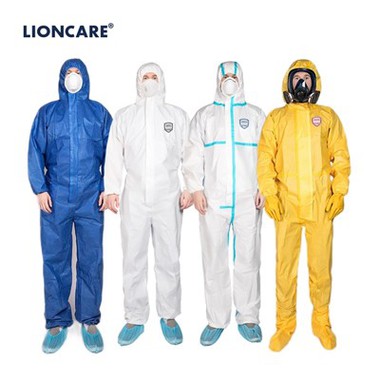
Anti-Static Disposable Coveralls: When EN 1149-5 Matters
Nov 11, 2026
In many industrial workplaces, a disposable coverall needs to do more than keep dust, particles or liquid splashes away from the wearer's clothing. It may also need to help control the risk of electrostatic discharge.
This becomes particularly important in environments where flammable gases, vapours, mists or combustible dust may be present. A static discharge that would be harmless in an ordinary workplace could become an ignition source under the wrong conditions.
For PPE distributors, safety equipment importers and industrial buyers, this raises an important question: When should you specify anti-static disposable coveralls, and what does EN 1149-5 actually require?
The answer is not simply to choose a garment labelled "anti-static."
EN 1149-5 is a European standard covering the material performance and design requirements of electrostatic-dissipative protective clothing. But the garment is only one part of an effective electrostatic control system. Fabric performance, garment construction, footwear, grounding arrangements and workplace conditions all matter.
This guide explains what buyers should know before sourcing EN 1149-5 compliant disposable coveralls, including the difference between ordinary disposable PPE and electrostatic-dissipative garments, relevant applications, verification points and supplier selection.

1. What Are Anti-Static Disposable Coveralls?
Anti-static disposable coveralls are protective garments designed to help dissipate electrostatic charges rather than allow them to accumulate on the wearer's clothing.
Ordinary disposable coveralls are generally designed around barrier performance, such as resistance to particles, dust or liquid splashes. Depending on their material composition and working conditions, however, synthetic nonwoven fabrics can accumulate electrostatic charges through friction and movement.
An electrostatic-dissipative coverall uses specially engineered materials and garment construction to help control this charge accumulation.
For industrial buyers, it is important to distinguish three concepts:
- Anti-static: A commonly used commercial description for products intended to reduce static charge accumulation.
- Electrostatic dissipative: A more specific technical description referring to materials or garments designed to dissipate electrostatic charges in a controlled manner.
- EN 1149-5 compliant: Protective clothing that meets the applicable material and design requirements of the standard when used as part of a properly grounded system.
These terms should not be treated as interchangeable.
A disposable coverall made from synthetic nonwoven fabric is not automatically anti-static. Similarly, a supplier's statement that a fabric contains conductive fibres does not, by itself, establish that the finished garment meets EN 1149-5.
When electrostatic control is a purchasing requirement, buyers should request product-specific test evidence and conformity documentation rather than rely on general product descriptions.
2. What Is EN 1149-5 and Why Does It Matter?
EN 1149-5:2018 is the European standard titled:
Protective Clothing – Electrostatic Properties – Part 5: Material Performance and Design Requirements.
It specifies requirements for electrostatic-dissipative protective clothing, including hoods and caps, intended to be used as part of a total earthed system to help prevent incendiary electrostatic discharges.
One of its important conditions is that the explosive atmosphere has a minimum ignition energy of at least 0.016 mJ.
The standard also defines a total earthed system as one in which personnel and other conductors are connected to earth through a resistance of less than 10⁸ Ω.
In practical terms, this means that an EN 1149-5 coverall is not intended to work independently. The garment must be used with an appropriate grounding arrangement.
What Does EN 1149-5 Actually Cover?
There are two main areas buyers should understand:
Material performance
The fabric must meet the applicable electrostatic-dissipative performance requirements. The EN 1149 series includes test methods for assessing electrostatic properties, including surface resistance and charge decay.
Relevant methods include:
EN 1149-1: Measurement of surface resistance.
EN 1149-3: Measurement of charge decay.
Garment design
The construction must also support electrostatic control.
This means buyers should pay attention to garment details such as exposed non-dissipative surfaces, closures, attachments and other design elements that may affect the electrostatic performance of the finished garment.
A fabric test report alone should not be treated as sufficient evidence that every finished garment design is compliant.
For procurement purposes, EN 1149-5 should therefore be assessed at both material and garment-design levels.
3. When Do You Need EN 1149-5 Disposable Coveralls?
Not every industrial workplace needs EN 1149-5 protective clothing. The requirement depends on the site's electrostatic risk assessment, the substances present and the possibility of an electrostatic discharge becoming an ignition source.
The following industries are particularly relevant.
Oil and Gas Operations
Oil and gas facilities may handle flammable hydrocarbons, gases and vapours during processing, storage, transfer and maintenance activities.
In designated hazardous areas, electrostatic discharge must be considered alongside other potential ignition sources.
An appropriate electrostatic-dissipative coverall may form part of the site's PPE requirements, provided it is compatible with the complete grounding system.
Chemical Manufacturing and Processing
Chemical production facilities often handle solvents, flammable liquids and other substances that can generate potentially explosive atmospheres.
Workers involved in chemical handling, equipment cleaning, filling operations and maintenance may require protective clothing with electrostatic-dissipative properties.
However, anti-static performance should never be confused with chemical resistance. If workers may be exposed to hazardous chemicals, the garment must also meet the relevant chemical protective clothing requirements.
Pharmaceutical and Fine Chemical Production
Some pharmaceutical and fine chemical operations involve combustible powders, solvents or other materials that require strict electrostatic controls.
Depending on the process, facilities may specify electrostatic-dissipative clothing to reduce static-related risks while maintaining appropriate contamination-control and barrier requirements.
In cleanroom applications, buyers should also consider particle shedding, garment cleanliness and compatibility with the facility's gowning procedures.
Paint, Coating and Spray Operations
Paint spraying, solvent handling and coating processes can involve flammable vapours and mists.
In these environments, the suitability of protective clothing must be assessed together with ventilation, equipment bonding, footwear and other ignition-control measures.
An ordinary disposable coverall should not be assumed suitable simply because it is made from nonwoven material.
Combustible Dust Processing
Certain industrial dusts, including fine organic powders and combustible manufacturing dusts, can create explosive atmospheres under specific conditions.
Facilities handling these materials may require anti-static workwear as part of their dust explosion prevention strategy.
The correct specification depends on the dust characteristics, process conditions and hazardous area classification.
A practical point for buyers: EN 1149-5 is particularly relevant when electrostatic discharge could ignite a hazardous atmosphere. It is not a universal requirement for every industrial disposable coverall.
4. EN 1149-5 vs. Ordinary Disposable Coveralls: What Is the Difference?
The most important difference is the intended electrostatic performance.
An ordinary disposable coverall may provide particle or splash protection without having any verified electrostatic-dissipative properties.
An EN 1149-5 compliant garment must meet the applicable electrostatic material and design requirements.
Here is a practical comparison:
| Purchasing consideration | Ordinary disposable coverall | EN 1149-5 coverall |
|---|---|---|
| Primary purpose | General barrier protection | Barrier protection where electrostatic dissipation is also required |
| Fabric | SMS, PP, microporous or other suitable nonwoven materials | Specifically qualified electrostatic-dissipative material |
| Static control | Not necessarily verified | Must meet applicable EN 1149-5 requirements |
| Garment construction | Based on the intended barrier application | Must also consider electrostatic design requirements |
| Grounding | Depends on workplace risk assessment | Requires use as part of a properly grounded system |
| Documentation | Relevant product and barrier test reports | Product-specific electrostatic evidence and applicable conformity documentation |
One point deserves special attention: EN 1149-5 does not replace other protective clothing standards.
For example, a buyer may need a garment that combines electrostatic-dissipative properties with protection against hazardous particles or limited liquid splashes.
In that case, the buyer must verify each required protection claim separately.
5. Can You Combine EN 1149-5 with Type 5 or Type 6 Disposable Coveralls?
Yes, provided the specific garment has been designed, tested and assessed against all the relevant requirements.
This is an important consideration for buyers sourcing disposable protective coveralls for industrial environments.
EN 1149-5 addresses electrostatic properties. Type 5 and Type 6 address different forms of protective performance.
- Type 5: Protection against hazardous dry particles, subject to the applicable requirements of EN ISO 13982-1.
- Type 6: Limited protection against light liquid chemical spray, subject to the applicable requirements of EN 13034.
A garment may therefore be specified for both electrostatic dissipation and particle or limited splash protection.
However, having Type 5 or Type 6 certification does not automatically mean that the garment is anti-static. The reverse is also true: EN 1149-5 compliance does not automatically establish Type 5 or Type 6 protection.
What Should Buyers Check?
When purchasing a combined-protection disposable coverall, consider the following:
Fabric construction
Ask whether the garment uses an electrostatic-dissipative nonwoven material, and whether the complete fabric construction has been evaluated against the relevant requirements.
Seam and closure design
Check the construction of seams, zippers, storm flaps, cuffs, ankles and other design details. These should be considered in the overall garment assessment.
Hood and coverage
Where head protection is required, confirm whether the hood is included in the evaluated garment configuration and whether the complete ensemble provides the intended coverage.
Certification and test documentation
Request documentation showing which standards and garment models have actually been assessed. Avoid relying on a generic fabric certificate for a different product.
For buyers who need Type 5/6 barrier performance and electrostatic control, the safest purchasing approach is to define both requirements before requesting quotations.
6. How to Choose the Right Anti-Static Disposable Coverall
Choosing the right garment involves more than comparing fabric weight or unit price.
The following purchasing considerations can help distributors and end users avoid costly specification mistakes.
Identify the Actual Workplace Hazard
Start with the site risk assessment.
Is the primary concern combustible dust, flammable vapour, solvent handling or another electrostatic hazard?
Does the workplace require particle protection, liquid splash protection or additional chemical protection?
The answers will determine whether an EN 1149-5 garment is necessary and whether additional protective clothing standards are required.
Confirm the Electrostatic Performance
Do not accept the words "anti-static fabric" as the only technical evidence.
Request the relevant EN 1149 test reports and applicable conformity documentation.
Check that the reports relate to the actual material and garment configuration being offered.
For private-label buyers, this is especially important because different models, fabric combinations and garment constructions may have different compliance status.
Evaluate the Complete Garment Design
A compliant fabric does not automatically make every garment made from it compliant.
Pay attention to:
- Zipper and fastening arrangements.
- Elasticated cuffs and ankles.
- Hood and neckline construction.
- External pockets and attachments.
- Exposed non-dissipative components.
- Overall garment coverage and fit.
The garment should be assessed in its intended finished configuration.
Consider Compatibility with Other PPE
An anti-static disposable coverall must be compatible with the other PPE worn by the worker.
This may include:
- Electrostatic-dissipative or otherwise suitable safety footwear.
- Gloves.
- Protective hoods and headwear.
- Respiratory protective equipment.
- Other conductive or grounded accessories.
EN 1149-5 does not independently establish the grounding suitability of every additional item worn or carried by the worker.
A complete PPE assessment is therefore essential.
Check Durability and Intended Use
Disposable does not mean that every garment has identical performance throughout its service life.
Ask the supplier about the recommended wearing conditions, storage requirements and whether the garment is intended for single use only.
If reuse or laundering is being considered, obtain specific manufacturer instructions and evidence that the relevant electrostatic performance is maintained under the proposed conditions.
Do not assume that ordinary washing or repeated use will preserve the garment's original performance.
Compare Total Procurement Value
For distributors and importers, the cheapest unit price is not necessarily the most economical purchasing decision.
Consider:
- Verified compliance documentation.
- Consistency between production batches.
- Fabric and workmanship stability.
- Packaging and private-label capabilities.
- Production lead time.
- Export experience.
- Availability of technical support.
A reliable supplier should be able to explain the product specification and provide traceable documentation, not simply offer a low quotation.
7. What Should You Ask an EN 1149-5 Coverall Supplier?
Before placing a bulk order, buyers should obtain clear answers to several technical and commercial questions.
| Supplier question | Why it matters |
|---|---|
| Is the finished garment compliant with EN 1149-5:2018? | Confirms the actual product claim |
| Can you provide relevant electrostatic test reports? | Helps verify material performance |
| Do the reports match the exact garment model? | Avoids documentation mismatches |
| Is the garment also certified to Type 5 or Type 6, if required? | Confirms additional barrier protection |
| What is the fabric composition and construction? | Helps assess product suitability |
| Are OEM labels and custom packaging available? | Supports distributor and private-label requirements |
| Can production batches be traced? | Supports quality control and procurement accountability |
| What are the minimum order quantity and lead time? | Helps plan purchasing and inventory |
For importers supplying European customers, it is also important to review the applicable EU PPE conformity documentation under Regulation (EU) 2016/425.
CE marking alone should not be treated as proof of EN 1149-5 performance. Buyers should verify the relevant standard, product identification and supporting documents.
8. Important Limitations of EN 1149-5
Although EN 1149-5 is an important standard for electrostatic-dissipative protective clothing, it does not cover every electrical or ignition hazard.
Buyers and safety managers should understand the following limitations.
It does not replace grounding.
The standard assumes that the garment is used within a total earthed system. Suitable footwear, flooring and other grounding arrangements must be considered.
It is not electrical insulation.
EN 1149-5 is not designed to protect workers from electric shock or contact with live electrical parts.
It may not be sufficient in oxygen-enriched atmospheres.
The standard itself warns that its material and design requirements may not provide adequate protection in oxygen-enriched flammable atmospheres.
It does not automatically cover every additional accessory.
Gloves, separate footwear, breathing apparatus and other equipment may require their own assessment and grounding arrangements.
It is not a substitute for a complete explosion risk assessment.
Workplace classification, ignition sources, combustible substances and other preventive measures must be considered together.
In particular, do not assume that an EN 1149-5 coverall is suitable for every hazardous zone or every explosive atmosphere. The site's safety engineer should determine the required PPE specification.
9. Why Choose Lioncare for Disposable Protective Coveralls?
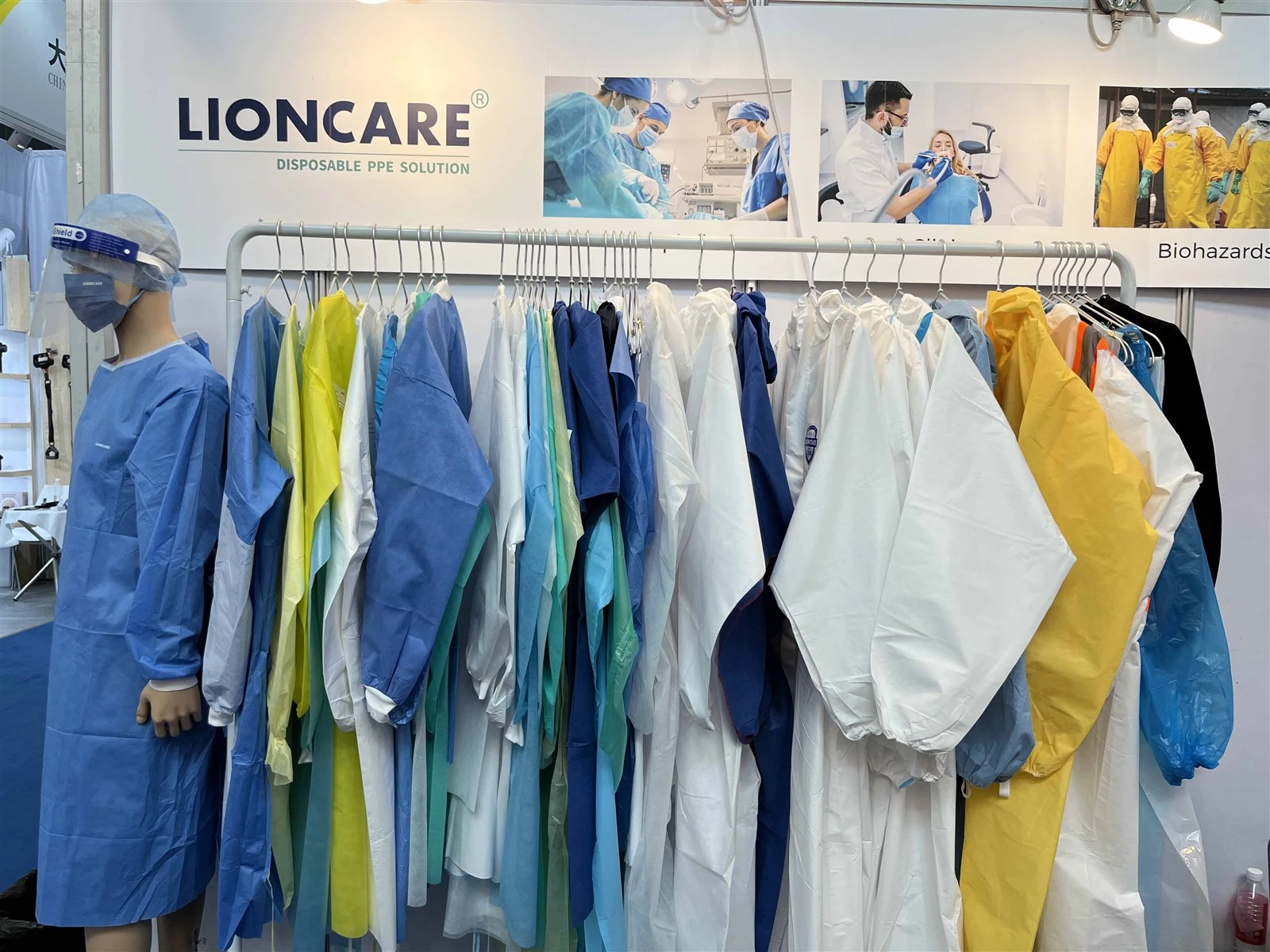
For international PPE distributors and importers, sourcing a suitable disposable coverall is only one part of a successful purchasing decision. Consistent production, reliable documentation and flexible OEM support are equally important.
Hubei Lioncare Protective Products Co., Ltd. is a China-based disposable PPE manufacturer serving international markets with a broad range of nonwoven protective products.
Our product range covers:
- Disposable protective coveralls.
- Type 5/6 protective clothing.
- Disposable isolation gowns.
- Lab coats and protective apparel.
- Face masks and disposable protective accessories.
Manufacturing Capacity and Supply Support
Lioncare operates a 58,000 m² production base with 12 production lines and a workforce of approximately 750 employees.
With annual production capacity exceeding 100 million pieces and exports to more than 50 countries, we support international distributors, wholesalers and brand owners looking for a stable disposable PPE supply partner.
OEM and Private Label Solutions
For buyers developing their own PPE brands, Lioncare provides flexible OEM and private-label support, including:
- Custom product and material specifications.
- Private-label branding.
- Packaging and carton design.
- Size and product configuration options.
- Export-oriented production coordination.
Quality Management and Compliance
Lioncare's quality management systems include ISO 9001 and ISO 13485, supported by product inspection and quality-control procedures.
We understand that international PPE buyers need more than a product catalogue. They need clear specifications, consistent production and documentation that can be matched to the actual product being purchased.
For projects requiring anti-static disposable coveralls, Type 5/6 protection or other specialized PPE, buyers are encouraged to share their target standards and application requirements with our team so that product suitability and available documentation can be reviewed before quotation.
Looking for a dependable disposable coverall manufacturer in China?
Contact Lioncare to discuss your disposable PPE sourcing requirements, OEM projects and private-label opportunities.
Choose Protective Clothing Based on Verified Performance
The right disposable coverall is not necessarily the one with the longest list of features. It is the one that matches the actual workplace hazards and has the documentation to support its intended use.
When electrostatic discharge is a potential ignition source, EN 1149-5 deserves serious consideration. For buyers, the priority should be to verify the complete garment, confirm compatibility with the grounding system and select a supplier capable of supporting the required technical and commercial specifications.
Talk to Lioncare about your next disposable PPE sourcing project.