

Type 6 Vs EN ISO 27065: What Is The Difference in Pesticide Protection?
Nov 25, 2026
When comparing protective coveralls for agricultural applications, buyers may come across two different standards: EN 13034 Type 6 and EN ISO 27065.
Both relate to protective clothing, but they are based on different testing frameworks and address different application requirements.
This distinction matters when sourcing disposable coveralls for pesticide handling. A garment carrying a Type 6 classification has demonstrated limited chemical protective performance under EN 13034. However, that classification alone does not establish whether the garment is suitable for a particular pesticide application.
For PPE distributors, importers, and agricultural safety managers, understanding what each standard actually verifies is more useful than simply comparing certification labels.
This article examines the differences in testing approach, product evaluation, and technical documentation, with a focus on what buyers should verify before placing an order.

1. Two Standards, Two Different Evaluation Frameworks
EN 13034 and EN ISO 27065 were developed to address different protective clothing requirements.
EN 13034 Type 6: Limited Chemical Protection
EN 13034:2005+A1:2009 specifies requirements for chemical protective clothing offering limited protection against liquid chemicals.
It is intended for situations involving potential exposure to:
- Light liquid sprays
- Liquid aerosols
- Low-pressure, low-volume splashes
The standard covers complete chemical protective suits classified as Type 6, as well as partial-body garments classified as PB [6].
For a complete Type 6 suit, the evaluation includes material performance and a reduced whole-suit spray test.
The objective is to establish whether the garment provides the specified limited protective performance under the standard's defined test conditions.
EN ISO 27065: Pesticide-Specific Protective Clothing
EN ISO 27065 was developed specifically for garments worn by pesticide application operators and workers re-entering treated areas.
Its scope includes clothing used during activities such as pesticide mixing, loading, application, and contaminated equipment handling.
Rather than relying on a general liquid chemical protective clothing classification, it establishes a pesticide-related performance framework.
The standard also considers the specific performance requirements associated with different protective clothing classifications.
The key distinction is that EN 13034 addresses limited liquid chemical protection, while EN ISO 27065 addresses protective clothing intended for defined pesticide-related activities.
2. The Main Difference Is in What the Tests Are Designed to Evaluate
For professional buyers, understanding the purpose of the testing is more important than comparing standard names.
A product certificate tells buyers that a garment has been evaluated against particular requirements. It does not automatically establish suitability for every chemical or working condition.
EN 13034: Evaluating Limited Liquid Chemical Protection
Under EN 13034, the evaluation includes several aspects of garment performance.
Material performance
The fabric is assessed for liquid repellency and resistance to liquid penetration using specified test chemicals and procedures.
These tests help determine whether the material can resist liquid contact under the conditions defined by the standard.
Mechanical performance
Protective clothing must also meet relevant physical performance requirements, including properties such as tensile strength, tear resistance, and seam strength.
These characteristics matter because a garment that tears or loses structural integrity during use may no longer provide the intended protection.
Whole-garment performance
Complete Type 6 suits are subjected to a reduced spray test to evaluate the protective performance of the assembled garment.
This is important because chemical penetration can occur through more than the fabric itself.
Closures, seams, garment construction, and connections between different components all contribute to overall performance.
A material test alone cannot establish that a complete coverall meets Type 6 requirements.
EN ISO 27065: Evaluating Pesticide-Related Protective Performance
EN ISO 27065 uses a framework specifically intended for pesticide protective clothing.
Its evaluation considers relevant material and garment performance requirements, with classification depending on the intended level of protection.
For procurement teams, several aspects deserve attention:
- Material resistance to the relevant liquid pesticide test conditions
- Performance of garment seams and construction
- Classification requirements applicable to the product
- Manufacturer information and product marking
- Intended application and limitations of use
The chemical test conditions and performance requirements should be checked against the actual edition of the standard and the product's supporting documentation.
The important point is that a pesticide-specific classification provides information that cannot be inferred from a general Type 6 marking alone.
3. Why Type 6 Test Results Cannot Automatically Prove Pesticide Suitability
This is where many procurement misunderstandings occur.
A Type 6 garment may perform well in the tests specified by EN 13034. However, pesticide formulations can contain different active ingredients, solvents, surfactants, and other substances.
Their chemical properties can vary considerably.
A fabric that repels one test liquid may behave differently when exposed to another chemical formulation.
Three factors are particularly important.
1. Different test chemicals
Standardized chemical tests are designed to evaluate performance under defined conditions.
They do not establish universal resistance to every chemical substance.
If a pesticide formulation contains chemicals outside the tested range, additional compatibility information may be necessary.
2. Different exposure conditions
Light spray exposure is not the same as prolonged contact with contaminated liquid or handling concentrated pesticide products.
Exposure duration, concentration, temperature, and the way the chemical contacts the garment can all influence protective performance.
3. Different garment requirements
A fabric may provide satisfactory liquid repellency while the assembled garment has different performance characteristics.
Seam construction, closures, cuffs, and other design details can influence how well the complete protective clothing system performs.
For these reasons, buyers should avoid treating a Type 6 classification as proof of pesticide-specific protection.
Equally, a Type 6 garment should not be assumed to meet EN ISO 27065 unless it has been separately evaluated against the relevant requirements.
4. Can One Coverall Carry Both Type 6 and EN ISO 27065 Classifications?
Yes, a protective garment may be developed and evaluated against both standards, provided it independently meets all applicable requirements.
However, dual classification should never be assumed based on fabric specifications or a supplier's general product description.
For a garment to claim both classifications, buyers should verify that the supporting conformity and test documentation covers each standard separately.
This includes checking:
- Whether the exact garment model has been evaluated against both standards
- Whether the same fabric and garment construction were used in the tested product
- Whether seams, closures, and other garment components match the documented design
- Whether the declared protective classifications are consistent with the test results
- Whether the manufacturer's instructions identify the intended applications and limitations
A supplier showing a Type 6 test report and an unrelated EN ISO 27065 document has not necessarily demonstrated that the supplied garment meets both standards.
The documents must be traceable to the actual product being purchased.
For private-label buyers, this is particularly important. Changing the fabric, seam construction, zipper, hood, or other design elements may affect whether existing test evidence remains applicable.
5. How to Evaluate a Supplier's Certification and Test Documents
A professional PPE procurement process should go beyond checking whether a certificate is available.
The following five checks can help distributors and importers reduce sourcing risks.
Check 1: Confirm the exact standard and edition
The document should clearly identify the applicable standard and edition.
For example, a supplier claiming EN ISO 27065 compliance should identify the relevant published edition and any applicable amendments.
Do not assume that a draft or proposed standard revision has already become an effective published standard.
Check 2: Match the document to the product model
Check the product name, model number, fabric, garment construction, and manufacturer details.
A test report for one garment design should not automatically be applied to another product made from a similar material.
Check 3: Review the scope of testing
Determine whether the report covers material performance, seams, and complete garment testing where required.
Ask the supplier to explain which requirements were evaluated and which were outside the scope of the report.
Check 4: Check the declared intended use
A classification is not a universal statement that the garment can withstand every pesticide.
The manufacturer's instructions should explain the intended application, relevant limitations, and any additional protective measures required.
Check 5: Verify conformity documentation
For products placed on the European market, buyers should also check the applicable PPE conformity documentation, including the EU Declaration of Conformity and relevant notified-body information where required.
For Category III PPE, the applicable conformity assessment procedures and ongoing production surveillance requirements should also be verified.
A CE mark alone does not establish that a garment meets EN ISO 27065.
6. What This Means for Disposable Coverall Manufacturers
For manufacturers developing disposable protective clothing for agricultural markets, the difference between these standards has practical implications for product development.
A general-purpose disposable coverall and a pesticide-specific protective garment should not be treated as the same product simply because they use similar nonwoven materials.
Several design and production factors may need to be considered.
Fabric selection
SMS, microporous film laminate, and other nonwoven constructions have different physical and barrier characteristics.
Material selection should be based on verified performance rather than fabric names alone.
Seam construction
Stitched, bound, taped, and other seam designs can have different protective characteristics.
The appropriate construction depends on the garment's intended application and applicable test requirements.
Garment design
Hoods, zippers, storm flaps, cuffs, ankle closures, and overall fit should be considered as part of the complete garment design.
Production consistency
Manufacturers should maintain control over raw materials, production processes, and finished-product specifications so that supplied garments remain consistent with the documented product design.
For OEM and private-label projects, buyers should also clarify whether changes in materials, accessories, sizing, or construction require additional evaluation.
These considerations are particularly relevant when developing agricultural protective clothing for different target markets.
7. A Practical Decision Framework for PPE Buyers
When comparing Type 6 and EN ISO 27065 products, buyers should start with the application rather than the certification label.
Use the following decision sequence:
Step 1: Identify the actual work activity
Is the garment intended for general liquid chemical splash protection, pesticide application, mixing and loading, or re-entry work?
Step 2: Review the applicable requirements
Check the pesticide label, local regulations, and workplace risk assessment.
Step 3: Identify the required performance standard
Determine whether EN 13034 Type 6, EN ISO 27065, or another protective clothing standard is relevant to the intended use.
Step 4: Review the evidence
Request the exact product's test reports, conformity documentation, technical specifications, and instructions for use.
Step 5: Confirm the product's limitations
Make sure the garment's tested performance matches the intended exposure conditions.
If the evidence does not support the proposed application, do not assume the product is suitable simply because it carries a familiar certification mark.
Conclusion: Look Beyond the Certification Label
EN 13034 Type 6 and EN ISO 27065 serve different purposes in protective clothing evaluation.
Type 6 demonstrates limited protective performance against specified liquid chemical exposures. EN ISO 27065 provides a framework specifically for clothing worn during pesticide handling and re-entry activities.
For agricultural PPE buyers, the real question is not simply which standard is better.
It is whether the garment's documented performance, construction, and intended use match the actual working conditions.
A reliable purchasing decision should always be based on product-specific evidence rather than assumptions made from certification labels alone.
Sourcing Disposable Protective Clothing for Your Market?
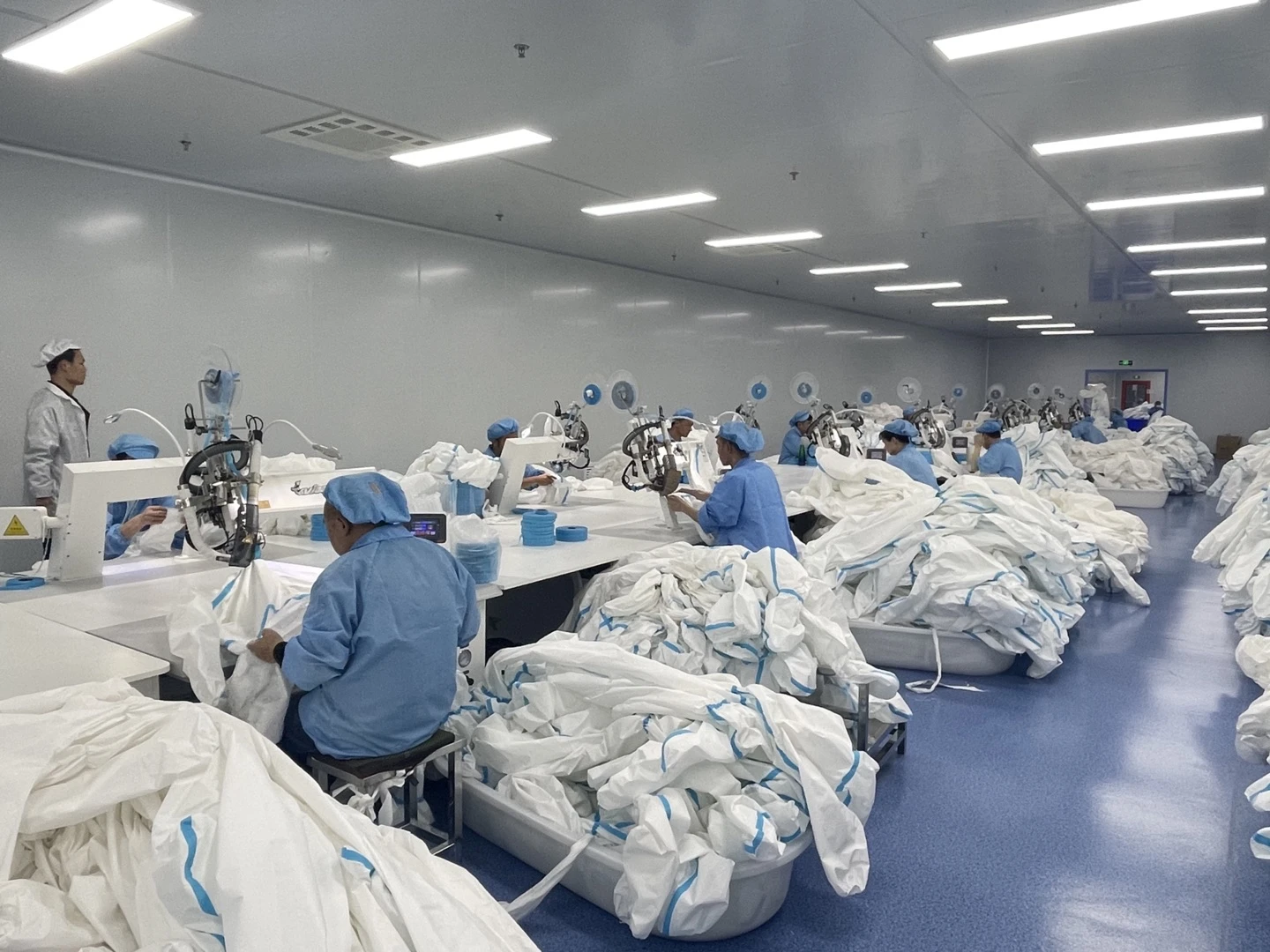
At Lioncare, we manufacture disposable nonwoven protective clothing and PPE solutions for international distributors, wholesalers, and private-label brands.
Our product portfolio includes disposable coveralls, protective gowns, lab coats, masks, caps, shoe covers, and other protective accessories.
We support OEM and private-label projects with product specification discussions, material options, sizing, and packaging solutions.
If you are developing a disposable PPE product range for agricultural or industrial markets, contact our team to discuss your sourcing requirements.
FAQ
Q: Does Type 6 certification mean a coverall is suitable for pesticide spraying?
A: No. Type 6 demonstrates limited chemical protective performance under EN 13034. It does not automatically establish suitability for a particular pesticide formulation or application.
Q: What is the main difference between EN 13034 and EN ISO 27065?
A: EN 13034 addresses limited protection against liquid chemical exposure. EN ISO 27065 specifically addresses protective clothing worn by pesticide application operators and re-entry workers.
Q: Can a coverall comply with both Type 6 and EN ISO 27065?
A: Yes, provided the exact garment independently meets the applicable requirements of both standards and has supporting documentation.
Q: Does a Type 6 test report prove chemical resistance against all pesticides?
A: No. Standardized test results only demonstrate performance under the specified test conditions. Additional chemical compatibility assessment may be necessary for other pesticide formulations.
Q: What should importers request from a disposable coverall manufacturer?
A: Importers should request product-specific test reports, conformity documents, technical specifications, material information, and instructions for use. The documents should correspond to the actual garment model being supplied.
Q: Is CE certification the same as EN ISO 27065 certification?
A: No. CE marking indicates conformity with applicable EU legislation. EN ISO 27065 is a technical standard specifying performance requirements for pesticide protective clothing. The relevant standard and conformity documentation must be verified separately.


