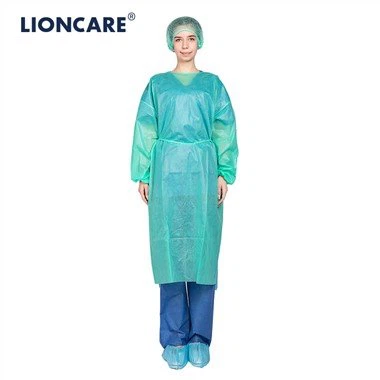
The Sewing Process Of Disposable Protective Clothing
Feb 14, 2025
Disposable protective clothing is essential for safeguarding workers across various industries, including healthcare, chemical processing, and manufacturing. While the materials used in these garments play a crucial role in protection, the sewing process is equally vital. Proper stitching techniques ensure durability, enhance barrier properties, and maintain wearer comfort. This article explores the essential sewing methods, seam sealing techniques, and the impact of these processes on the performance of protective clothing.
Importance of Sewing in Protective Clothing
Sewing is more than just fabric assembly-it determines the overall integrity of protective clothing. Well-executed stitching prevents contaminants from penetrating seams and enhances the durability of the garment. Protective apparel must withstand rigorous use, whether in medical settings with continuous movement or in industrial environments exposed to hazardous chemicals. Therefore, manufacturers employ specialized sewing techniques and quality control measures to ensure optimal performance.

Common Sewing Techniques in Protective Clothing
The choice of sewing technique depends on the level of protection required and the intended application. Below are the most widely used sewing methods in protective clothing manufacturing:
1. Overlock Stitching (Serger Stitching)
Functionality: Overlock stitching involves looping multiple threads over fabric edges, preventing fraying and adding durability.
Advantages:
- Provides flexibility and strength
- Cost-effective and widely used
- Prevents fabric unraveling
Disadvantages:
- Leaves needle holes, reducing barrier protection
- Not suitable for high-risk hazardous environments
2. Sewn and Bound Seams
Functionality: A fabric binding is sewn over the seam to reinforce strength and durability, commonly found in high-performance protective clothing.
Advantages:
- Enhances seam durability
- Improves resistance to wear and tear
- Reduces seam leakage
Disadvantages:
- More expensive than overlock stitching
- May require additional seam sealing for liquid protection
3. Ultrasonic Welding (Heat Sealing)
Functionality: Uses high-frequency ultrasonic waves to bond fabric layers, eliminating the need for thread-based stitching.
Advantages:
- No needle holes, ensuring superior barrier protection
- Creates a strong, seamless bond
- Ideal for non-woven fabric applications
Disadvantages:
- Requires specialized machinery and expertise
- Higher production costs
4. Taped Seams
Functionality: Heat-sealed or adhesive-backed tape is applied over stitched seams to enhance barrier properties.
Advantages:
- Improves resistance against liquids and particles
- Prevents contaminants from entering through needle holes
- Increases the garment's lifespan
Disadvantages:
- Adds to production costs
- Adhesive durability may degrade over time
Specialized Sewing Machines and Techniques
Various sewing machines and advanced stitching methods are used to ensure quality and protection in disposable protective clothing:
1. Lockstitch Sewing Machines
Functionality: Creates a stitch by interlocking two threads, providing a strong and stable seam.
Applications: Commonly used for high-stress seams like side and shoulder seams.
2. Overlock Sewing Machines (Sergers)
Functionality: Simultaneously sew and finish fabric edges, preventing fraying.
Applications: Used for hemming sleeves, bottom edges, and raw fabric edges.
3. Flatlock Stitching
Functionality: Joins two fabric pieces with a flat seam, reducing bulk and enhancing comfort.
Applications: Suitable for areas requiring a smooth finish, such as underarms.
4. Chain Stitching
Functionality: Forms looped stitches in a chain-like pattern, offering elasticity and flexibility.
Applications: Used in waistbands and cuffs.
5. Bar Tack Stitching
Functionality: Reinforces high-stress areas with closely spaced stitches.
Applications: Essential for heavy-duty protective suits used in construction and firefighting.
Seam Sealing Techniques
Seam sealing is crucial for ensuring protective clothing offers maximum resistance against fluids, chemicals, and airborne particles. Key seam sealing techniques include:
1. Heat-Sealed Seam Taping
Process: A specialized tape is applied using heat and pressure, creating an impermeable barrier.
Applications: Common in waterproof medical and chemical protective suits.
2. Chemical Bonding
Process: Chemical adhesives reinforce seams for liquid-tight protection.
Applications: High-risk environments where chemical exposure is a concern.
3. Double-Stitched and Sealed Seams
Process: Combines double stitching with seam sealing for extra durability and protection.
Applications: Suits used in industrial hazardous material handling.
Quality Control in Protective Clothing Sewing
To ensure compliance with industry standards, manufacturers implement stringent quality control measures:
1. Visual Inspection
Process: Inspectors check for defects like uneven stitches, loose threads, or frayed edges.
2. Tensile Strength Testing
Process: Seams are subjected to controlled pulling forces to test durability.
3. Leak Testing
Process: Pressurizing garments to check for seam leaks and ensure full protection.
Innovations in Sewing Techniques
Advancements in sewing technology enhance the quality and effectiveness of protective clothing. Two key innovations include:
1. Ultrasonic Sewing
Functionality: Uses ultrasonic vibrations to bond fabrics, eliminating the need for threads.
Advantages: Reduces contamination risks and enhances durability.
2. Laser-Assisted Sewing
Functionality: Combines laser cutting and stitching for precision and strength.
Advantages: Reduces fabric distortion and improves seam integrity.
Compliance with Safety Standards
Protective clothing must meet international safety regulations to ensure maximum protection. Key standards include:
1. EN ISO 13982-1:2004
Requirements: Specifies seam strength and leakage protection for particulate-resistant protective clothing.
2. NFPA 1999
Requirements: Outlines seam strength and durability criteria for emergency medical protective clothing.
3. ASTM F1670/F1671
Requirements: Evaluates resistance to penetration by synthetic blood and bloodborne pathogens.
The sewing techniques and processes used in disposable protective clothing manufacturing are critical for ensuring garment strength, durability, and protective efficacy. From traditional lockstitch and overlock sewing to innovative ultrasonic welding and laser-assisted stitching, each method contributes to high-quality protective wear. Seam sealing further enhances barrier performance, making protective clothing more effective in hazardous environments.
By understanding these techniques and implementing stringent quality control measures, manufacturers can produce protective garments that meet industry standards and provide optimal safety for workers. Investing in advanced sewing technologies ensures compliance, durability, and wearer protection, making disposable protective clothing a reliable choice for various high-risk industries.