How To Choose Pesticide Protective Clothing For Farms And Agricultural Contractors
Nov 25, 2026
Pesticide spraying is a routine part of agricultural work, but the protective clothing required can vary considerably from one operation to another.
A vineyard worker spraying between rows, a greenhouse operator applying fungicides, and a professional contractor handling several pesticide products throughout the day do not necessarily face the same exposure conditions. Choosing the wrong protective clothing can leave workers exposed, create unnecessary replacement costs, or make routine tasks more difficult.
For farm owners, agricultural managers, and professional spraying contractors, the challenge is not simply finding a pesticide protective suit. It is identifying clothing that matches the chemicals being handled, the application method, the working environment, and the frequency of use.
This guide explains how to evaluate pesticide protective clothing for different agricultural operations and what to consider when purchasing coveralls for agricultural workers.
1. Start with the Pesticide and the Actual Work Being Performed
The first purchasing decision should not be based on fabric type or garment price. It should begin with the pesticide product and the tasks workers perform.
Agricultural pesticide handling generally includes three activities:
- Mixing and loading: Opening containers, measuring concentrates, transferring chemicals, and filling spray tanks.
- Application: Spraying crops using tractors, boom sprayers, handheld equipment, or backpack sprayers.
- Equipment cleaning and maintenance: Washing spray tanks, hoses, nozzles, and other potentially contaminated equipment.
These activities can involve different levels of exposure. Mixing concentrated products may create a greater splash risk, while spraying can expose workers to droplets, mist, and contaminated surfaces.
Before selecting agricultural chemical protective clothing, review the pesticide label and identify:
- The required clothing and PPE.
- Whether coveralls or a chemical-resistant suit are specified.
- Any requirements for chemical-resistant aprons or additional protection.
- Whether the product is being handled in concentrated or diluted form.
- Any restrictions on PPE materials or garment reuse.
The pesticide label is the starting point for PPE selection. In the United States, EPA guidance and applicable Worker Protection Standard requirements also need to be considered. Requirements in other markets may differ.
Importantly, a general-purpose disposable coverall should never be assumed to provide chemical resistance against every pesticide formulation.
2. Match Protective Clothing to the Agricultural Working Environment
Different agricultural environments create different practical demands. The same coverall specification may not be suitable for every operation.
Open-field farms and crop spraying
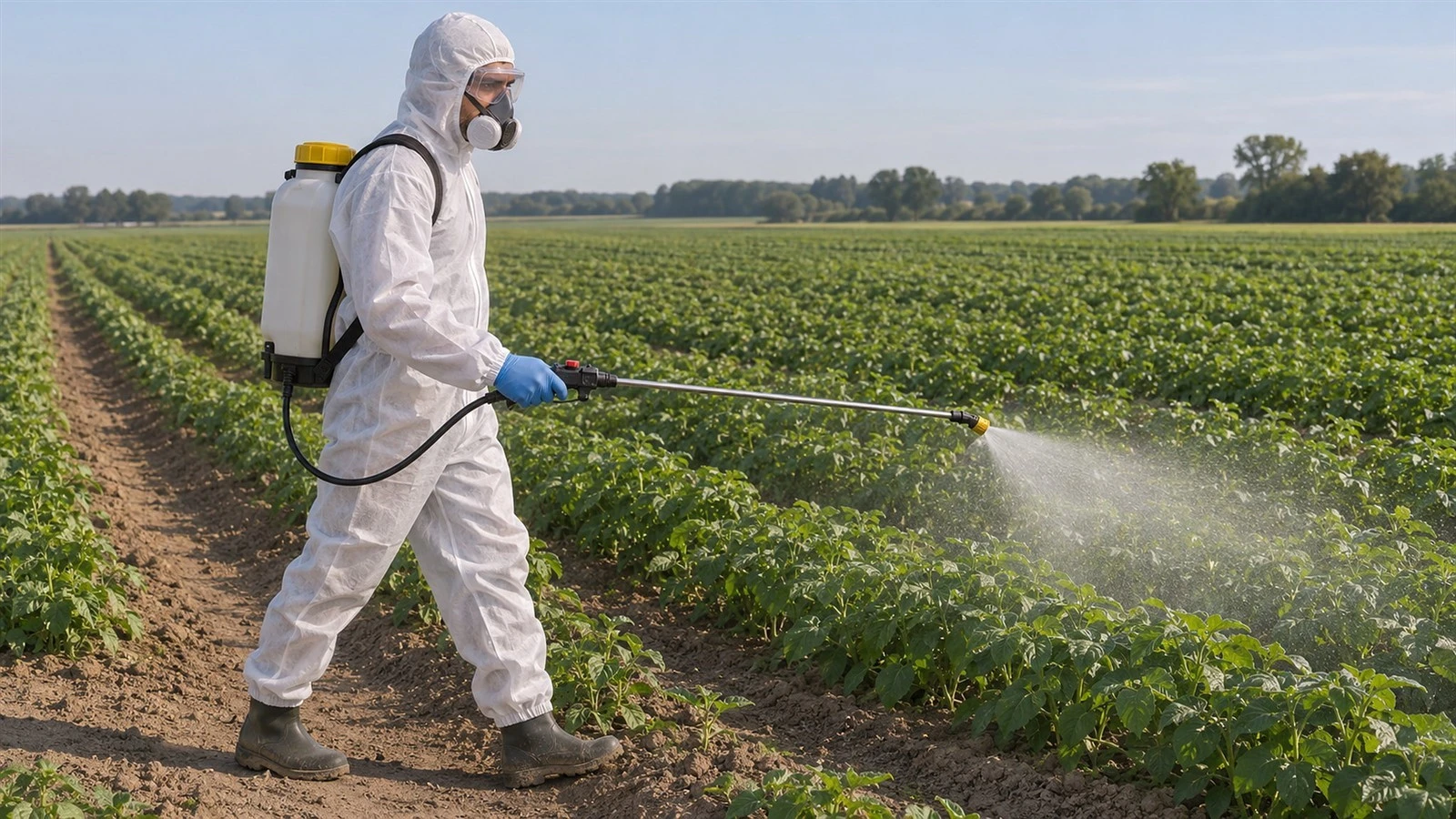
Open-field spraying often involves large working areas, extended exposure periods, and movement between crops.
Workers may use tractor-mounted boom sprayers, self-propelled equipment, or backpack sprayers. Wind direction, spray drift, vegetation contact, and changing weather conditions can all influence exposure.
When purchasing pesticide application coveralls for field workers, consider:
- Full-body coverage appropriate to the pesticide label.
- Fabric performance against the expected spray exposure.
- Sufficient tear resistance for contact with crops and equipment.
- Comfortable movement when bending, walking, or operating machinery.
- Practical sizing that allows any required underlying clothing to be worn.
For larger farms, consistency is equally important. Standardized specifications across worker groups make purchasing, distribution, and replacement easier.
Vineyards and orchards
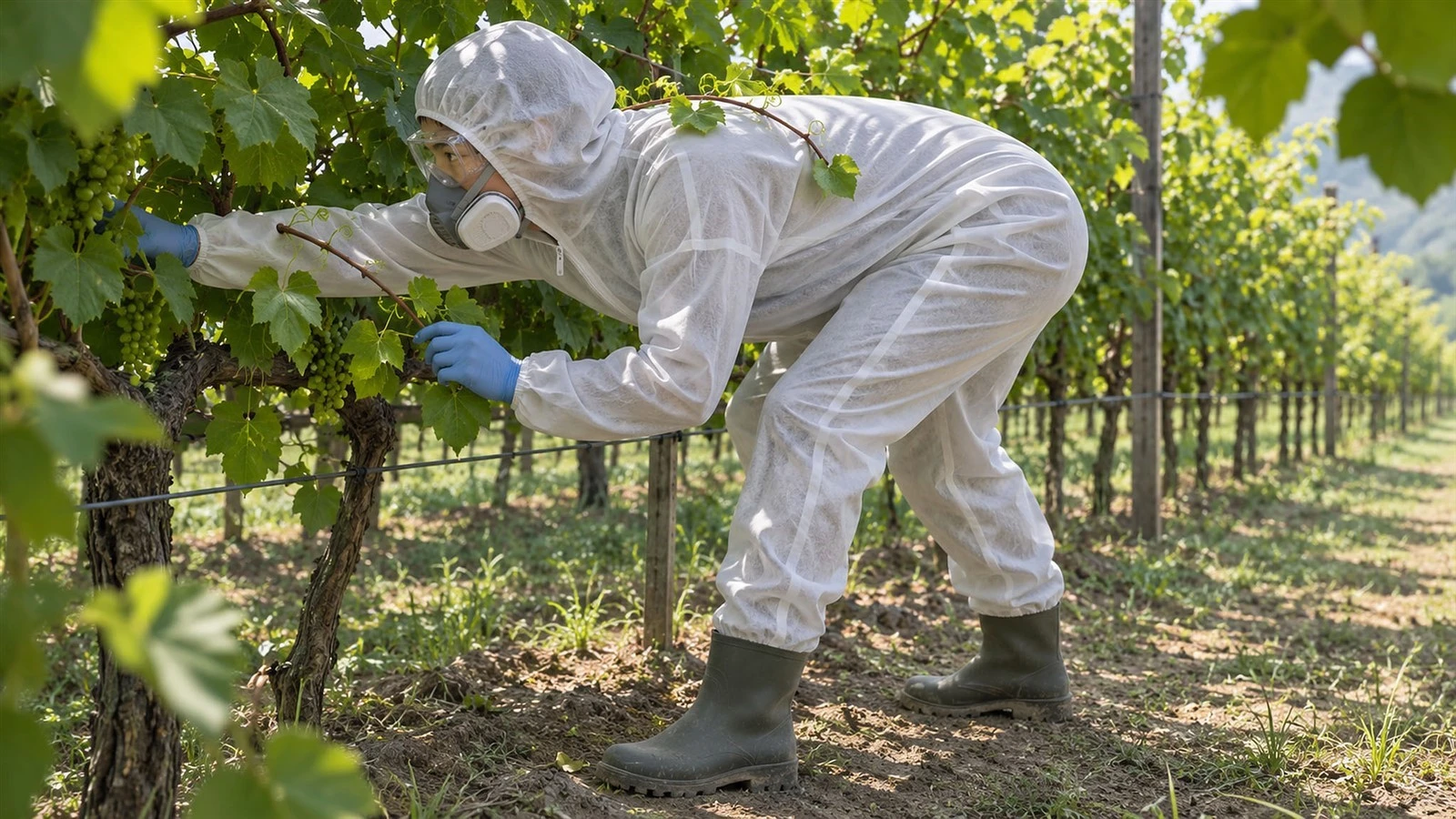
Vineyards and orchards present a different set of working conditions.
Workers frequently move between narrow rows, reach overhead, bend around branches, and work close to leaves and treated surfaces. Depending on the application equipment, they may also encounter spray drift from surrounding rows.
Garment design becomes particularly important.
Look for coveralls that offer:
- Enough room for bending, stretching, and climbing.
- A hood option when required by the risk assessment and pesticide label.
- Secure wrist and ankle closures to help reduce unwanted entry of spray droplets.
- Durable construction around high-movement areas.
- A fit that works with the required gloves, footwear, and other PPE.
A coverall that performs well in a laboratory but restricts movement during a full day of vineyard work may not be a practical purchasing choice.
Greenhouses and enclosed growing environments
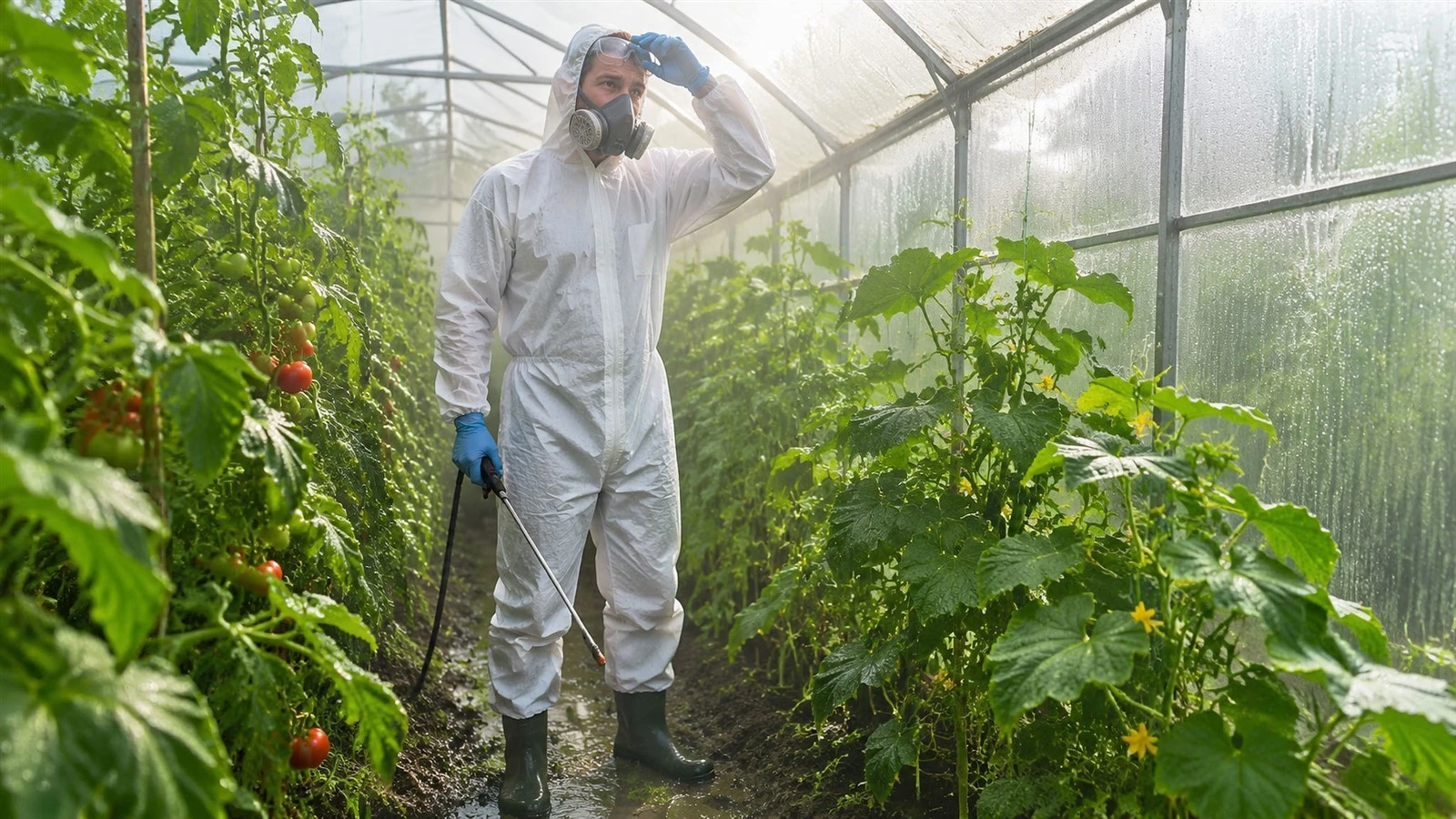
Greenhouse operators often work in warm, humid conditions with limited natural ventilation.
Unlike open-field spraying, greenhouse work can involve prolonged exposure within an enclosed space. Workers may move through narrow aisles, work close to treated plants, and encounter moisture or condensation.
When evaluating protective clothing for greenhouse operations, consider both protection and wearability.
Important purchasing factors include:
- Appropriate barrier performance for the pesticide and application method.
- Lightweight construction where permitted by the required protection level.
- Garment fit that does not restrict movement in narrow working areas.
- Sufficient durability for contact with greenhouse structures and crops.
- A practical supply of replacement garments for scheduled spraying operations.
Breathability should never be used as a reason to select a garment with inadequate protection. Where respiratory protection or additional chemical-resistant equipment is required, clothing alone cannot replace it.
Agricultural spraying contractors
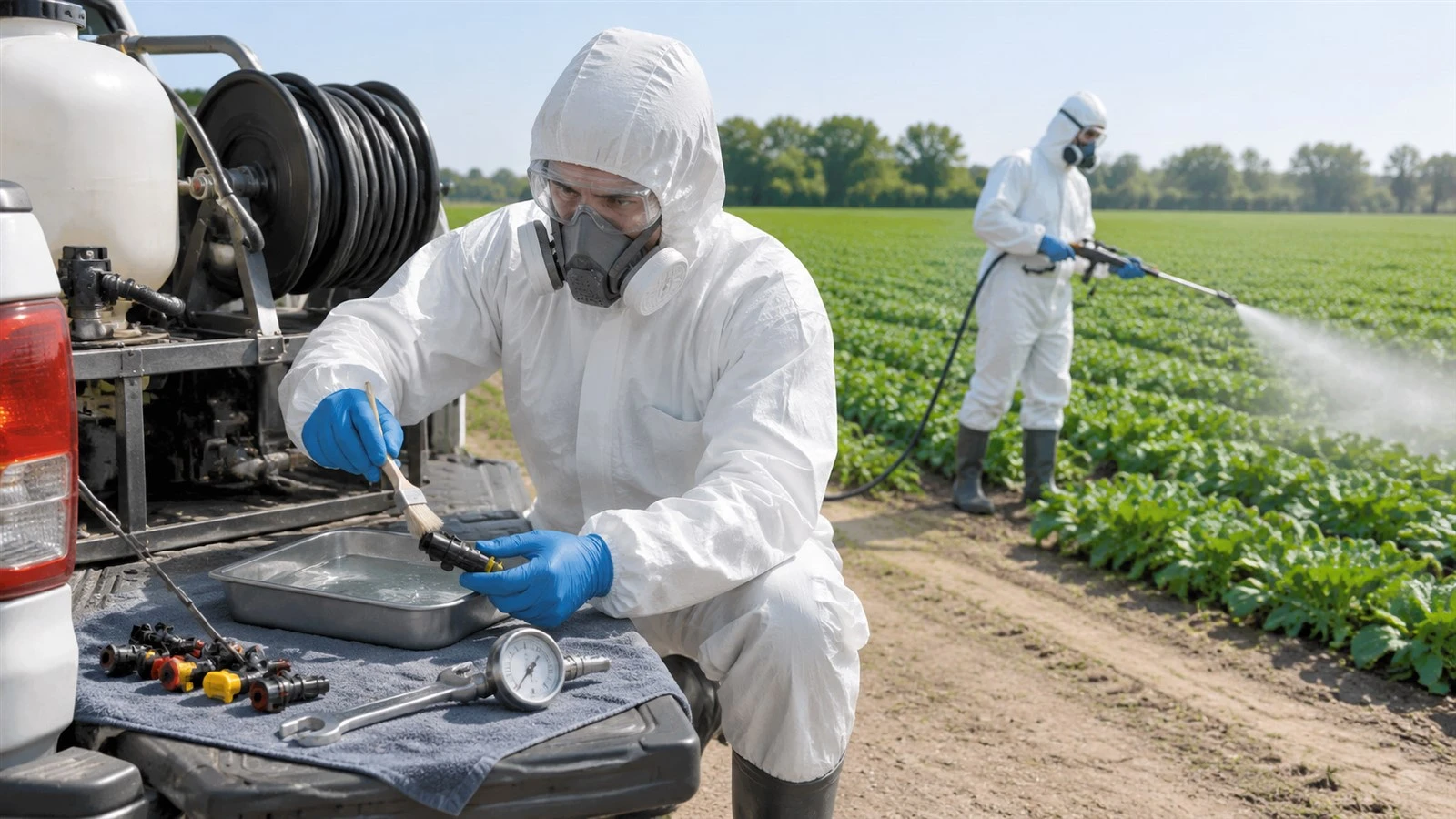
Professional agricultural contractors may work across multiple farms, crop types, and pesticide programs within the same week.
Their procurement requirements are therefore more complex than those of a farm with a relatively consistent spraying schedule.
A contractor may need different protective clothing for mixing, application, equipment cleaning, and other handling activities.
A practical purchasing strategy is to establish several approved garment specifications rather than relying on one universal coverall.
For example:
- A standard specification for routine spraying tasks where permitted by the pesticide label.
- A higher-protection specification for tasks involving increased splash exposure, where supported by the relevant product requirements.
- Separate chemical-resistant garments or aprons when specifically required.
This approach helps contractors manage inventory while ensuring that workers receive clothing appropriate to each assignment.
3. Evaluate Fabric Performance Before Comparing Prices
Fabric selection is one of the most important parts of purchasing pesticide protective clothing.
Disposable coveralls are available in different nonwoven constructions, each with its own characteristics. However, fabric names alone do not establish suitability for pesticide exposure.
Here are three common material categories worth understanding.
SMS (Spunbond-Meltblown-Spunbond)
SMS is a multilayer nonwoven fabric commonly used in disposable protective garments.
Its lightweight construction and balance of strength and breathability make it suitable for various general-purpose protective clothing applications. However, standard SMS should not automatically be considered suitable for pesticide spraying.
Microporous film laminate
Microporous laminate fabrics combine a nonwoven backing with a functional film layer.
Depending on the construction and testing results, these materials can offer a barrier against liquid splashes and particles while maintaining a degree of water vapor transmission.
They are worth evaluating for agricultural applications where the required protection level is compatible with the garment's tested performance.
High-density polyethylene (HDPE) materials
HDPE-based protective fabrics are used in specialized disposable protective garments.
Their performance depends on fabric construction, garment design, and the applicable test requirements. Buyers should request technical documentation rather than relying on the material name as proof of chemical resistance.
What should buyers request from suppliers?
When evaluating agricultural chemical protective clothing, ask suppliers for:
- Fabric composition and weight.
- Relevant penetration and resistance test results.
- Garment seam and closure construction.
- Applicable protective clothing standards and certification documents.
- Instructions for use, limitations, and disposal.
- Evidence that the finished garment meets the claimed performance requirements.
A fabric's water resistance, particle filtration performance, or general splash resistance does not automatically establish resistance to a particular pesticide.
4. Check the Garment Design, Not Just the Fabric
Even a suitable fabric can become less effective if the garment is poorly designed.
When comparing disposable pesticide application coveralls, pay attention to the following details.
Hood design
A hood can provide additional coverage around the head and neck when required. Buyers should check its compatibility with protective eyewear, respirators, and other head protection.
Zipper protection
A front zipper with an appropriate protective flap can help reduce direct exposure around the closure area.
Wrist and ankle closures
Elasticated or otherwise secure closures can help maintain garment positioning and reduce gaps. They must also work with the gloves and footwear required for the task.
Seams and construction
The seam construction should be appropriate to the claimed garment performance. Buyers should request relevant finished-garment test information rather than evaluating fabric samples alone.
Sizing and mobility
Workers need enough room to move without excessive loose material catching on equipment or vegetation. A practical size range is particularly important for farms employing seasonal workers.
These design details should be included in the purchasing specification, not left entirely to the supplier's standard configuration.
5. Disposable or Reusable? Consider the Total Operating Cost
The choice between disposable and reusable protective clothing is not simply a question of which option has the lower unit price.
It depends on the pesticide label, required protection, contamination conditions, available laundering facilities, and operating frequency.
| Purchasing consideration | Disposable coveralls | Reusable garments |
|---|---|---|
| Initial unit cost | Generally lower | Generally higher |
| Cleaning requirements | No routine laundering | Requires suitable decontamination |
| Inventory management | Requires regular replenishment | Requires rotation and maintenance |
| Contamination management | Used garments are discarded appropriately | Cleaning and inspection are essential |
| Suitability | Depends on the required protection and garment performance | Depends on material compatibility and validated cleaning procedures |
For farms with seasonal spraying programs, disposable garments can simplify replacement and reduce the burden of laundering contaminated workwear.
For operations with frequent pesticide handling, reusable garments may be considered if their materials, maintenance procedures, and service life are suitable for the chemicals involved.
However, disposable does not automatically mean safer, and reusable does not automatically mean more economical.
Buyers should compare the full operating cost, including garment purchase, cleaning, labor, replacement, storage, and disposal.
Any garment exposed to pesticides must be handled according to its instructions and applicable pesticide safety requirements. Contaminated clothing should never be treated as ordinary workwear.
6. Understand the Role of EN ISO 27065
For buyers sourcing pesticide protective clothing internationally, EN ISO 27065 is an important standard to understand.
ISO 27065 addresses protective clothing worn by operators handling pesticides and workers re-entering treated agricultural areas. It establishes performance, classification, and marking requirements for relevant protective garments.
It is particularly relevant when evaluating clothing intended for agricultural pesticide application rather than relying solely on general-purpose protective clothing specifications.
When reviewing a supplier's documents, check:
- Whether the finished garment has been assessed against the relevant standard.
- The exact product model and configuration covered by the documentation.
- The applicable classification and intended use.
- Whether the certificate and test reports are valid and traceable.
Also remember that ISO 27065 does not cover respiratory, hand, or foot protection, and it does not address protection against fumigants.
It should therefore be considered as part of a complete PPE selection process, not as a replacement for the pesticide label or a full workplace risk assessment.
For buyers selling into the European market, the applicable EU PPE regulatory requirements should also be checked.
7. Build a Practical Purchasing Specification
Once the application and protection requirements have been identified, buyers should turn them into a clear purchasing specification.
This is particularly useful for farm groups, agricultural contractors, distributors, and private-label PPE brands.
A purchasing specification should cover:
| Specification | What to confirm |
|---|---|
| Application | Open-field spraying, vineyards, greenhouses, or other agricultural work |
| Pesticide exposure | Product formulation, concentration, and application method |
| Protection requirements | Pesticide label and applicable garment standard |
| Fabric | Material construction, weight, and verified performance |
| Garment design | Hood, zipper flap, cuffs, ankles, and seams |
| Sizing | Available sizes and fit requirements |
| Packaging | Individual packaging, carton quantity, and labeling |
| Supply capacity | Production lead time, repeat orders, and stock availability |
| Documentation | Technical data, test reports, certificates, and instructions |
Before placing a large order, request product samples and conduct a practical evaluation of fit, mobility, and compatibility with the complete PPE ensemble.
Where relevant, verify the product documentation independently and confirm that the exact supplied model matches the tested configuration.
8. Work with a Supplier That Understands Agricultural PPE
For distributors and agricultural PPE importers, choosing a supplier involves more than finding an attractive quotation.
A reliable manufacturer should be able to provide clear technical documentation, consistent product specifications, stable production capacity, and support for repeat orders.
Before finalizing a supplier, consider asking:
- Can you provide technical documents and test reports for the exact garment?
- Which fabric options are available for different agricultural applications?
- Can you supply multiple sizes and garment configurations?
- Do you support OEM and private-label packaging?
- Can you maintain consistent specifications across repeat orders?
- What is your production lead time and bulk order capacity?
For brands and distributors developing their own agricultural PPE range, OEM and private-label manufacturing can also provide flexibility in packaging, sizing, garment configuration, and product presentation.
At Lioncare, we manufacture disposable nonwoven protective clothing for international PPE distributors, wholesalers, and private-label brands. Our product range includes disposable coveralls and other protective garments, with OEM and private-label solutions available for different market requirements.
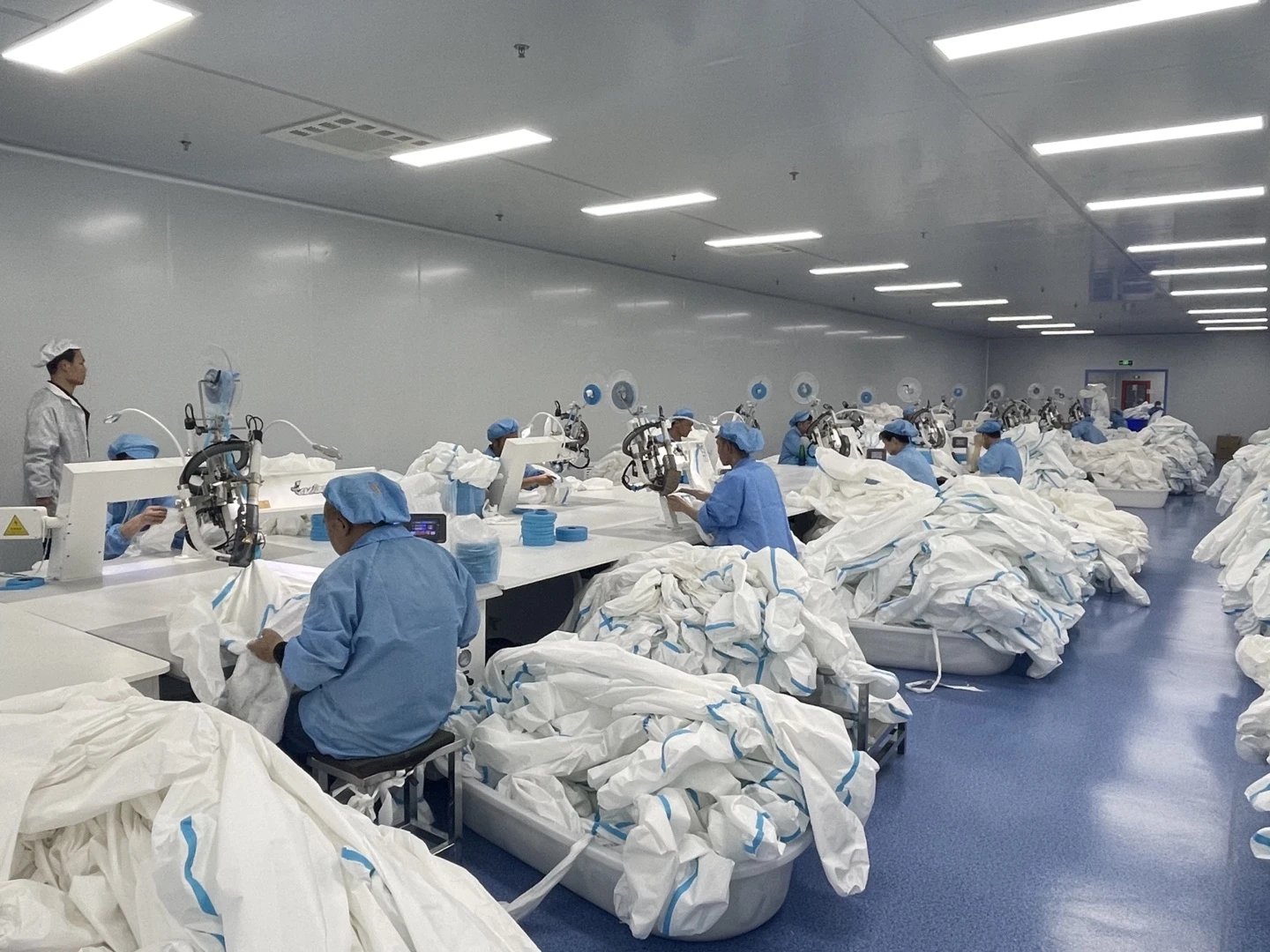
We encourage buyers to define their intended application and required protection level first, then evaluate the appropriate garment construction and documentation before selecting a product.
Final Thoughts
Choosing pesticide protective clothing for farms and agricultural contractors requires more than selecting a lightweight coverall or comparing fabric prices.
The right purchasing decision starts with the pesticide label, the actual handling activity, and the working environment. Fabric performance, garment construction, comfort, replacement procedures, and supplier documentation all matter.
For farms and contractors managing multiple spraying operations, a clearly defined purchasing specification can improve product consistency, simplify inventory management, and help ensure that workers receive clothing appropriate to their assigned tasks.
Looking for a disposable protective clothing manufacturer for your agricultural PPE range?
Contact Lioncare to discuss your product requirements, fabric options, OEM solutions, and bulk supply needs.