

Respirators For Avoiding Virus? There Are Few Things You Do Not Know About N95 Or FFP2
Dec 30, 2022
Lots of different types of respirators in the market these days when sourcing globally. For example N95, KN95, FFP2, KF94. What are these types about and are they able to protect from virus? If I cannot find N95, what else can I buy? Read this article in 5 mins, you will know about types of respirators and standards of different countries.
WHAT ARE THEY? N95, KN95, FFP2, KF94
N95, KN95, FFP2, KF94 are different standards approved in different countries. N95 is American standard for face masks; KN95 comes from Chinese standard; FFP2 is European standard; and KF94 is from Korean standard.
THINKING OF BUYING N95?
Starting with N95, the most common respirators so you could have a whole picture how respirators helps with avoiding Covid-19. N95 respirators comply with the USA NIOSH (National Institute for Occupational Safety and Health) standards(NIOSH-42CFR Part84), which can filter 95% of non-oily particles with a diameter of 0.3 microns or more in the air. The first letter N, means not resistant to oil. And the number 95 means a filtration efficiency of 95% or above. In addition to N95, there are classifications of N99 (filter efficiency not less than 99%) and N100 (filter efficiency not less than 99.97%). If there is a letter R comes with N95, it stands for the product is resistant to oil. And the letter P stands for Strongly resistant to oil.

Pic1 Image from:https://www.seattletimes.com
HOW CAN MASKS HELPS WITH AVOIDING COVID-19 VIRUS?
As you can see, the larger of the number they are, the higher level of the protection they have. When water molecules exist as a gas, the diameter is about 0.28nm. The overall particle diameter of the corona-virus is about 80-120nm (we mentioned earlier N95 which can filter 95% of non-oily particles with a diameter of 300nm or more in the air). The respirator cannot pass through particles with larger diameters, so it can block the virus. 95 means that the efficiency of filtering this type of particulate matter reaches 95%. The 90 series is not as high as the 95 protection level, but it can also resist more than 90% of particles.
KN95 and FFP2? IS IT THE SAME WITH N95?
KN95 is based on the Chinese standards GB 2626-2019 Respiratory protection-NON-power air-Purifying particle respirator. Filter elements are divided into KN and KP types according to the filtration performance. KN is suitable for filtering non-oily particles, and KP is suitable for filtering oily and non-oily particles. According to the level of filtration efficiency and the level of filter elements, respirators can be divided into six categories: KN90, KN95, KN100, KP90, KP95, and KP100. KN95 respirators are anti-particulate respirator with a filtration efficiency of more than 95% for non-oily particulate matter, which has the same filtration level with N95.
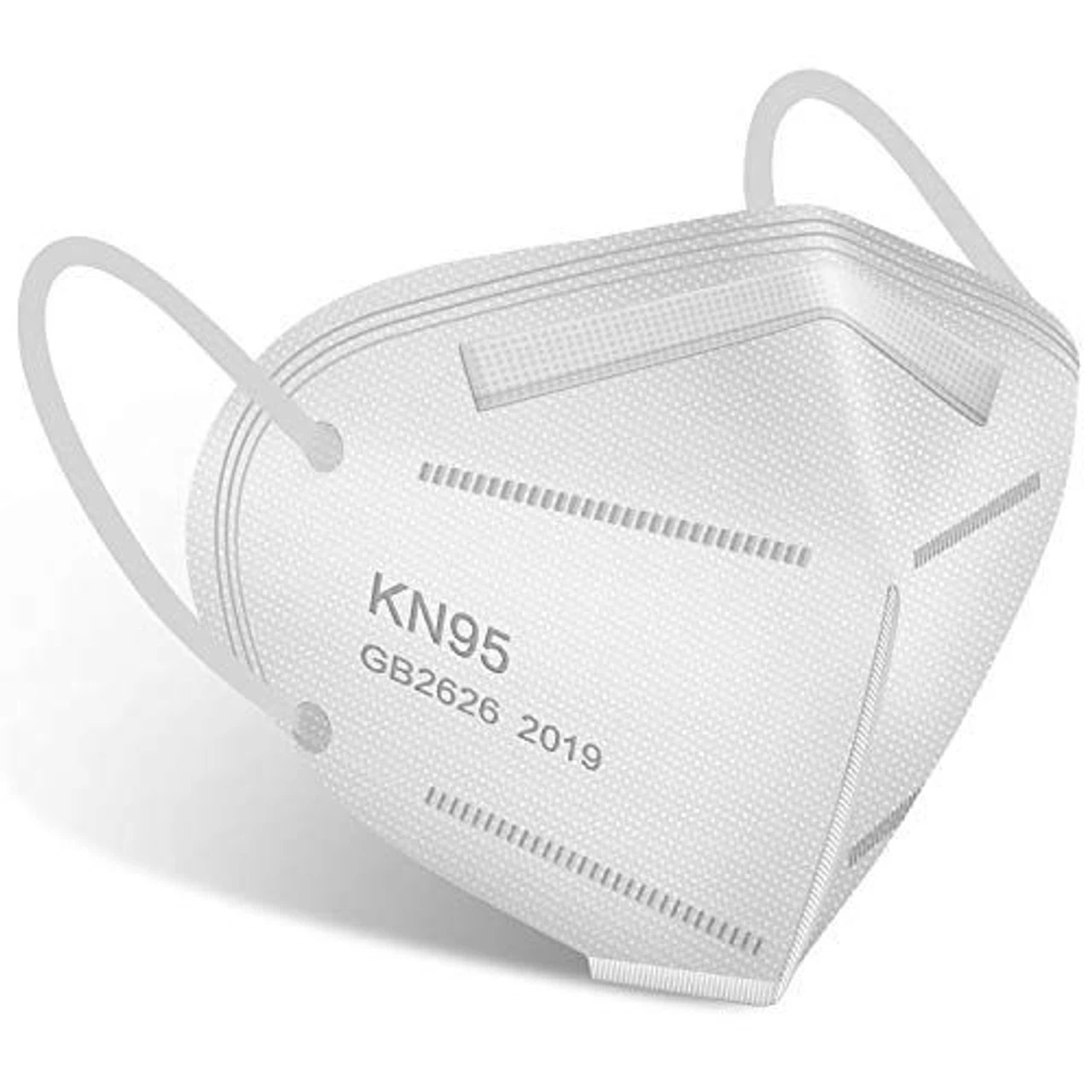
Pic2 Image from:https://thedentalmarket.ca/n95/white-kn95-respiratory-masks-10-pk/
Whether KN95 is the same with N95, let’s have a look of their test methods. The test methods of N95 and KN95 are exactly the same, both are 0.3 micron sodium chloride aerosol interception efficiency at 85L/min flow rate. However from the key assessment indicators, the test methods of KN95 (GB 2626-2019) have extra assessment indicators such as leakage, dead space, air tightness, flammability, cleaning and disinfection, etc.
In the EU standard FFP series, FFP2 basically corresponds to 95%, and FFP3 means that the filtration efficiency is higher, reaching 99%.

Pic3 Image from: https://www.lioncare.net/industrial-protection/face-protection/ffp2-ffp3-respirators/lioncare-foldable-ffp2-respirator.html
It is easier to understand the filtering ability by using the following set of relationships: FFP3>FFP2=N95=KN95=KF94>KN90. In addition, numbers with a V at the end indicate a breathing valve.
I hope this article helps with basic informations about face masks. If you have other questions please leave a message with us.


