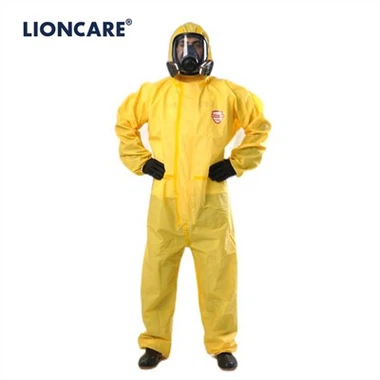
Choosing The Right Disposable Protective Products For Different Cleanroom Classe
Jan 16, 2025

In industries where cleanliness is paramount, such as semiconductor manufacturing, pharmaceuticals, and biotechnologies, cleanrooms play a critical role in maintaining the highest standards of hygiene and particle control. Disposable protective products are essential in these environments, as they ensure that workers do not introduce contaminants into these sensitive areas. Different cleanroom classes, defined by ISO standards, require specific types of protective wear to maintain their stringent cleanliness levels. This article will guide you in choosing the appropriate disposable protective products based on ISO cleanroom classifications, ensuring both safety and optimal performance in various industries.
Introduction to Disposable Protective Products for Different Cleanroom Classes
ISO 1 to 3 Cleanrooms

Face Masks:
Typically made from high-efficiency filter nonwoven materials, such as melt-blown fabric, with fine fibers that effectively filter fine particles. These masks have a high filtration efficiency for particles as small as 0.1 microns or even smaller, usually requiring over 99% efficiency to prevent dust particles from entering the cleanroom and affecting high-precision production or experiments.

Coveralls:
Made from tightly woven, smooth nonwoven materials, such as SMS fabric, which have good barrier properties and anti-static capabilities. They prevent particles and static generated by the human body from contaminating the cleanroom environment. Sealed designs at the collar, cuffs, and ankles reduce gaps and prevent particles from entering.

Gloves:
Typically made from latex or nitrile, with an additional nonwoven fabric glove over the outer layer. The latex or nitrile gloves provide excellent chemical protection and sealing, while the nonwoven gloves offer additional dust prevention and prevent particles from shedding from the gloves, avoiding contamination of the cleanroom environment and products.

Shoe Covers:
Made from nonwoven fabric with appropriate thickness and strength to completely cover the shoes and prevent dust and particles from entering the cleanroom. The elastic design at the opening ensures a tight fit at the ankle, preventing the shoe covers from falling off or loosening during movement, which could lead to dust leakage.
ISO 4 to 5 Cleanrooms

Respirator:
Disposable nonwoven face masks that meet corresponding filtration standards, such as N95 or higher, with a filtration efficiency of no less than 95% for non-oily particles larger than 0.3 microns. These masks meet the cleanroom's air filtration requirements and prevent contaminants from being brought into the cleanroom by the worker's breath.

Isolation Gowns:
Commonly made from SMS nonwoven fabric, which has good breathability and barrier properties to block particles and microorganisms. The gowns are typically one-piece or two-piece styles, convenient to wear with tightly sealed parts to cover most of the body and minimize direct contact with the cleanroom environment.

Caps:
Nonwoven fabric caps completely cover the hair, preventing dust and dandruff from falling into the cleanroom. The material should be soft, comfortable, and anti-static, with a certain elasticity to ensure a tight fit to the head, preventing the cap from loosening or slipping during work.
ISO 6 to 7 Cleanrooms
Face Masks: Disposable medical masks generally meet the requirements, with a filtration efficiency of over 70% for particles, preventing droplets exhaled by workers and external dust from entering the cleanroom and maintaining basic cleanliness for production or experiments.
Workwear: Made from lightweight, breathable nonwoven fabric, comfortable to wear, and able to cover the whole body, providing basic dust protection. The color is typically light to easily detect stains and replace the garments when needed. The cuffs and collar may have elastic designs to reduce dust entry.
Shoe Covers: Simple nonwoven shoe covers provide protection by preventing dust and debris from the soles of shoes from entering the cleanroom. The shoe covers should be durable and slip-resistant to ensure safety and stability while walking.
ISO 8 to 9 Cleanrooms
Face Masks: Ordinary nonwoven face masks are used to prevent larger dust particles and droplets, providing basic protection for the cleanliness of the environment. While their filtration efficiency is relatively low, they meet the basic protection needs for this cleanroom class.
Aprons: Nonwoven fabric aprons serve as a simple protective product to prevent contamination of clothing during operations. They can also block dust and particles generated by the body to some extent. The material should be easy to clean and disinfect for repeated use.
Sleeves: Nonwoven fabric sleeve protectors protect the arms of workers, preventing fibers and dust from falling into the work area. The sleeves should be long enough to cover up to the wrist and have good elasticity for a snug fit to the arm, preventing slippage.
How to Choose Disposable Protective Products for Different Cleanroom Classes:
Disposable protective products are classified for different cleanroom levels (ISO 1 to ISO 9) based on material, manufacturing processes, cleanliness requirements, and applications. Below are recommendations for selecting disposable protective products for each cleanroom class:
ISO 1-3 Class (Ultra-high cleanliness, semiconductor, nanotechnology, biopharmaceuticals, etc.)
- Features: Extremely strict particle and microorganism control with very low fiber shedding rates and particle generation rates.
- Recommended Products:
-High-performance disposable protective clothing (e.g., Type 3/4/5/6 protective suits made using ultrasonic seamless welding).
-Low-particle release hoods, shoe covers, and sleeves.
-Sterilized sterile isolation gowns or surgical gowns.
-Non-dusting and low-fiber releasing nonwoven cleaning cloths.
ISO 4-5 Class (High cleanliness, pharmaceuticals, medical devices, microelectronics)
- Features: Strict control of particles and microorganisms in the air, suitable for sterile operations.
- Recommended Products:
- Sterile surgical gowns (Level 2/3 standards).
- Anti-static shoe covers and hats (with conductive fibers).
- Liquid splash-resistant isolation gowns and workwear.
- Sterile face masks (FFP2/FFP3, N95).
ISO 6-7 Class (Medium-high cleanliness, food processing, medical testing, laboratory environments)
- Features: Moderate control over particle numbers, suitable for routine clean operations.
- Recommended Products:
- Disposable isolation gowns (Level 1-2).
- Regular face masks or surgical masks.
- Disposable caps (e.g., strip caps).
- Disposable shoe covers and sleeves.
ISO 8-9 Class (General cleanliness environment, light industry, general production workshops)
- Features: Lower cleanliness requirements, primarily controlling larger dust particles and contaminants.
- Recommended Products:
- Ordinary isolation gowns and workwear.
- Ordinary nonwoven fabric caps, shoe covers, and sleeves.
- Dust masks (FFP1).
Classification and Selection Guidelines:
1. Material Selection:
- ISO 1-5 classes require nonwoven materials with low particle release and shedding rates (e.g., SMS, SMMS, or composite materials).
- ISO 6-9 classes can use regular nonwoven materials (e.g., PP, PE-coated nonwoven fabrics).
2. Process Requirements:
- ISO 1-3 classes recommend seamless processes like ultrasonic welding or laser cutting.
- ISO 4-9 classes can use regular sewing processes but need to ensure surfaces are clean and uncontaminated.
3. Sterilization Treatment:
- ISO 1-5 classes typically require gamma radiation or ethylene oxide sterilization.
- Sterilization is generally not mandatory for ISO 6-9 class products.
4. Packaging and Storage:
- High-level cleanrooms require vacuum-sealed or double-layer sterile packaging.
- Regular clean environments may use standard sealed packaging.
selecting the correct disposable protective products is crucial for maintaining the integrity of cleanroom environments across various industries. Whether operating in high-tech sectors such as semiconductors and pharmaceuticals, or in less demanding areas such as food processing, the proper choice of protective gear-based on the specific ISO cleanroom classification-ensures safety, prevents contamination, and upholds the highest standards of hygiene. By adhering to the material, process, and sterilization requirements outlined for each cleanroom class, businesses can guarantee both worker protection and the preservation of cleanroom integrity.