Top 10 Disposable Coverall Suppliers For Pharmaceutical Manufacturing
Sep 16, 2026
Pharmaceutical manufacturing is not an industry where disposable coveralls can be selected on price alone.
A garment may look suitable on a product page, yet still be a poor fit for a pharmaceutical production environment. Cleanroom classification, particle control, sterile or non-sterile requirements, garment construction, packaging, documentation and supply consistency can all affect the purchasing decision.
For this reason, pharmaceutical buyers often need to look beyond the coverall itself and evaluate the supplier behind it.
This guide reviews 10 disposable coverall suppliers that are relevant to pharmaceutical manufacturing and controlled environments. The list is not a ranking. Instead, each company is included because it represents a different type of sourcing option, from global protective clothing brands to specialist cleanroom suppliers and direct manufacturers.

What Pharmaceutical Buyers Should Check Before Choosing a Coverall Supplier
Before comparing suppliers, it helps to define what the production environment actually requires.
A pharmaceutical facility may need very different disposable coveralls for general production areas, controlled environments, aseptic processing, laboratory operations or chemical handling.
Here are the main points worth checking with every supplier:
1. Cleanroom suitability
Ask whether the garment has been designed, processed or packaged for the intended cleanroom environment. A standard industrial disposable coverall should not automatically be treated as a cleanroom garment.
2. Sterile or non-sterile configuration
The requirement depends on the manufacturing process. Some pharmaceutical applications require sterile garments, while others use clean-processed or non-sterile apparel.
3. Particle and lint control
For controlled environments, the fabric and garment construction matter because the operator can be a significant source of particles.
4. Garment construction
Check the hood, cuffs, ankles, zipper design, seams and overall fit. Small design details can affect gowning, movement and contamination control.
5. Documentation
A serious supplier should be able to provide relevant product specifications, test reports, certificates and traceability information rather than simply sending a CE logo or a generic compliance statement.
6. Supply consistency
For pharmaceutical production, approving a sample is only the beginning. The supplier also needs to maintain consistent materials, construction and packaging across repeat orders.
10 Disposable Coverall Suppliers for Pharmaceutical Manufacturing
1. DuPont
Best known for: Tyvek® and Tyvek® IsoClean® cleanroom apparel
DuPont is one of the most established names in disposable protective clothing and has a dedicated portfolio for pharmaceutical manufacturing.
Its Tyvek® IsoClean® range includes clean-processed and sterile single-use garments designed for environments where particle and microbiological contamination control are important. The portfolio covers coveralls as well as hoods, gowns, sleeves and shoe covers.
For pharmaceutical buyers, DuPont is particularly relevant when the project requires a well-established material platform, documented cleanroom performance and a broad international supply network.
Consider DuPont when: brand recognition, established cleanroom garment systems and documented contamination-control performance are important purchasing requirements.
2. Kimberly-Clark Professional
Best known for: Kimtech™ cleanroom and controlled-environment apparel
Kimberly-Clark Professional has a long-established presence in healthcare, laboratory and controlled-environment PPE.
Its cleanroom apparel portfolio is relevant to pharmaceutical and life-science operations where contamination control and consistent garment quality are important. The company also provides a wider range of PPE and workplace consumables, which can be useful for buyers looking to consolidate several categories with one supplier.
The main consideration is that pharmaceutical buyers should evaluate the exact garment and cleanroom specification rather than judging suitability from the company name alone.
Consider Kimberly-Clark when: you prefer an established PPE and workplace-supplies brand with a broad product ecosystem.
3. Lakeland
Best known for: CleanMax® disposable cleanroom apparel
Lakeland has developed a dedicated CleanMax® range for controlled environments, covering different fabric constructions and cleanroom classifications.
Its current portfolio includes sterile and non-sterile coveralls, including models designed for ISO Class 4–6 environments, as well as SMMS options for ISO Class 5–8 applications. Pharmaceutical manufacturing, aseptic manufacturing, biotechnology and compounding pharmacies are among its stated application areas.
This makes Lakeland particularly interesting for buyers whose requirements are more specific than ordinary industrial disposable PPE.
Consider Lakeland when: you need a dedicated cleanroom apparel range with different configurations for pharmaceutical and controlled environments.
4. Ansell
Best known for: Specialist protection and AlphaTec® apparel
Ansell is better known for its broad industrial and healthcare PPE portfolio than for being a disposable-coverall-only company.
For pharmaceutical procurement teams, however, that wider protection portfolio can be useful. Certain pharmaceutical processes involve not only contamination control but also exposure to chemicals, hazardous substances or other process-specific risks.
Buyers should therefore evaluate Ansell according to the particular garment and hazard rather than treating all AlphaTec® products as interchangeable cleanroom apparel.
Consider Ansell when: the project involves pharmaceutical processing where chemical or higher-level personal protection requirements need to be considered alongside disposable apparel.
5. Contec
Best known for: Cleanroom contamination-control products
Contec has a strong presence in the cleanroom industry, with products covering cleaning, contamination control and controlled-environment operations.
For pharmaceutical buyers, this specialist positioning is useful because garment selection is only one part of a larger contamination-control program.
When evaluating a Contec apparel product, buyers should confirm the exact garment specification, processing method, packaging and intended cleanroom classification.
Consider Contec when: contamination control is the main purchasing concern and you prefer to work with a cleanroom-focused supplier.
6. Micronclean
Best known for: Cleanroom garments and contamination-control services
Micronclean is a specialist cleanroom company with a strong focus on controlled environments, particularly in pharmaceutical and other high-specification industries.
Its cleanroom garment portfolio includes coveralls with integral hoods and designs intended for controlled environments and GMP areas. Some garments use heat-sealed edges and low-shedding constructions to reduce loose-fiber concerns.
Micronclean is particularly relevant to buyers who need more than a standard disposable PPE supplier and are evaluating the complete cleanroom garment process.
Consider Micronclean when: cleanroom garment management, contamination control and specialist cleanroom expertise are high priorities.
7. Valutek
Best known for: Cleanroom supplies and controlled-environment apparel
Valutek is a cleanroom-focused supplier offering a broad range of products used in controlled environments.
For pharmaceutical manufacturing, its relevance comes from its position within the wider cleanroom supply chain rather than simply from disposable coveralls.
This can be useful for procurement teams that purchase multiple cleanroom consumables and want to compare apparel alongside other contamination-control products.
Consider Valutek when: you are sourcing several categories of cleanroom consumables rather than coveralls alone.
8. Berkshire Corporation
Best known for: Cleanroom contamination-control products
Berkshire has built its business around contamination-control products for cleanrooms and critical environments.
Its portfolio is particularly relevant to pharmaceutical, semiconductor, medical device and other industries where contamination control is a central purchasing concern.
For buyers evaluating disposable coveralls, the important step is to confirm the intended cleanroom classification, garment processing, packaging and product documentation for the specific model.
Consider Berkshire when: cleanroom contamination control is more important than general industrial PPE coverage.
9. Alpha Pro Tech
Best known for: Disposable protective apparel and specialty PPE
Alpha Pro Tech offers disposable protective clothing across healthcare, industrial and controlled-environment applications.
For pharmaceutical buyers, the company provides another option between broad PPE suppliers and highly specialized cleanroom providers.
Its relevance may be particularly strong for buyers looking at recurring disposable apparel requirements rather than a one-time purchase.
Consider Alpha Pro Tech when: you need disposable protective apparel from an established North American supplier and want to compare multiple garment configurations.
10. LIONCARE

Best known for: Direct manufacturing, OEM/private label and disposable PPE
For pharmaceutical distributors, PPE importers and private-label brands, LIONCARE represents a different sourcing model from the large international PPE brands listed above.
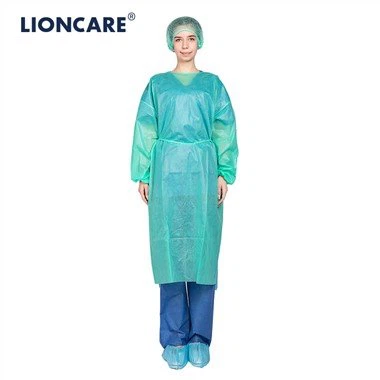
LIONCARE is a China-based manufacturer and exporter specializing in single-use PPE. Its manufacturing operation includes a 58,000 m² factory, cleanroom facilities and an in-house testing laboratory. The company offers disposable coveralls across different protection levels and materials, including SMS and microporous options.
For pharmaceutical-related purchasing, the main attraction is not simply the product itself. Direct factory sourcing can give buyers more flexibility around specifications, packaging, private labeling and repeat production.
LIONCARE's product range includes coveralls designed for particle, liquid and chemical protection, while its broader PPE portfolio allows buyers to source related disposable products from the same manufacturing partner.
Consider LIONCARE when: you are looking for a China manufacturing partner for bulk purchasing, OEM/private label programs or cost-controlled pharmaceutical PPE sourcing.
How to Compare These Suppliers Before Placing an Order
A supplier list is useful for creating a shortlist, but it should not replace qualification.
For pharmaceutical procurement, I would compare suppliers using the following points:
What to Compare |
Why It Matters |
|---|---|
| Cleanroom classification | Confirms whether the garment fits the intended environment |
| Sterile / non-sterile | Determines whether the garment matches the production process |
| Fabric construction | Affects particle control, liquid resistance and wearer comfort |
| Seam construction | Important for garment integrity and barrier performance |
| Hood and cuff design | Influences coverage and contamination control |
| Packaging | Important when garments enter controlled environments |
| Test reports | Provides evidence behind product claims |
| Certification documents | Supports supplier qualification and internal QA review |
| Sample consistency | Helps confirm whether production matches the approved sample |
| Production capacity | Important for recurring bulk orders |
| OEM / private label capability | Relevant for distributors and PPE brands |
| Lead time | Affects inventory planning and production continuity |
One point deserves particular attention: do not compare suppliers only by the price per coverall.
A lower unit price can become less attractive if the garment requires additional processing, has inconsistent sizing, creates higher rejection rates or cannot be supplied with the documentation required by your quality team.
Should You Buy Pharmaceutical Coveralls From a Brand or Direct Manufacturer?
There is no single sourcing model that fits every pharmaceutical buyer.
Large established brands can provide recognizable product platforms, established distribution networks and extensive technical documentation.
Specialist cleanroom suppliers may be more suitable when contamination control and controlled-environment expertise are central to the project.
Direct manufacturers can be worth evaluating when the buyer needs larger quantities, customized packaging, private labeling or greater control over product specifications and cost.
For distributors and importers, it can therefore make sense to compare both branded products and direct factory options before making the final decision.
Questions to Ask a Disposable Coverall Supplier
Before approving a supplier, pharmaceutical procurement teams can ask:
- Is the garment intended for cleanroom, controlled-environment or general industrial use?
- Is it available in sterile and non-sterile configurations?
- What cleanroom classification is the garment designed for?
- What fabric and seam construction are used?
- How is particle shedding or cleanliness controlled?
- How is the garment packaged?
- Which test reports and certificates are available?
- Can you provide production samples before bulk approval?
- Can the supplier maintain the same specification for repeat orders?
- What OEM, packaging and private-label options are available?
These questions usually tell you more about a supplier's actual suitability than a long product catalogue.
Final Thoughts
Choosing a disposable coverall supplier for pharmaceutical manufacturing is less about finding a famous brand and more about finding a garment-and-supplier combination that fits the production environment.
A pharmaceutical buyer may need sterile apparel for one operation, clean-processed non-sterile garments for another, and higher-barrier disposable coveralls for a separate chemical handling process.
That is why supplier qualification should start with the application, not the catalogue.
For distributors and pharmaceutical PPE importers, it is also worth comparing established international brands with qualified direct manufacturers. The right comparison can reveal differences in customization, documentation, production flexibility, lead time and total cost that are not obvious from a product page.
Before placing a large order, request samples, review the relevant documentation and confirm that the supplier can reproduce the approved specification consistently. That final step is often more important than the supplier's position on any Top 10 list.
FAQ
Q: What type of disposable coverall is commonly used in pharmaceutical manufacturing?
A: It depends on the production environment. Pharmaceutical facilities may use different coveralls for general production areas, controlled environments, laboratories and aseptic operations. Buyers should select the garment according to the required cleanroom, contamination-control and protection specifications rather than choosing by fabric type alone
Q: Should pharmaceutical manufacturers use sterile or non-sterile disposable coveralls?
A: Not every pharmaceutical operation requires sterile apparel. The correct choice depends on the manufacturing process, cleanroom classification and gowning procedure. Buyers should confirm the requirement with their quality and contamination-control teams before ordering.
Q: What should I ask a supplier before buying pharmaceutical cleanroom coveralls?
A: Ask about cleanroom suitability, particle control, processing, packaging, sterile/non-sterile configuration, test reports, certificates, traceability, sample approval and repeat-order consistency.
Q: Are SMS coveralls suitable for pharmaceutical manufacturing?
A: SMS coveralls can be suitable for some pharmaceutical and controlled-environment applications, but suitability depends on the exact garment construction, processing and environmental requirements. A generic SMS coverall should not automatically be considered a pharmaceutical cleanroom garment.
Q: What is the difference between a cleanroom coverall and a standard disposable coverall?
A: A cleanroom garment is designed with contamination control in mind. Fabric, garment construction, processing, packaging and cleanliness requirements can all differ from ordinary industrial disposable PPE.
Q: Can pharmaceutical companies source disposable coveralls directly from China?
A: Yes. Direct Chinese manufacturers can be an option for pharmaceutical distributors, importers and private-label buyers. However, the supplier should be qualified through samples, documentation, factory assessment and quality-control procedures before regular purchasing.
Q: Can disposable coveralls be customized for pharmaceutical PPE brands?
A: Many manufacturers offer OEM and private-label services, including fabric selection, garment design, labels, packaging and carton configuration. Buyers should confirm which customization options are available at the required order quantity.
Q: How should buyers compare disposable coverall suppliers for pharmaceutical production?
A: Start with the actual application requirements, then compare cleanroom suitability, garment construction, documentation, quality consistency, production capability, lead time and total purchasing cost. The cheapest coverall is not necessarily the lowest-cost sourcing option over the life of a supply program.