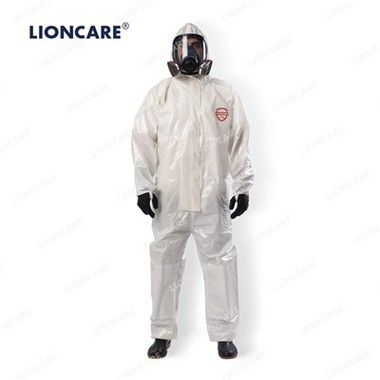
Hooded Vs Non-Hooded Disposable Coveralls: Which Specification Fits?
Oct 29, 2026
When sourcing disposable coveralls, one of the first decisions is whether to choose a hooded or non-hooded design. It may seem like a minor specification, but it affects head and neck coverage, compatibility with other PPE, wearer comfort, and the suitability of the garment for a particular job.
For PPE distributors and bulk buyers, the decision also influences product assortment. Stocking only hooded coveralls may not suit every customer, while offering too many similar specifications can complicate inventory management.
So, which option should you choose?
The answer depends on where the coverall will be used, whether separate head protection is required, and what level of protection the complete garment must provide. This guide explains the practical differences to help you select the right disposable coverall specification for your customers or workforce.
1. What Is the Difference Between Hooded and Non-Hooded Disposable Coveralls?
The main difference is whether the hood is integrated into the coverall.
A hooded disposable coverall has an attached hood that covers the head and, depending on its design and fit, part of the neck. A non-hooded coverall typically ends at the collar, leaving head protection to a separate item when needed.
Neither design is automatically better. Each serves a different purpose.
Hooded Disposable Coveralls
Hooded coveralls are designed for applications where head and neck coverage forms part of the required protective clothing system.
Common design features include an integrated hood, an elasticated face opening, a front zipper, and elasticated wrists and ankles. The exact configuration varies by model.
Potential advantages include:
- Additional coverage around the head and neck.
- Fewer separate garments to manage when an integrated hood meets the application requirements.
- Convenient donning when the hood is needed throughout the task.
- A practical option for certain dusty, contamination-sensitive, and industrial environments.
However, an attached hood does not automatically provide a secure seal around the face, protect the eyes, or replace a respirator, helmet, or other required head protection.
The hood must fit properly and work with the rest of the PPE.

Non-Hooded Disposable Coveralls
Non-hooded coveralls provide body coverage without an attached hood. They can be suitable when head protection is unnecessary or when workers use separate headwear as part of their PPE system.
Depending on the workplace, separate headwear may include a disposable bouffant cap, hairnet, protective hood, or safety helmet.
Potential advantages include:
- Greater flexibility in choosing separate headwear.
- Easier replacement of headwear without replacing the coverall.
- A simpler garment configuration for applications that do not require integrated head coverage.
- Potentially more convenient inventory management when different customers use different head protection.
The important consideration is whether the separate headwear provides the required coverage and works correctly with the coverall. A non-hooded garment should not be selected simply because workers already wear hats or helmets.
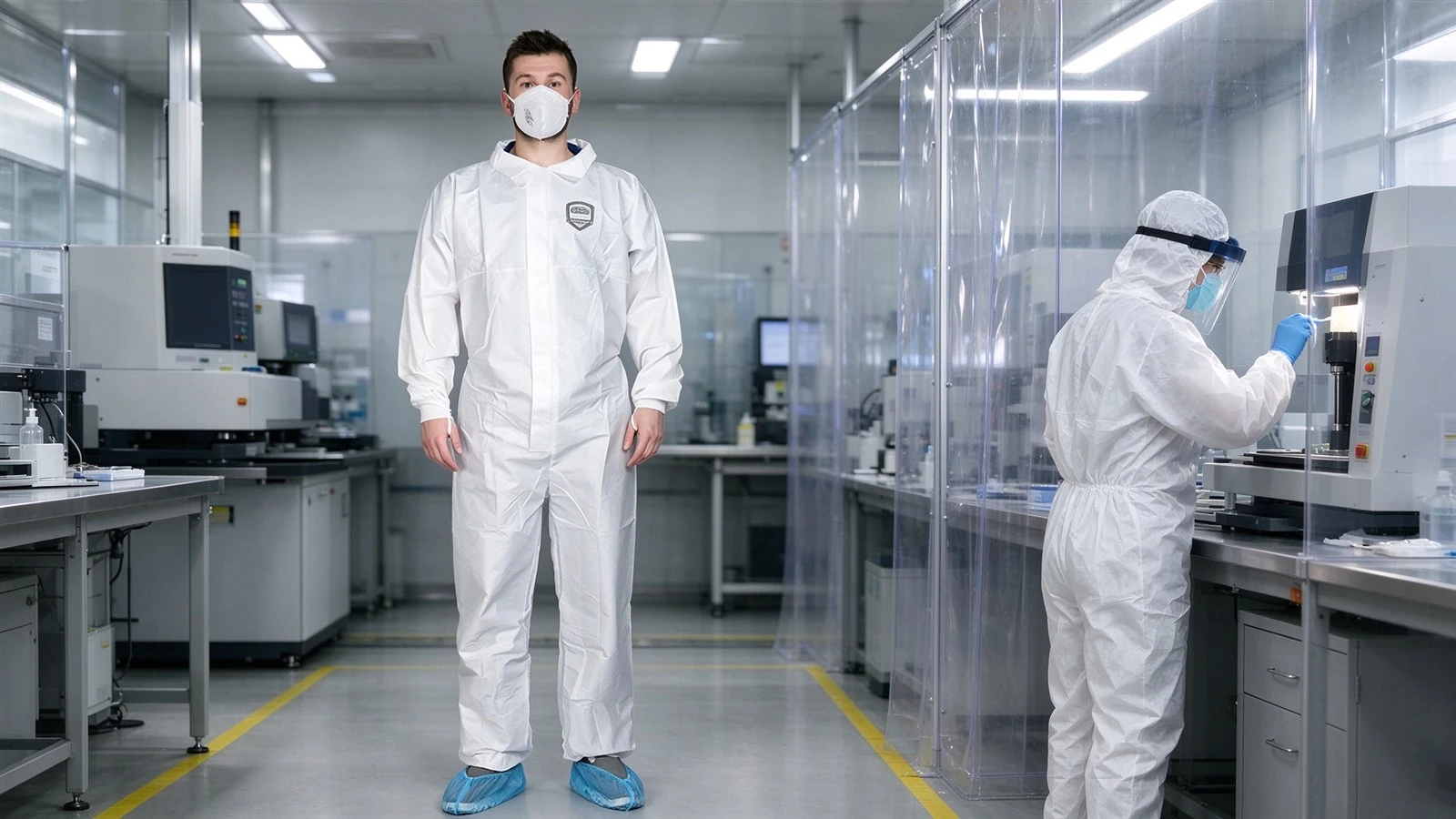
2. Hooded vs Non-Hooded Coveralls: A Practical Comparison
For purchasing teams, the most useful comparison is not which design offers more features, but which one meets the application requirements without adding unnecessary cost or complexity.
| Purchasing factor | Hooded coveralls | Non-hooded coveralls |
|---|---|---|
| Head and neck coverage | Integrated hood provides additional coverage | Requires separate headwear when coverage is needed |
| PPE compatibility | Must fit with respirators, goggles, helmets, or other equipment | Allows separate headwear selection but still requires compatibility checks |
| Donning and doffing | Convenient when the hood is needed for the whole task | Flexible when headwear changes independently |
| Inventory management | One integrated garment specification | Separate headwear may need to be stocked |
| Wearer comfort | Hood fit, face opening, and heat retention need evaluation | Collar comfort and the separate headwear arrangement need evaluation |
| Typical purchasing priority | Integrated head coverage is required | Body coverage is sufficient, or separate headwear is preferred |
The table is a purchasing guide, not a statement that one design offers a higher protection level than the other. Actual protection depends on the fabric, seams, closures, garment construction, and applicable testing.
3. When Should You Choose Hooded Disposable Coveralls?
Hooded coveralls are worth considering when the head and neck need to be covered as part of the protective clothing specification.
Dusty Work Environments
In insulation work, certain powder-handling operations, and dusty maintenance tasks, particles may settle on the head, hair, and neck as well as on the body.
A hooded disposable coverall can provide additional coverage, provided the garment is appropriate for the particle hazard and the required protection level.
For buyers sourcing Type 5 disposable coveralls, confirm that the exact garment meets the applicable requirements under EN ISO 13982-1. The hood itself does not establish Type 5 compliance.
Pharmaceutical and Controlled Environments
In pharmaceutical manufacturing and other contamination-sensitive environments, head coverage may form part of the site's gowning procedure.
A hooded design can simplify the garment configuration when an integrated hood is permitted by the facility's procedures. However, a disposable hooded coverall is not automatically suitable for a cleanroom or a particular cleanroom grade.
Buyers should confirm the required cleanliness, particle-shedding performance, garment materials, and compatibility with the facility's gowning protocol.
Industrial Cleaning and Certain Chemical Applications
Some industrial cleaning and chemical-handling tasks require additional head and neck coverage because of the potential for splashes or contamination.
In these cases, a hooded coverall may be appropriate only if the complete garment provides the required protection.
For limited liquid chemical exposure, Type 6 protective clothing may be relevant. Where more demanding chemical exposure is possible, a different protection type may be necessary. Chemical compatibility, permeation data, and the actual exposure conditions must be assessed rather than relying on the hooded design alone.
Jobs Requiring Consistent Full-Body Coverage
When workers need to wear head and body protection together throughout a task, an integrated hood can make the clothing system easier to manage.
Before selecting this option, check that the hood stays correctly positioned during bending, turning, and reaching, and that it does not interfere with eye protection or respiratory equipment.
4. When Is a Non-Hooded Disposable Coverall the Better Choice?
Non-hooded coveralls can be a practical alternative when the work does not require an integrated hood or when separate headwear offers greater flexibility.
General Maintenance and Warehouse Work
Some maintenance, packaging, and warehouse tasks require protection against dirt, fibers, or other workplace contamination without requiring additional head coverage.
For these applications, a non-hooded disposable coverall may provide the necessary body coverage with a simpler specification.
The choice should still reflect the actual hazards. A task involving hazardous dust or chemical exposure may require a different garment even if the worker's head does not need to be covered.
Food Processing and Hygiene Operations
Food processing facilities often use disposable headwear to control hair contamination. Depending on the process, a bouffant cap or hairnet may be more practical than an integrated coverall hood.
A non-hooded coverall allows the facility to select its preferred headwear separately.
However, the final choice should follow the site's hygiene procedures, contamination-control requirements, and any applicable protective clothing specification.
Workplaces Using Separate Helmets or Head Protection
Some industrial environments require safety helmets or other head protection that must remain compatible with the worker's clothing.
A non-hooded coverall may be suitable where an integrated hood is unnecessary or interferes with the required equipment.
This does not mean a non-hooded design is always preferable when helmets are worn. If head and neck coverage is also required, the complete PPE arrangement must be evaluated.
Operations Where Headwear Changes Frequently
In some facilities, workers change headwear when moving between production areas or tasks.
A non-hooded coverall can make it easier to replace the headwear independently, potentially reducing unnecessary garment changes.
For purchasing teams, this may simplify replenishment and product selection. The benefit depends on the facility's procedures and the cost of maintaining separate headwear supplies.
5. Does a Hooded Coverall Provide Better Protection?
Not necessarily. This is one of the most important distinctions for buyers to understand.
A hooded coverall provides additional physical coverage, but the presence of a hood alone does not determine the garment's protective performance.
Consider two disposable coveralls: one hooded and one non-hooded. If their fabrics, seams, closures, and tested performance differ, the hooded model is not automatically the more protective option for every hazard.
The correct evaluation should consider three elements.
First, the required protection type. Determine whether the application involves airborne solid particles, limited liquid chemical splashes, biological hazards, or another specific exposure.
Second, the complete garment construction. Review fabric performance, seam construction, zipper protection, cuffs, and the way the garment interfaces with other PPE.
Third, the supporting documentation. Confirm the protection claims and test evidence for the exact product model. For example, Type 5 relates to airborne solid particle protection under EN ISO 13982-1, while Type 6 relates to limited liquid chemical protection under EN 13034.
If a hooded and non-hooded version are being considered for the same application, ask the manufacturer whether the required performance and documentation apply to each specific configuration.
The purchasing objective is to obtain the required protection, not simply to choose the garment with more visible features.
6. How Should Buyers Specify Hooded or Non-Hooded Coveralls?
For distributors, wholesalers, and private-label PPE brands, choosing the design is only the first step. The full specification must also be clear enough for quotation, sample approval, and repeat orders.
Before contacting a disposable coverall manufacturer, consider the following points.
1. Intended application
Describe the actual work rather than providing only an industry name. "Pharmaceutical production" or "industrial cleaning" may cover very different exposure conditions.
2. Head protection requirements
Confirm whether an integrated hood is required, optional, or unsuitable. If separate headwear is used, identify the type and how it must fit with the coverall.
3. Fabric and protection level
Specify the required material or performance characteristics where known. SMS and microporous laminate are common options, but neither should be selected without considering the required protection and finished-garment performance.
4. Garment details
Confirm the hood configuration, face opening, zipper and flap, elasticated cuffs, ankles, and waist. These details affect fit and usability.
5. Size range and wearer comfort
Request samples in representative sizes. Check movement, hood fit, sleeve length, and compatibility with the PPE worn underneath or alongside the coverall.
6. Documentation and quality requirements
Identify the applicable standards, test reports, conformity documentation, and any additional requirements for your target market.
7. Commercial requirements
For bulk orders, confirm MOQ, packaging, labeling, lead time, size distribution, and repeat-order consistency. If you are building a private-label range, document the approved product configuration before production.
A clear specification makes it easier to compare quotations on an equivalent basis and reduces the risk of receiving a product that does not match the intended application.
7. What Should PPE Distributors Stock?
For distributors serving multiple industries, the decision may not be limited to one design.
A practical product range can include hooded and non-hooded disposable coveralls when customer demand justifies both.
A hooded option may be appropriate for customers who require integrated head and neck coverage. A non-hooded option may serve customers who prefer separate headwear or need a simpler garment for routine tasks.
Rather than adding products simply to expand the catalog, review customer inquiries, repeat-order patterns, and the applications your sales team encounters most frequently.
A focused assortment with clearly differentiated specifications is often easier to sell than several models that appear similar but have no obvious purchasing rationale.
For private-label brands, the same principle applies: select each design to serve a defined customer need, then establish the fabric, protection requirements, size range, and packaging accordingly.
8. Sourcing Hooded and Non-Hooded Disposable Coveralls From LIONCARE

For importers, wholesalers, and PPE distributors, the right specification needs to work technically and commercially.
LIONCARE supplies disposable PPE for international B2B buyers, with disposable coverall options including SMS and microporous designs. Depending on the selected model and project requirements, buyers can discuss hood configurations, garment details, sizes, labeling, and packaging for OEM or private-label programs.
When evaluating hooded versus non-hooded coveralls, our recommendation is to begin with the intended application and required protection level rather than selecting a model based on appearance alone.
To help us understand your project, share:
- Your intended application and target market.
- Whether you require hooded or non-hooded coveralls.
- Your preferred material and required protection type, if known.
- The estimated order quantity and size range.
- Any labeling, packaging, or private-label requirements.
With these details, the product discussion can focus on suitable models, available specifications, and the documentation needed for your purchasing decision.
Explore Lioncare Disposable Coveralls
Choose the Right Coverall Specification for Your Market
Hooded and non-hooded disposable coveralls serve different needs. The right choice depends on the required head coverage, the workplace hazards, compatibility with other PPE, and the performance of the complete garment.
For buyers sourcing disposable coveralls in bulk, a clear specification is the best starting point for evaluating product suitability, comparing suppliers, and planning repeat orders.
Looking for a disposable coverall manufacturer for your next order?
Contact LIONCARE with your application, preferred design, required protection level, and estimated quantity. Our team can help you discuss suitable disposable coverall options and OEM or private-label requirements.
[Discuss Your Disposable Coverall Requirements with LIONCARE →]
FAQ
Q: Are hooded disposable coveralls always better than non-hooded coveralls?
A: No. Hooded coveralls provide additional head and neck coverage, but the best choice depends on the application and the required PPE system. A non-hooded model may be more practical when separate headwear is preferred or integrated head coverage is unnecessary.
Q: Can non-hooded disposable coveralls meet Type 5 or Type 6 requirements?
A: A non-hooded design can be part of a Type 5 or Type 6 protective clothing specification. Compliance depends on the applicable requirements and the performance of the complete garment configuration, not simply on whether a hood is attached. Always verify the documentation for the exact model.
Q: A non-hooded design can be part of a Type 5 or Type 6 protective clothing specification. Compliance depends on the applicable requirements and the performance of the complete garment configuration, not simply on whether a hood is attached. Always verify the documentation for the exact model.
A: A non-hooded design can be part of a Type 5 or Type 6 protective clothing specification. Compliance depends on the applicable requirements and the performance of the complete garment configuration, not simply on whether a hood is attached. Always verify the documentation for the exact model.
Q: Are hooded coveralls suitable for cleanrooms?
A: They may be suitable for certain controlled environments, but not every hooded disposable coverall meets cleanroom requirements. The facility's cleanliness classification, gowning procedures, particle-shedding requirements, and product documentation must guide selection.
Q: Can I order both hooded and non-hooded coveralls under a private label?
A: OEM and private-label options depend on the available models, order quantities, and project requirements. Contact LIONCARE to discuss your preferred configurations, branding, packaging, and specifications.