PP Vs SMS Vs Microporous Coveralls: A Complete Material Guide For Smart Buyers
Apr 10, 2026
When sourcing disposable protective coveralls, the single most critical decision is choosing the right material. Three nonwoven fabrics dominate the market: PP (Polypropylene), SMS (Spunbond-Meltblown-Spunbond), and Microporous Film Laminate. Each offers distinct advantages in protection, comfort, durability, and cost. As a smart buyer, understanding these differences ensures you select coveralls that balance safety, worker comfort, and budget-without overpaying for unneeded features or compromising on critical protection.
At LIONCARE , we engineer high-performance disposable coveralls using all three premium materials, tailored to diverse industrial, healthcare, and hazardous environments. This guide compares PP, SMS, and Microporous coveralls in depth, with real-world applications and LIONCARE product recommendations to help you make an informed purchase.
Industry research and academic studies consistently highlight the critical role of material selection in disposable protective coveralls, with polypropylene (PP), spunbond-meltblown-spunbond (SMS), and microporous laminate emerging as the three dominant options for industrial, healthcare, and hazardous environment use. According to 360iResearch (2026), the global disposable protective clothing market-fueled by demand for these three materials-is projected to grow at a CAGR of 8.97% through 2032, reaching $9.88 billion, with SMS and PP materials accounting for nearly 80% of the market share (Global Info Research, 2026). Academic testing published in the Journal of Industrial Textiles (2025) further clarifies performance differences, noting that microporous coveralls offer superior particulate filtration (99.9%) and liquid resistance (>2000 mmH₂O) compared to SMS (95–98% filtration, 800–1200 mmH₂O resistance) and PP (85–90% filtration, <100 mmH₂O resistance). These findings align with industry standards outlined in EN 13982-1:2024 and AAMI PB70:2023, which classify SMS materials for Type 5/6 protection and microporous options for Type 3/4/5/6 compliance (CEN, 2024; AAMI, 2023). At LIONCARE, our product lineup-from economy PP (CoverLite C300) to heavy-duty microporous (CoverPremPro C900)-is engineered to align with these research-backed performance benchmarks, ensuring our coveralls meet global certification standards and address the specific hazards outlined in industry studies (LIONCARE, 2026).
1. What is PP (Polypropylene) Coverall?
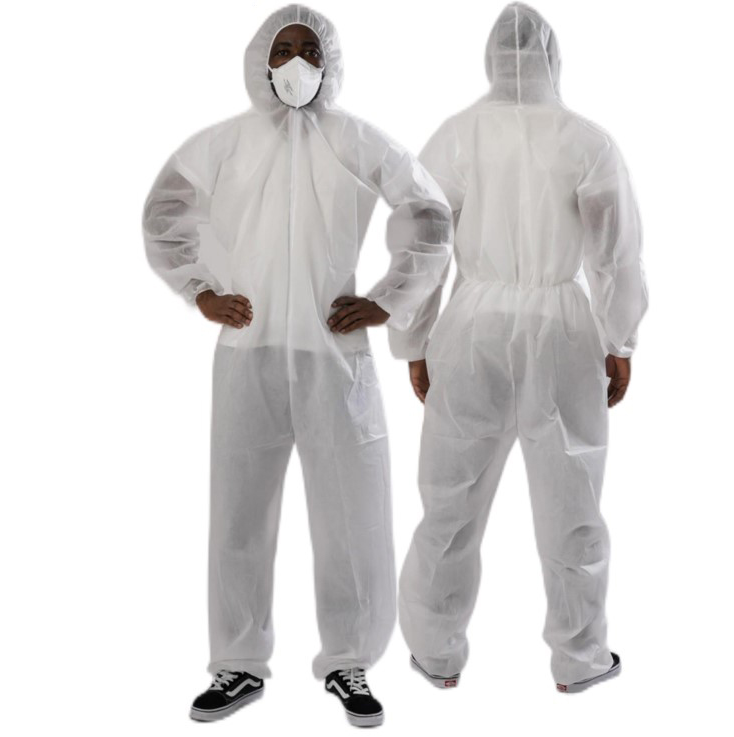
PP (Spunbond Polypropylene) is the most basic, economical material for disposable protective wear. It's made from single-layer spunbond polypropylene fibers-lightweight, soft, and cost-effective for low-risk settings.
Key Properties of PP Coveralls
- Breathability: Excellent (high air/moisture vapor transmission) - ideal for long shifts in warm conditions
- Protection Level: Basic barrier against dry particulates (dust, pollen, non-toxic powders), dirt, and minimal liquid splashes
- Durability: Low tensile strength; prone to tearing/punctures with rough use
- Liquid Resistance: Poor (non-waterproof; absorbs moisture)
- Cost: Ultra-budget-friendly (entry-level pricing)
- Certifications: Typically Type 5/6 (basic particulate/light splash protection)
Best Applications for PP Coveralls
- General cleaning/janitorial work
- Non-hazardous construction/demolition (dry dust)
- Agriculture/livestock farming (dry environments)
- Visitor/visitor safety suits
- Light manufacturing/assembly (dust protection)
- Painting (dry, low-overspray environments)
LIONCARE PP Coverall Recommendation
👉LIONCARE® CoverBasic Polypropylene Basic Disposable Protective Coverall – Our economy-grade coverall with elastic cuffs, ankles, and hood for a secure fit. Perfect for short-duration, low-risk tasks where cost efficiency is priority.
2. What is SMS (Spunbond-Meltblown-Spunbond) Coverall?
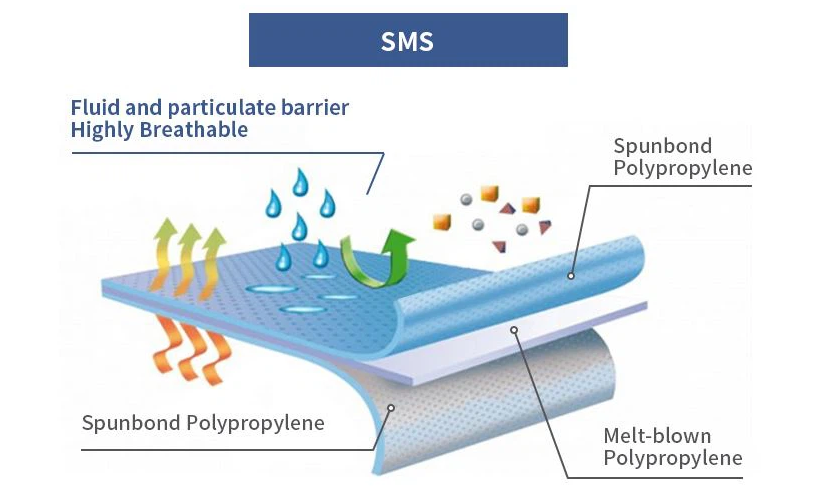
SMS is a triple-layer composite nonwoven: two outer spunbond polypropylene layers (strength/comfort) + a middle meltblown polypropylene layer (filtration/barrier). This design delivers superior protection over PP while retaining breathability.
Key Properties of SMS Coveralls
- Breathability: Very good (balances vapor transmission and barrier protection)
- Protection Level: Enhanced barrier against fine particulates (1 micron+), aerosols, and moderate liquid splashes (water-based)
- Durability: High tensile/tear resistance; stronger than single-layer PP
- Liquid Resistance: Good (hydrophobic treatment repels light liquids; Type 4/5/6 certified)
- Cost: Mid-range (premium over PP, value for performance)
- Anti-static: Standard treatment (safe for electronics/cleanrooms)
Best Applications for SMS Coveralls
- Pharmaceutical manufacturing/cleanrooms
- Food processing/packaging (dry + light moisture)
- Healthcare/isolation wards (non-surgical)
- Chemical handling (diluted water-based solutions)
- Automotive repair/refinishing (light overspray)
- Waste management/recycling
- Asbestos/lead abatement (low-to-moderate exposure)
LIONCARE SMS Coverall Recommendations
👉LIONCARE® CoverLite 300 – Premium SMS coveralls with bound seams, zipper + storm flap, and elasticated fit for Type 5/6 protection.
3. What is Microporous Coverall?
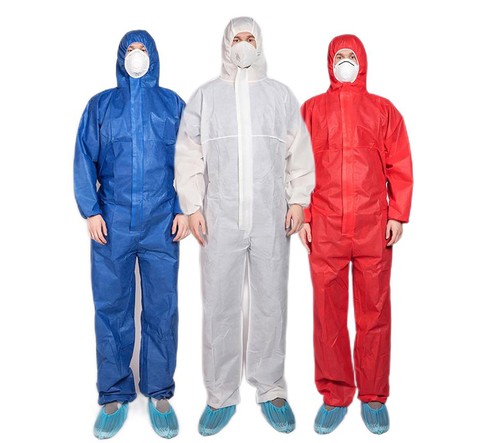
Microporous coveralls use a polyethylene (PE) microporous film laminated to a nonwoven PP base. The film has micro-sized pores that block liquids/chemicals but allow vapor escape-delivering heavy-duty liquid/chemical barrier with moderate breathability.
Key Properties of Microporous Coveralls
- Breathability: Moderate (lower than SMS/PP, but higher than solid PE films)
- Protection Level: Superior barrier against hazardous liquids, chemicals, oils, solvents, and fine particulates (Type 3B/4B/5B/6B certified)
- Durability: Excellent (puncture/abrasion resistant; rugged for harsh environments)
- Liquid Resistance: Outstanding (waterproof, chemical-resistant; prevents permeation)
- Cost: Premium (highest of the three; investment for high-risk tasks)
- Taped Seams: Standard (eliminates liquid penetration at stitching)
Best Applications for Microporous Coveralls
- Chemical manufacturing/mixing (hazardous substances)
- Oil/gas industry (spill cleanup, refining)
- Paint spraying (solvent-based coatings)
- Pest control (pesticide application)
- Laboratory chemical handling
- Hazardous waste remediation
- Industrial cleaning (strong detergents/chemicals)
LIONCARE Microporous Coverall Recommendations
👉LIONCARE® CoverPrem+ C700 – Microporous laminate with taped seams for Type 4B/5B/6B chemical/liquid protection.
👉LIONCARE® CoverPremPro C900 – Heavy-duty microporous with reinforced seams for Type 3B/4B chemical splash and spray protection.
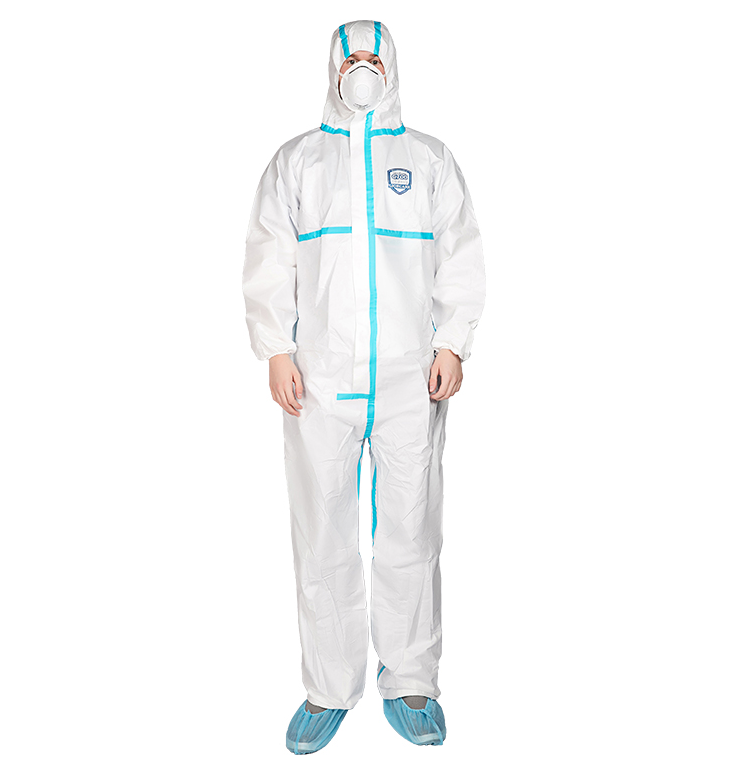
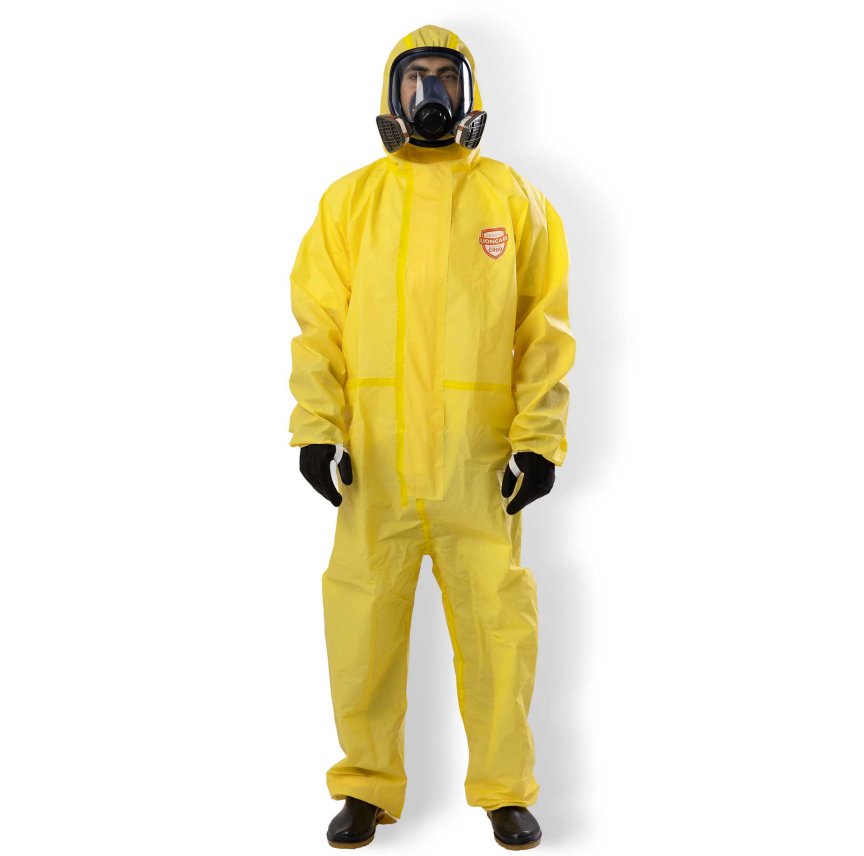
PP vs SMS vs Microporous Coveralls: Head-to-Head Comparison
|
Feature |
PP (Polypropylene) |
SMS (Triple-Layer) |
Microporous (Film Laminate) |
|
Core Material |
Single-layer spunbond PP |
Spunbond-Meltblown-Spunbond PP |
Microporous PE film + PP nonwoven |
|
Breathability |
★★★★★ (Excellent) |
★★★★☆ (Very Good) |
★★★☆☆ (Moderate) |
|
Particulate Barrier |
★★☆☆☆ (Basic) |
★★★★☆ (Excellent) |
★★★★★ (Superior) |
|
Liquid Resistance |
★☆☆☆☆ (Poor) |
★★★☆☆ (Good) |
★★★★★ (Outstanding) |
|
Chemical Protection |
★☆☆☆☆ (None) |
★★☆☆☆ (Light water-based) |
★★★★☆ (Hazardous chemicals) |
|
Durability/Tear |
★★☆☆☆ (Low) |
★★★★☆ (High) |
★★★★★ (Rugged) |
|
Anti-Static |
Optional |
Standard |
Standard |
|
Cost per Unit |
$ |
$$ |
$$$ |
|
Typical Certifications |
Type 5/6 |
Type 4/5/6 |
Type 3B/4B/5B/6B |
|
Best For |
Low-risk dry tasks |
General industrial/cleanrooms |
High-risk chemical/liquid exposure |
How to Choose the Right Material: Buyer's Guide
Choose PP Coveralls If:
You need ultra-low-cost protection for short, low-risk tasks
Work is dry/dust-only (no liquids/chemicals)
Workers need maximum breathability in hot conditions
Budget is the top priority; protection is minimal
Choose SMS Coveralls If:
You need balanced protection + comfort for all-day wear
Work involves fine dust, aerosols, or light liquid splashes
You need anti-static properties (cleanrooms/electronics)
Want better durability than PP at mid-range pricing
Choose Microporous Coveralls If:
Work involves hazardous liquids, chemicals, oils, or solvents
You need Type 3/4 liquid spray/splash protection
Environments are harsh/abrasive (rugged durability needed)
Protection against chemical permeation is critical
Why LIONCARE Coveralls Stand Out
As a leading global PPE manufacturer, LIONCARE designs coveralls that outperform generic alternatives:
- Premium Raw Materials: We use 100% virgin polypropylene and medical-grade microporous film (no recycled fillers) for consistent barrier performance.
- Advanced Construction: Elastic hood/cuffs/ankles, sturdy zippers with storm flaps, taped seams (microporous models), and seamless shoulders for strength.
- Full Certification: All coveralls meet CE, ISO 9001, ISO 13485 standards, with Type 3B/4B/5B/6B certifications for global compliance.
- Size Inclusivity: Sizes from S to 6XL, ensuring proper fit for all workers (critical for safety).
- Industry-Specific Solutions: From economy PP (CoverLite) to heavy-duty microporous (CoverPremPro), we have a material for every risk level.
Final Thoughts: Smart Buying = Right Material + Right Protection
Don't waste money on over-engineered coveralls for low-risk work-or risk worker safety with insufficient protection. Match your coverall material to your specific hazards:
Low-risk dry work: LIONCARE PP CoverLite C300
General industrial/cleanrooms: LIONCARE SMS CoverPlus C600
Chemical/hazardous liquid exposure: LIONCARE Microporous CoverPremPro C900
Explore our full range of disposable coveralls at https://www.lioncare.net/ to find the perfect material and fit for your team. For custom quotes or bulk orders, contact LIONCARE today-your trusted partner in premium PPE protection.