What Makes A Long-Term PPE Manufacturing Partner? A Practical Guide For Global Buyers
Aug 27, 2026
Finding a PPE supplier is relatively easy.
Finding a PPE manufacturing partner you can rely on for years is much harder.
For distributors, importers, industrial safety companies, healthcare suppliers, and private-label PPE brands, the real cost of choosing the wrong manufacturer often goes far beyond the purchase price. Inconsistent fabric, changing specifications, delayed shipments, poor communication, missing documentation, or unstable production can quickly turn a low-cost supplier into an expensive business problem.
A long-term PPE manufacturing partner should therefore offer more than competitive pricing. The right partner combines consistent quality, regulatory awareness, manufacturing capacity, product development, communication, supply stability, and the ability to grow with your business.
So, what should global buyers actually look for?

What Is a Long-Term PPE Manufacturing Partner?
A long-term PPE manufacturing partner is not simply a factory that produces products after receiving an order.
It is a manufacturer that understands your product requirements, market expectations, quality standards, purchasing cycles, and growth plans - and can continue supporting them as your business develops.
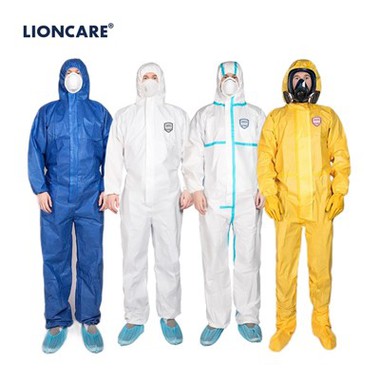
For example, a distributor may initially purchase standard disposable coveralls in bulk. Six months later, the same buyer may need:
- Different fabric weights
- Additional sizes
- Custom packaging
- Private-label products
- New protection levels
- Country-specific documentation
- Larger production volumes
- Faster replenishment
A reliable manufacturing partner should be able to adapt without forcing the buyer to restart the entire sourcing process.
This is particularly important for disposable PPE manufacturers serving international markets, where product compliance and supply consistency can directly affect the buyer's reputation.
1. Consistent Product Quality Comes Before Low Pricing
Price matters in B2B purchasing, but it should not be the first or only evaluation criterion.
A supplier offering a very low initial quotation may still create higher costs if product quality changes from one production batch to another.
For disposable protective clothing, buyers should pay attention to details such as:
- Fabric weight and composition
- Fabric barrier performance
- Seam quality
- Stitching consistency
- Elasticity of cuffs, ankles, and waist
- Zipper performance
- Hood construction
- Garment dimensions
- Packaging accuracy
- Product labeling
A long-term manufacturer should have a repeatable production process rather than relying heavily on manual judgment.
For PPE buyers, batch-to-batch consistency is one of the most valuable signs that a factory is suitable for long-term cooperation.
2. Regulatory Knowledge Should Be Part of the Partnership
PPE is not an ordinary consumer product.
Depending on the intended application and destination market, protective clothing may need to meet specific regulatory and technical requirements.
For European PPE, for example, Regulation (EU) 2016/425 establishes requirements covering design, conformity assessment, technical documentation, CE marking, and manufacturer responsibilities. The regulation also requires appropriate production quality systems for certain conformity-assessment routes.
This means a good PPE manufacturer should understand that compliance is not simply about sending a certificate after production.
The manufacturer should be able to connect:
Product design → material selection → testing → production → quality control → documentation
into one traceable process.
For buyers sourcing CE-certified disposable coveralls, this capability can significantly reduce communication gaps between procurement, quality-control, and regulatory teams.
3. Manufacturing Capacity Must Match Your Growth
A supplier may perform perfectly when your monthly order is small.
The real test comes when your business grows.
Imagine that your annual demand increases from 100,000 coveralls to 1 million units. Can the manufacturer maintain the same specifications, packaging, quality standards, and delivery schedule?
This is why procurement teams should evaluate manufacturing capacity before entering a long-term PPE supply agreement.
Important questions include:
- How many production lines are available?
- What is the factory's production capacity?
- How is peak-season demand handled?
- What happens when several large orders arrive simultaneously?
- Are raw materials sourced consistently?
- How are production schedules managed?
- Can the factory support urgent replenishment?
A long-term partner should have enough manufacturing infrastructure to support both today's requirements and tomorrow's growth.
4. Quality Control Should Be Built Into Production
Quality inspection should not happen only when the finished goods are sitting in cartons.
A stronger approach is to control quality throughout the manufacturing process.
A professional PPE production system may include checks covering:
Incoming materials → Cutting → Sewing → Assembly → Finished products → Packaging → Final inspection
For disposable coveralls, quality control can include fabric specifications, garment dimensions, seam integrity, zipper function, appearance, cleanliness, packaging quantity, and labeling.
For regulated PPE, appropriate testing and documentation are also essential.
This approach matters because preventing a problem during production is usually much easier than discovering thousands of defective products after shipment.

5. A Good Partner Helps You Choose the Right Product
Not every buyer knows exactly which PPE specification they need.
A distributor may understand the market but need technical guidance when comparing SMS, polypropylene, microporous film, or other non-woven materials.
A long-term manufacturer should be able to explain the practical differences rather than simply recommending the most expensive option.
For example:
Polypropylene:
Often selected for economical general-purpose applications where basic barrier protection and breathability are important.
SMS:
Can offer a useful balance between breathability, softness, and barrier performance for selected applications.
Microporous film:
Often considered when greater resistance to liquid splashes and contamination is required.
The right choice depends on the hazard, application, required protection level, local regulations, wearer comfort, and purchasing budget.
A trustworthy supplier should help the buyer make an informed decision instead of simply pushing a standard product.
Discover LIONCARE Disposable Coveralls: https://www.lioncare.net/industrial-protection/disposable-coveralls/
6. OEM and Private Label Capability Creates Long-Term Value
For established PPE distributors and growing safety brands, manufacturing is only one part of the relationship.
The supplier may also need to support:
- Custom logos
- Private-label packaging
- Custom cartons
- Product labels
- Barcodes
- Customized colors
- Size specifications
- Packaging quantities
- Product documentation
- New product development
This is where an experienced private label PPE manufacturer can become much more valuable than a conventional wholesale supplier.
A good OEM relationship allows the buyer to gradually develop a recognizable product line instead of competing purely on price.
For a growing PPE brand, that can create a stronger competitive position and make it more difficult for customers to switch suppliers.
7. Communication Is an Operational Capability
Many international sourcing problems are not caused by manufacturing technology.
They are caused by communication.
A buyer may need an answer about:
- Production status
- Sample modifications
- Packaging approval
- Material availability
- Inspection results
- Shipping schedules
- Certification documents
- Corrective actions
If every question requires multiple follow-ups, the supplier becomes a bottleneck.
A long-term PPE partner should have a clear communication process and knowledgeable staff who understand both the product and international B2B purchasing.
For global buyers, responsive communication is not a soft skill - it is part of supply-chain reliability.
8. The Manufacturer Should Have a Problem-Solving Mindset
No manufacturing relationship is completely free of problems.
The important question is what happens when something goes wrong.
A mature manufacturer does not simply say:
"This is not our problem."
Instead, the conversation should move toward:
What happened? Why did it happen? What needs to be corrected? How can we prevent it from happening again?
This mindset is particularly important when dealing with:
- Product complaints
- Packaging errors
- Specification changes
- Production delays
- Material shortages
- Inspection failures
- Transportation disruptions
Long-term partnerships are built through how both sides handle problems, not just how they handle successful orders.
9. Transparency Builds Trust
A professional PPE manufacturer should be comfortable showing buyers how the business operates.
Depending on the stage of cooperation, buyers may reasonably want to understand:
- Factory location
- Production capabilities
- Quality systems
- Certifications
- Testing capabilities
- Production processes
- Export experience
- Packaging procedures
- Inspection methods
This does not mean every buyer needs to conduct a full factory audit before placing a sample order.
However, the more transparent the supplier is, the easier it becomes to evaluate whether the factory is suitable for a long-term relationship.
10. The Best Partner Can Grow With Your Business
Perhaps the most important question is simple:
Can this manufacturer still support us three years from now?
Your business may start with one product.
Then you may add more sizes.
Then private labeling.
Then new materials.
Then new markets.
Then larger annual volumes.
A strong PPE manufacturing partner should have enough product knowledge, production capacity, OEM capability, and organizational stability to evolve alongside you.
That is the difference between a supplier and a manufacturing partner.
What Should Buyers Ask Before Choosing a PPE Manufacturer?
Before signing a long-term supply agreement, procurement teams can use the following questions:
| Evaluation Area | Questions to Ask |
|---|---|
| Product Quality | How is batch consistency controlled? |
| Compliance | Which certifications and test reports are available? |
| Production | What is the available production capacity? |
| Materials | Can the factory recommend materials for different applications? |
| OEM | Can the supplier support private-label packaging and specifications? |
| QC | What inspections are performed before shipment? |
| Communication | Who manages technical and production communication? |
| Supply | How are peak-season orders handled? |
| Problem Solving | How are quality complaints investigated and corrected? |
| Growth | Can the supplier support larger volumes and new products? |
A supplier that gives clear, specific answers to these questions is usually much easier to evaluate than one that focuses only on price.
Why Lioncare Can Be a Long-Term PPE Manufacturing Partner
For international buyers looking for a disposable PPE manufacturer in China, Lioncare combines manufacturing capability with OEM support and international market experience.
Hubei Lioncare Protective Products Co., Ltd. specializes in disposable protective products, including disposable coveralls, isolation gowns, lab coats, masks, patient gowns, shoe covers, bouffant caps, and other non-woven PPE.
Lioncare operates a large manufacturing base and provides OEM and private-label support for international customers. Its product portfolio includes different disposable coverall materials and protection options, allowing buyers to develop product solutions around different market requirements.
For buyers, the value is not simply access to a factory.
It is the ability to build a repeatable supply chain around a manufacturer that can support:
Product selection → Sampling → Customization → Production → Quality control → Documentation → Packaging → Shipment
That workflow is particularly useful for distributors, importers, wholesalers, and PPE brands looking to establish a stable long-term supply relationship.
Lioncare's existing product resources also cover important selection topics such as Type 5 and Type 6 disposable coveralls and European industrial-use requirements, helping buyers better understand how product specifications relate to different applications.

Final Thoughts: Don't Choose a PPE Supplier for One Order
The cheapest quotation may win the first order.
But consistency, communication, compliance, capacity, and problem-solving ability are what determine whether a supplier deserves the next ten orders.
For companies building a PPE distribution business or private-label brand, changing manufacturers every few months can create unnecessary costs and operational risks.
A better strategy is to find a manufacturer that understands your business, maintains consistent product standards, supports customization, communicates clearly, and has enough capacity to grow with you.
That is what turns a factory relationship into a long-term manufacturing partnership.
Looking for a Reliable PPE Manufacturing Partner?
If you are sourcing disposable coveralls, non-woven PPE, OEM protective clothing, or private-label PPE products, Lioncare can help you evaluate suitable materials, product specifications, packaging options, and production solutions.
FAQ: Long-Term PPE Manufacturing Partnerships
Q: What makes a good long-term PPE manufacturing partner?
A: A good long-term PPE manufacturer should provide consistent quality, reliable production capacity, regulatory support, responsive communication, OEM capabilities, transparent quality control, and effective problem-solving.
Q: How do I choose a reliable PPE manufacturer in China?
A: Look beyond price. Evaluate factory capacity, certifications, quality-control procedures, export experience, product consistency, OEM capabilities, communication, and the manufacturer's ability to support your future order volume.
Q: Why is product consistency important when sourcing PPE?
A: Inconsistent materials, dimensions, seams, packaging, or performance can lead to customer complaints, rejected shipments, and reputational damage. Consistent production is therefore essential for long-term B2B PPE supply.
Q: Can a PPE manufacturer support private-label products?
A: Yes. Experienced OEM PPE manufacturers can support private-label solutions including custom logos, packaging, labels, cartons, specifications, colors, and product configurations.
Q: What certifications should I check when sourcing PPE?
A: The appropriate requirements depend on the product and target market. For European PPE, buyers should pay attention to applicable CE requirements and relevant harmonized or designated standards. EU Regulation 2016/425 establishes manufacturer obligations concerning conformity assessment, technical documentation, CE marking, and product compliance.
Q: Should I choose a PPE supplier based mainly on price?
A: No. Price should be evaluated together with quality, compliance, production capacity, lead time, documentation, customization, and after-sales support. A slightly higher unit price can be more economical if it delivers better consistency and fewer supply problems.
Q: What questions should I ask a PPE manufacturer before placing a large order?
A: Ask about production capacity, material specifications, certifications, quality-control procedures, sample approval, lead times, packaging, inspection, OEM capabilities, and how quality issues are handled.
Q: Why work directly with a PPE manufacturer?
A: Direct cooperation can provide better communication, greater customization flexibility, stronger production visibility, and a clearer path for scaling orders and developing private-label products.
Q: Can Lioncare support long-term OEM PPE projects?
A: Yes. Lioncare provides disposable PPE manufacturing and OEM/private-label solutions for international buyers, including disposable coveralls and other non-woven protective products.
Q: How can I start working with a PPE manufacturer?
A: Start by providing your target product, application, market, required protection level, material preference, quantity, packaging requirements, and any existing specifications. The manufacturer can then recommend a suitable product and develop samples before mass production.