Top 10 Disposable Coverall Suppliers For Pharmaceutical Manufacturing
Sep 02, 2026

Pharmaceutical manufacturing leaves very little room for contamination.
From raw-material handling and formulation to filling, packaging, laboratory testing, and cleanroom operations, protective clothing is part of a much larger contamination-control system. A disposable coverall may look like a simple garment, but its fabric, seams, packaging, cleanliness, fit, and donning method can all affect how well it performs in a controlled environment.
That is why pharmaceutical manufacturers should not choose disposable coveralls based only on price or appearance.
The right supplier should understand the difference between a general-purpose protective coverall and a garment intended for a controlled or critical environment.
This guide reviews 10 disposable coverall suppliers relevant to pharmaceutical manufacturing and cleanroom applications, including established global PPE brands, cleanroom specialists, distributors, and manufacturers.
Important: This is a buyer-oriented shortlist, not an official ranking by revenue, market share, or product quality. Pharmaceutical manufacturers should verify the current technical documentation, cleanroom classification, sterility status, packaging configuration, and suitability of each specific garment before qualification.
What Makes a Disposable Coverall Suitable for Pharmaceutical Manufacturing?
A pharmaceutical facility does not simply need a garment that protects the worker.
It also needs to control what the worker introduces into the production environment.
Operators are one of the major potential sources of particles in cleanrooms. DuPont notes that cleanroom garments are primarily used to contain particles shed by workers, while also providing protection from substances being handled. Its pharmaceutical manufacturing guidance emphasizes full-body coverage and secure closures around the wrists and ankles to help reduce contamination.
This changes the way pharmaceutical buyers should evaluate disposable coveralls.
Important considerations include:
- Particle shedding
- Lint generation
- Cleanroom compatibility
- Fabric construction
- Seam design
- Garment coverage
- Fit and mobility
- Static control
- Sterility
- Packaging
- Traceability
- Donning procedure
- Applicable standards and test data
In other words:
A pharmaceutical coverall is not simply an industrial coverall in white.
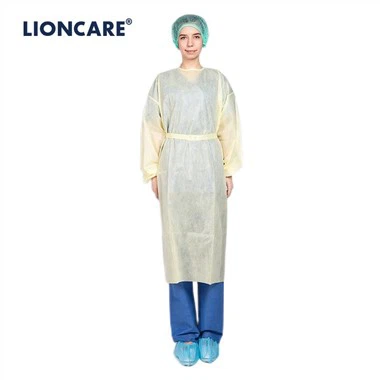
Lioncare pharmaceutical coverall
Top 10 Disposable Coverall Suppliers for Pharmaceutical Manufacturing
1. DuPont
DuPont is one of the most established names in protective apparel and cleanroom garments.
Its Tyvek® and Tyvek® IsoClean® portfolios are widely associated with controlled environments. DuPont specifically identifies pharmaceutical manufacturing, biotechnology, medical device manufacturing, and laboratory environments among the applications for its cleanroom apparel.
The Tyvek® IsoClean® range is designed around contamination control, with garments available in sterile and non-sterile configurations. DuPont also highlights packaging and traceability features for its controlled-environment portfolio.
For pharmaceutical manufacturing, this makes DuPont particularly relevant when the priority is contamination control rather than simply general-purpose worker protection.
Best suited for:
- Pharmaceutical cleanrooms
- Biotechnology
- Medical device manufacturing
- Controlled environments
- High-contamination-control applications
Key strengths:
- Long-standing cleanroom apparel experience
- Tyvek® material technology
- Sterile and non-sterile options
- Pharmaceutical-specific product portfolio
- Strong technical documentation
2. Ansell
Ansell has a dedicated life-sciences portfolio covering cleanroom protection for pharmaceutical and biotechnology manufacturing.
Its BioClean-D™ range includes disposable cleanroom coveralls in sterile and non-sterile configurations.
For example, the BioClean-D™ sterile hooded coverall uses low-linting CleanTough™ fabric and includes a protective flap and zipper arrangement designed to reduce contamination risks. Ansell lists pharmaceutical manufacturing, biotechnology, medical-device manufacturing, and laboratory applications for the product.
Ansell also positions its life-sciences apparel around products manufactured, processed, and packed for controlled environments.
Best suited for:
- Pharmaceutical production
- Biotechnology
- Sterile manufacturing
- Cleanrooms
- Medical-device facilities
Key strengths:
- Dedicated life-sciences portfolio
- Sterile and non-sterile coveralls
- Low-linting fabrics
- Cleanroom-focused garment construction
- Technical documentation
3. Lakeland Fire + Safety
Lakeland Fire + Safety offers several disposable protective clothing ranges that can be relevant to pharmaceutical and controlled environments.
Its CleanMax® range is specifically designed for cleanroom apparel. Lakeland states that CleanMax garments are intended for ISO Class 4–8 cleanrooms and controlled environments, with pharmaceutical manufacturing listed among the applications.
The range includes different configurations designed to balance comfort, protection, and contamination control.
Lakeland also offers MicroMax® microporous garments for applications requiring protection against dust and light liquid aerosols.
Best suited for:
- Pharmaceutical manufacturing
- Laboratories
- Medical-device production
- Biotech
- Controlled environments
Key strengths:
- Dedicated CleanMax cleanroom range
- Multiple material options
- ISO cleanroom applications
- Broad protective clothing portfolio
- Strong industrial PPE experience
4. Kimberly-Clark Professional - Kimtech
Kimberly-Clark Professional offers the Kimtech™ A5 cleanroom apparel range for controlled environments.
The A5 portfolio includes both sterile and non-sterile disposable coveralls.
Kimtech A5 sterile coveralls are made from breathable SMS fabric and are designed for ISO Class 5 or higher cleanrooms. The garments use features such as a mandarin collar, thumb loops, tunneled elastics, and specialized packaging for cleanroom use.
The non-sterile A5 range is also designed for ISO Class 5 or higher cleanrooms and is clean-processed and packaged under controlled conditions.
This makes Kimtech particularly interesting for pharmaceutical manufacturers that need a disposable garment program rather than a general industrial coverall.
Best suited for:
- Pharmaceutical manufacturing
- Biotechnology
- Medical devices
- ISO Class 5+ cleanrooms
- Sterile production
Key strengths:
- A5 cleanroom apparel
- Sterile and non-sterile options
- Cleanroom-specific packaging
- Low-contamination design
- Multiple sizes and configurations
5. 3M
3M offers a broad range of disposable protective coveralls for industrial and specialized applications.
Its 3M™ 4540 disposable protective coverall, for example, includes an anti-static treatment, sealable storm flap, reinforced gusset, and two-way zipper. 3M lists pharmaceutical powder handling among the recommended applications.
This makes 3M more relevant for pharmaceutical operations where worker protection from powders, particles, or certain process materials is an important consideration.
However, pharmaceutical buyers should distinguish between general protective apparel and cleanroom-specific garments. A coverall suitable for pharmaceutical powder handling is not automatically appropriate for every aseptic or sterile manufacturing area.
Best suited for:
- Pharmaceutical powder handling
- Industrial pharmaceutical operations
- Maintenance
- Chemical handling
- General protective applications
Key strengths:
- Strong PPE engineering background
- Anti-static options
- Durable garment construction
- Broad industrial application experience
6. Valutek
Valutek specializes in cleanroom and critical-environment products.
Its NanoTek A3 disposable microporous coverall is designed for demanding cleanroom applications and is manufactured using a non-linting microporous film bonded to nonwoven fabric.
Valutek states that the coverall can be used in critical environments up to ISO Class 3–4, depending on the specific application and garment configuration. The garments are packaged for critical-environment use and include lot traceability information.
This makes Valutek particularly relevant when contamination control and cleanroom compatibility are more important than simple low-cost disposable protection.
Best suited for:
- Pharmaceutical cleanrooms
- Critical environments
- Medical-device manufacturing
- High-cleanliness applications
- Controlled environments
Key strengths:
- Cleanroom specialization
- Non-linting materials
- Critical-environment products
- Lot traceability
- Multiple cleanroom apparel options
7. AlphaProTech
AlphaProTech offers disposable protective apparel for controlled environments.
Its Critical Cover™ range includes ComforTech™ and AlphaGuard™ coveralls. Products listed through laboratory and cleanroom distribution channels include microporous and SMS constructions for controlled environments, with applications covering particle, biological, and fluid barriers.
The range is relevant for pharmaceutical and laboratory facilities that require disposable garments for controlled environments but may not require a sterile garment for every operation.
Best suited for:
- Pharmaceutical laboratories
- Controlled environments
- Research facilities
- Medical-device manufacturing
- General cleanroom applications
Key strengths:
- Critical-environment focus
- SMS and microporous options
- Multiple garment configurations
- Balance of comfort and protection
8. Fisher Scientific
Fisher Scientific is not primarily a garment manufacturer. It is included because it is an important distribution channel for pharmaceutical, laboratory, and cleanroom buyers.
Its protective-coverall catalog includes products from brands such as Ansell and Fisherbrand. The catalog includes disposable cleanroom coveralls for ISO Class 5–8 environments and applications such as compounding, mixing, filling, cleaning, pharmaceutical manufacturing, and biomedical research.
Its controlled-environment catalog also includes sterile Ansell BioClean-D coveralls for applications including pharmaceutical and biotechnology manufacturing.
For pharmaceutical procurement teams, this type of distributor can be useful because several brands and specifications can be compared through one purchasing channel.
Best suited for:
- Pharmaceutical laboratories
- Research organizations
- Universities
- Biotech companies
- Pharmaceutical manufacturing procurement
Key strengths:
- Broad laboratory supply portfolio
- Multiple PPE brands
- Cleanroom product selection
- Established distribution network
- Convenient product comparison
9. Unimax Medical
Unimax Medical is a China-based manufacturer of disposable PPE and medical consumables.
The company operates facilities in Wuhan, Xiantao, and Xiaogan, with a reported total factory area of more than 80,000 m² and more than 20,000 m² of Class 100,000 cleanrooms. It also reports in-house material production, laboratories, and testing capabilities for Type 4/5/6 and EN 1149-5 requirements.
Its disposable coverall portfolio includes SMMS, microporous, and Type 3B/4B/5B/6B configurations. The company specifically lists pharmaceutical, laboratory, medical, and cleanroom applications for its disposable coveralls.
For international buyers looking for a China-based OEM manufacturer rather than a branded Western PPE supplier, Unimax is worth comparing.
Best suited for:
- Pharmaceutical distributors
- PPE importers
- OEM buyers
- Private-label brands
- Industrial and medical PPE programs
Key strengths:
- Large manufacturing footprint
- OEM/ODM capability
- Multiple disposable PPE materials
- In-house material production
- International export experience
10. Lioncare
Lioncare is a China-based manufacturer specializing in disposable nonwoven PPE for international B2B buyers.
Its product portfolio includes disposable coveralls, SMS coveralls, microporous coveralls, lab coats, gowns, masks, shoe covers, caps, and other disposable protective products.
For pharmaceutical manufacturing buyers, the important advantage is not simply having a standard disposable coverall catalog.
It is the ability to develop a product around the buyer's application.
Depending on the project, OEM customization can include:
- Fabric selection
- GSM
- Coverall construction
- Size range
- Color
- Hood configuration
- Cuff design
- Zipper construction
- Antistatic treatment
- Labeling
- Individual packaging
- Carton packaging
- Private-label requirements
Lioncare's manufacturing profile includes a reported 58,000 m² production base, multiple production lines, cleanroom facilities, and an in-house laboratory.
For pharmaceutical distributors and PPE brands that want to source disposable coveralls directly from China, this makes Lioncare an option worth evaluating alongside established international brands.
Best suited for:
- Pharmaceutical PPE distributors
- Importers
- Private-label brands
- OEM projects
- Bulk disposable coverall procurement
Key strengths:
Disposable PPE specialization
OEM/ODM support
Multiple nonwoven materials
Private-label capability
International B2B focus
Comparison: Disposable Coverall Suppliers for Pharmaceutical Manufacturing
| Supplier | Cleanroom Focus | Sterile Options | Pharmaceutical Application | OEM / Customization | Main Strength |
|---|---|---|---|---|---|
| DuPont | ✓ | ✓ | ✓ | Limited | Cleanroom & contamination control |
| Ansell | ✓ | ✓ | ✓ | Limited | Life-science PPE |
| Lakeland | ✓ | - | ✓ | ✓ | CleanMax & protective apparel |
| Kimberly-Clark / Kimtech | ✓ | ✓ | ✓ | Limited | Cleanroom apparel |
| 3M | Some products | - | ✓ | Limited | Industrial protection |
| Valutek | ✓ | - | ✓ | ✓ | Critical environments |
| AlphaProTech | ✓ | - | ✓ | ✓ | Controlled environments |
| Fisher Scientific | ✓ | ✓ | ✓ | - | Distribution & product selection |
| Unimax Medical | ✓ | ✓* | ✓ | ✓ | China OEM manufacturing |
| Lioncare | ✓ | Project-dependent | ✓ | ✓ | OEM & private label |
Sterility and cleanroom suitability must always be confirmed for the exact product configuration and manufacturing process.
The table is intended for supplier comparison rather than certification verification. Buyers should request current product-specific technical documentation before qualification.
Pharmaceutical Manufacturing Has Different PPE Requirements at Different Stages

One reason supplier comparisons can become confusing is that pharmaceutical manufacturing is not one single environment.
The garment required for raw-material handling may be completely different from the garment used during aseptic filling.
Consider a simplified production flow:
Raw Materials → Weighing → Formulation → Processing → Filling → Packaging → Cleaning
Each stage can involve different contamination and occupational risks.
Raw-Material Handling
During powder handling and weighing, the primary concern may be preventing particles from reaching the worker's skin or clothing while also reducing the chance of material being carried outside the controlled area.
In these environments, buyers may prioritize:
Full-body coverage
Particle protection
Anti-static properties
Secure hood
Reliable zipper closure
Appropriate seam construction
3M, for example, identifies pharmaceutical powder handling as an application for its 4540 disposable coverall.
Formulation and Processing
During formulation and processing, the balance between worker protection and contamination control becomes more important.
Depending on the process, buyers may look for:
Low-linting fabric
Particle containment
Liquid resistance
Comfortable fit
Controlled-environment packaging
Appropriate cleanroom classification
The correct specification should come from the facility's contamination-control strategy rather than simply from the garment's marketing category.
Aseptic Filling
Aseptic operations require a different level of attention.
Here, the garment itself becomes part of the cleanroom garment system.
Sterile garments, controlled packaging, aseptic donning procedures, and validated cleaning or sterilization processes may all become relevant.
Kimtech's sterile A5 coveralls, for example, are designed for ISO Class 5 or higher cleanrooms and are individually packaged for controlled use.
Cleaning and Maintenance
Cleaning personnel may encounter a combination of:
Chemical residues
Cleaning agents
Dust
Biological contaminants
Wet surfaces
A pharmaceutical facility may therefore use a different garment configuration for maintenance and cleaning than for aseptic production.
This is why purchasing departments should avoid specifying one disposable coverall for every department simply to simplify procurement.
Disposable Coverall vs. Sterile Cleanroom Coverall
These terms are often mixed together, but they should not be treated as synonyms.
A standard disposable coverall may provide protection against particles, dust, or liquid splash.
A sterile cleanroom coverall involves additional controls around:
- Sterilization
- Packaging
- Cleanliness
- Lot traceability
- Garment preparation
- Donning
- Storage
- Handling
For example, DuPont's Tyvek® IsoClean® portfolio includes sterile products and emphasizes validated packaging and traceability.
Kimtech A5 sterile garments are also packaged specifically for cleanroom use and designed for sterile environments.
Therefore, if a pharmaceutical buyer needs a sterile garment, simply purchasing a "cleanroom-compatible" coverall is not enough.
What Should Pharmaceutical Buyers Check Before Choosing a Supplier?
1. Cleanroom Classification
Start by defining the environment.
For example:
- ISO 4
- ISO 5
- ISO 6
- ISO 7
- ISO 8
The garment should be evaluated in the context of the facility's overall contamination-control program.
2. Sterile or Non-Sterile?
This should be decided before supplier comparison.
A non-sterile coverall may be appropriate for some controlled environments.
A sterile coverall may be necessary for specific aseptic operations.
Do not assume that a garment is sterile because it is marketed as a cleanroom garment.
3. Lint and Particle Shedding
In pharmaceutical production, particle generation can be more important than how "thick" or "strong" the garment feels.
Ask suppliers for relevant cleanroom or particle-shedding information where applicable.
Ansell, for example, describes its BioClean-D CleanTough™ material as low-linting, while Kimtech highlights low-contamination cleanroom apparel characteristics.
4. Packaging
Packaging deserves more attention than many purchasing teams give it.
Ask:
- Is the garment bulk packed?
- Individually packaged?
- Double bagged?
- Triple bagged?
- Vacuum packed?
- Sterilized after packaging?
- Lot traceable?
For critical cleanroom applications, packaging is part of the product-not merely an afterthought.
5. Garment Design
Look closely at:
- Collar
- Hood
- Cuffs
- Ankles
- Waist
- Zipper
- Zipper flap
- Seam construction
- Thumb loops
- Back elastic
Small design details can make donning easier and reduce unnecessary exposure during movement.
How Much Should Pharmaceutical Disposable Coveralls Cost?
There is no meaningful single market price.
The cost can vary substantially depending on:
Material + Cleanroom Classification + Sterility + Packaging + Testing + Garment Design + Order Quantity
A basic PP coverall for general manufacturing can be dramatically cheaper than a sterile cleanroom garment individually packaged for critical pharmaceutical production.
Buyers should therefore avoid comparing suppliers solely on:
Price per piece
A better calculation is:
Total Cost of Qualified Use
That may include:
- Garment
- Sterilization
- Packaging
- Testing
- Freight
- Storage
- Qualification
- Incoming inspection
- Rejection rate
- Disposal
For pharmaceutical production, a cheaper garment that creates contamination-control problems can quickly become much more expensive than a higher-priced qualified garment.
Should Pharmaceutical Manufacturers Buy From a Local Supplier or Directly From a Factory?
Both models can work.
Local Distributor
Advantages
- Faster delivery
- Smaller order quantities
- Local inventory
- Easier replenishment
- Local technical support
Best for:
- Smaller facilities
- Urgent orders
- Trial quantities
- Established branded products
Direct OEM Manufacturer
Advantages
- Lower factory-direct pricing at scale
- Product customization
- Private-label packaging
- Custom garment specifications
- Large-volume production
- Long-term supply agreements
Best for:
- PPE distributors
- Pharmaceutical suppliers
- Large-volume buyers
- Private-label brands
- Procurement programs
For a pharmaceutical distributor purchasing thousands or hundreds of thousands of coveralls annually, it can be worthwhile to compare the economics of local distribution with direct OEM sourcing.
What Should a Pharmaceutical PPE RFQ Include?
A vague RFQ creates vague quotations.
Instead of sending:
"Please quote disposable coveralls."
Provide as much technical information as possible.
Product Requirements
- Coverall type
- Material
- GSM
- Color
- Size range
- Hood
- Cuffs
- Ankle design
- Zipper
- Seam construction
Cleanroom Requirements
- ISO classification
- Controlled or critical environment
- Sterile / non-sterile
- Packaging requirements
- Cleanliness requirements
Commercial Requirements
- Initial quantity
- Annual volume
- Target delivery date
- Destination
- Packaging
- Private-label requirements
Documentation
- Technical data sheet
- Test reports
- Certificate of conformity where applicable
- Sterility documentation where applicable
- Lot traceability
- Quality-management documentation
The more precise the RFQ, the easier it becomes to compare suppliers on an equal basis.
What Makes a Good Pharmaceutical Coverall Supplier?
After comparing the suppliers above, one pattern becomes clear.
The strongest suppliers do not simply sell a coverall.
They provide a garment system.
That system may include:
Material → Garment Construction → Clean Processing → Packaging → Sterilization → Traceability → Documentation
This is particularly important for pharmaceutical manufacturing because the garment is connected to the facility's contamination-control strategy.
A supplier that understands this relationship is generally more valuable than one that simply offers the lowest unit price.
Why Consider Lioncare for Pharmaceutical Disposable Coveralls?

For pharmaceutical distributors, importers, and private-label PPE companies that need a more flexible manufacturing partner, Lioncare offers a different proposition from large multinational PPE brands.
Rather than relying only on an existing branded garment portfolio, Lioncare can work with buyers on customized disposable PPE specifications.
Potential OEM projects can include:
- SMS coveralls
- SMMS coveralls
- Microporous coveralls
- Disposable lab coats
- Protective gowns
- Hooded coveralls
- Antistatic garments
- Private-label PPE
- Custom packaging
This can be particularly useful when a buyer needs a product that sits between a standard catalog garment and a fully specialized cleanroom garment.
For example, a pharmaceutical PPE distributor may want to develop its own disposable coverall with a specific GSM, color, size range, packaging format, and brand identity.
That is where an OEM manufacturer can provide more flexibility than a conventional distributor.
Before qualification, however, pharmaceutical buyers should always confirm the exact product specification, manufacturing conditions, test reports, packaging process, and intended application with the supplier.
Final Takeaway
Choosing disposable coveralls for pharmaceutical manufacturing is fundamentally different from choosing general industrial PPE.
The key question is not:
"Which supplier sells the cheapest coverall?"
It is:
"Which garment and supplier combination can consistently meet our contamination-control, worker-protection, cleanroom, packaging, and documentation requirements?"
Global suppliers such as DuPont, Ansell, Lakeland, Kimberly-Clark Professional, and 3M offer established protective-apparel portfolios. Cleanroom-focused suppliers such as Valutek and AlphaProTech provide additional options for controlled environments, while distributors such as Fisher Scientific can simplify procurement across multiple brands. China-based manufacturers such as Unimax Medical and Lioncare can provide another route for buyers seeking OEM, private-label, or larger-volume sourcing.
For pharmaceutical manufacturers, the safest purchasing process is to:
Define the environment → Specify the garment → Verify documentation → Test samples → Qualify the supplier → Monitor repeat production
The garment should fit the process-not the other way around.
Looking for a disposable coverall OEM supplier for pharmaceutical manufacturing?
Share your cleanroom classification, application, material preference, estimated annual volume, sterility requirements, and packaging requirements with Lioncare to discuss a suitable disposable PPE solution.
FAQ
Q: What type of disposable coverall is best for pharmaceutical manufacturing?
A: There is no single best coverall for every pharmaceutical application. The appropriate garment depends on the cleanroom classification, contamination-control strategy, worker hazards, sterility requirements, and manufacturing process.
Q: Are disposable coveralls used in pharmaceutical cleanrooms?
A: Yes. Disposable coveralls are commonly used in pharmaceutical and other controlled environments to help control particles generated by operators and, depending on the garment, provide protection against substances being handled.
Q: What is the difference between a pharmaceutical coverall and a normal disposable coverall?
A: Pharmaceutical applications may require additional controls around lint, particle shedding, cleanliness, packaging, traceability, cleanroom compatibility, and sterility. A standard industrial disposable coverall should not automatically be considered suitable for pharmaceutical cleanroom use.
Q: Are sterile disposable coveralls necessary in pharmaceutical manufacturing?
A: Not necessarily for every operation. Sterile garments are generally associated with processes where sterility and contamination control requirements justify their use. The decision should be based on the facility's validated procedures and applicable quality requirements.
Q: What ISO cleanroom class are disposable coveralls used in?
A: Disposable cleanroom garments can be designed for different environments, including ISO Class 4 through ISO Class 8. The appropriate garment should be selected according to the specific cleanroom and contamination-control requirements.
Q: What materials are used for pharmaceutical disposable coveralls?
A: Common materials include SMS, SMMS, polypropylene, microporous film laminate, and specialized cleanroom fabrics. Material selection should consider particle shedding, comfort, barrier performance, electrostatic properties, and cleanroom requirements.
Q: Should pharmaceutical manufacturers choose sterile or non-sterile coveralls?
A: The answer depends on the production process. Non-sterile cleanroom garments may be suitable for some controlled environments, while sterile garments can be required for certain aseptic operations. Buyers should verify the requirements with their quality and contamination-control teams.
Q: What should I ask a disposable coverall supplier before purchasing?
A: Ask about material, GSM, cleanroom compatibility, particle shedding, seam construction, packaging, sterility, test reports, lot traceability, quality controls, MOQ, lead time, and product-specific documentation.
Q: Can Chinese manufacturers produce pharmaceutical disposable coveralls?
A: Yes. Some Chinese manufacturers offer disposable PPE designed for pharmaceutical, laboratory, and cleanroom applications, along with OEM and private-label services. However, buyers should qualify the exact product and production process rather than relying only on the manufacturer's general certifications.
Q: Can Lioncare provide private-label pharmaceutical disposable coveralls?
A: Lioncare can discuss OEM and private-label disposable PPE projects, including material, garment construction, sizing, labeling, packaging, and other specifications. Suitability for a particular pharmaceutical or cleanroom application should be confirmed based on the exact product requirements and documentation.