OEM Disposable PPE Manufacturing Process: From Design To Shipment
Aug 12, 2026
For a PPE distributor or private label brand, choosing an OEM PPE manufacturer is about much more than finding a factory with a competitive price.
A successful OEM project depends on what happens before production starts: understanding the application, selecting the right material, confirming product specifications, developing samples, checking compliance requirements, and making sure the factory can reproduce the approved product consistently.
That is why custom PPE production should be treated as a process rather than a single purchase order.
Whether you are developing disposable coveralls for industrial customers, launching a private label PPE range, or looking for a long-term disposable PPE manufacturing partner, understanding the complete workflow can help you avoid expensive mistakes.
Here is how a typical OEM disposable PPE project moves from the first specification to final shipment.
What Is OEM Disposable PPE Manufacturing?
OEM disposable PPE manufacturing allows a brand, distributor, importer, or industrial supplier to develop protective products according to its own requirements instead of simply purchasing an existing standard product.
Depending on the project, customization may include:
- Product construction
- Fabric and material
- GSM
- Color
- Size range
- Hood and cuff design
- Zipper configuration
- Seam treatment
- Logo and labeling
- Individual packaging
- Carton packaging
- Product specifications
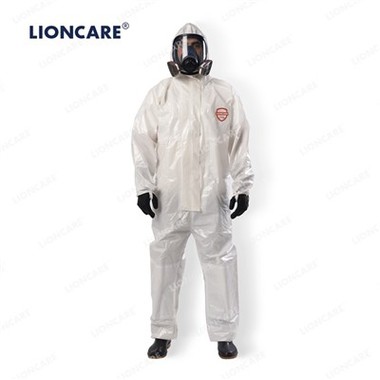
For disposable protective coveralls, for example, buyers may choose between PP, SMS, microporous film-laminated materials, or other nonwoven constructions depending on the intended application and protection requirements.
The important point is that customization should start with the end-use risk, not simply with the appearance of the garment.

Step 1: Define Your PPE Requirements
Every custom PPE production project should begin with a clear product brief.
Before an OEM PPE manufacturer can provide an accurate recommendation, the buyer should ideally define:
Intended application
Target market
Required protection level
Material preference, if known
Size range
Color
Estimated order quantity
Packaging requirements
Target price range
Required certifications or standards
For example, a distributor supplying general industrial customers may prioritize breathable SMS coveralls and cost efficiency. A customer serving chemical-handling applications may require a higher-barrier microporous construction or a different certified protective clothing configuration.
This is also where the destination market matters.
European PPE requirements, North American customer specifications, and other regional requirements may differ. A reliable manufacturer should therefore review the intended market before recommending a product configuration.
The best OEM project starts with the question: "What protection does the end user actually need?"
Step 2: Select the Right Material and Product Construction
Material selection directly influences protection, comfort, durability, and production cost.
Common disposable PPE materials include:
PP Nonwoven
PP is lightweight and economical, making it suitable for lower-risk applications where basic barrier protection and breathability are the main priorities.
SMS Nonwoven
SMS combines spunbond and meltblown layers to provide a balance of strength, filtration performance, and breathability.
It is widely used for disposable coveralls in industrial, cleaning, laboratory, and other applications.
Microporous Film Laminate
Microporous materials add a film layer to the nonwoven structure and can provide stronger resistance against liquids and fine particles.
For buyers developing premium disposable protective clothing, this construction can offer a different balance between protection and wearer comfort.
Lioncare currently manufactures disposable coveralls using different material configurations, including SMS and microporous constructions, allowing OEM projects to be matched to specific application requirements.

Step 3: Develop the Product Specification
Once the basic material is selected, the product specification needs to be finalized.
This is where an experienced OEM manufacturer can make a significant difference.
The specification may include:
- Fabric composition
- GSM
- Garment dimensions
- Size grading
- Hood construction
- Elastic cuffs and ankles
- Waist design
- Zipper type
- Storm flap
- Seam construction
- Stitching or taped seams
- Color
- Label position
Small details can have a surprisingly large impact on the finished product.
For example, changing the zipper configuration can affect usability and sealing. Increasing fabric weight can improve durability but also increase material consumption and shipping volume.
A professional OEM supplier should therefore explain the trade-offs instead of simply accepting every specification without discussion.
Step 4: Sample Development and Approval
A sample is more than a visual reference. It is the physical version of the product specification.
During sample development, buyers should check:
- Overall fit
- Garment dimensions
- Material feel
- Breathability
- Hood fit
- Cuff elasticity
- Zipper operation
- Seam quality
- Packaging
- Labeling
For private label projects, this is also the stage to verify artwork, logos, barcodes, warning information, and packaging details.
It is better to spend additional time correcting a sample than discovering a specification problem after thousands of pieces have entered production.
Once the buyer approves the sample and specifications, the approved version should become the production reference.
Step 5: Confirm Compliance and Testing Requirements
PPE is not a category where appearance alone determines whether a product is suitable.
The required compliance route depends on the product, intended use, market, and protection claim.
For example, certain disposable protective coveralls may be designed for Type 5 and Type 6 protection, while higher-risk applications may require different protection categories and testing.
Lioncare's product portfolio includes Type 5/6 disposable coveralls as well as higher-protection configurations. Its company profile also states that its products are developed around applicable EU PPE and medical-device requirements depending on the product category.
For an OEM buyer, the key question is not simply:
"Does this factory have a certificate?"
A better question is:
"Can the manufacturer provide the documentation and testing evidence relevant to my exact product configuration and target market?"
That distinction can save considerable time during supplier evaluation.
Step 6: Production Planning
After specifications and samples are approved, the factory can prepare for bulk production.
Production planning normally covers:
- Raw material preparation
- Material inspection
- Cutting
- Garment assembly
- Seam processing
- Accessory installation
- In-process inspection
- Final inspection
- Packaging
- Carton packing
For large OEM orders, production capacity becomes particularly important.
A factory may have a competitive quotation but still struggle with delivery if its production capacity or material supply is unstable.
Lioncare states that its manufacturing base covers approximately 58,000㎡ and includes production facilities, clean-room workshops, machinery, and laboratory capabilities. The company also reports serving customers in more than 50 countries.
For international distributors, this kind of manufacturing infrastructure matters because an OEM relationship is usually expected to continue beyond the first order.

Step 7: Quality Control During Production
Quality control should not begin after production is finished.
A stronger OEM manufacturing process uses multiple inspection points.
Incoming Material Inspection
Fabric and other materials should be checked before entering production.
Depending on the product, checks may include fabric weight, appearance, dimensions, and other agreed specifications.
In-Process Inspection
Operators and quality personnel can monitor garment dimensions, seams, elastic components, zippers, and other construction details while production is running.
Finished Product Inspection
Finished garments should be checked against the approved sample and production specification.
For OEM buyers, consistency is particularly important.
If the first shipment meets the specification but the second shipment changes in fabric weight, sizing, packaging, or construction, the OEM relationship quickly becomes difficult to manage.
Lioncare describes its quality system as including factory inspection and laboratory capabilities, with product testing aligned with applicable international requirements.
Step 8: Private Label and Custom Packaging
For many distributors, OEM PPE is not simply about changing the product.
The packaging is part of the brand.
A private label PPE project may include:
- Custom logo
- Brand label
- Individual polybag
- Printed box
- Carton markings
- Barcode
- Product model number
- Size information
- Instructions
- Regulatory information
Packaging should be finalized before mass production rather than treated as an afterthought.
For large-volume buyers, carton dimensions can also affect warehouse utilization and freight costs.
A good OEM PPE manufacturer should therefore be able to coordinate the product and packaging specifications as one project.
Step 9: Final Inspection and Shipment Preparation
Before shipment, the finished order should be checked against the purchase specifications.
Typical checks may include:
- Product quantity
- Size breakdown
- Color
- Packaging
- Carton markings
- Product appearance
- Random sampling
- Shipping documents
For international buyers, accurate documentation is just as important as physical product quality.
The goal is simple: the product arriving at the buyer's warehouse should match the product that was approved during the OEM development process.

Step 10: Reorders and Long-Term OEM Supply
The first shipment is only the beginning of a successful OEM relationship.
Once a product has been approved, future orders become much easier when the manufacturer maintains clear records of:
- Approved samples
- Material specifications
- Packaging artwork
- Product measurements
- Production standards
- Inspection requirements
- Previous order history
This creates consistency from one production batch to the next.
For distributors and private label brands, that consistency is often more valuable than saving a small amount on the initial order.
How to Choose an OEM PPE Manufacturer
Before placing a large custom PPE order, ask the manufacturer these questions:
1. Do you manufacture the product in-house?
This helps clarify how much control the supplier has over production.
2. Can you develop samples before bulk production?
A sample approval process reduces the risk of specification misunderstandings.
3. What materials and product configurations can you customize?
The supplier should be able to explain the advantages and limitations of each option.
4. Can you support private label packaging?
This is especially important for distributors building their own PPE brands.
5. What quality-control procedures are used during production?
Look for a process rather than a simple statement such as "100% quality guaranteed."
6. Can you provide documentation for the target market?
Compliance requirements should be considered at the beginning of the project.
7. Can you support repeat orders at the same specification?
Long-term consistency is one of the most important benefits of working directly with an experienced OEM manufacturer.
Why Work With Lioncare for Custom PPE Production?
Lioncare has focused on disposable personal protective products since 2008 and provides OEM/ODM manufacturing for international buyers.
Its manufacturing base includes approximately 58,000㎡ of factory space, clean-room facilities, production equipment, and an in-house testing laboratory. The company manufactures disposable protective clothing and related nonwoven PPE for distributors, wholesalers, and other international customers.
Its disposable coverall range includes different material and protection configurations, including SMS and microporous products, allowing buyers to develop PPE according to application, protection requirements, and market positioning.
For a brand or distributor, the value of an OEM partner is not simply factory-direct pricing.
It is the ability to move from idea → specification → sample → production → inspection → shipment with fewer communication gaps.
If you are developing a new disposable PPE product or looking for a stable OEM PPE manufacturer in China, Lioncare can evaluate your requirements and recommend a suitable production approach.
Looking for custom disposable PPE for your brand?
Send us your product requirements, target quantity, preferred material, destination market, and packaging needs.
Request an OEM Quote → [Contact Lioncare]
FAQ
Q: What is OEM PPE manufacturing?
A: OEM PPE manufacturing means producing personal protective equipment according to a buyer's product specifications, branding, packaging, and market requirements rather than simply purchasing an off-the-shelf product.
Q: Can disposable coveralls be customized?
A: Yes. Depending on the manufacturer and product, customization may include material, GSM, color, size, hood design, zipper configuration, seam construction, labeling, logo, and packaging.
Q: What is the MOQ for custom PPE production?
A: MOQ varies according to the product, material, customization level, packaging, and production requirements. Buyers should confirm MOQ with the manufacturer based on their specific project rather than relying on a generic number.
Q: How long does OEM disposable PPE production take?
A: How long does OEM disposable PPE production take?
Q: Can an OEM PPE manufacturer provide private label packaging?
A: Yes. Many OEM manufacturers support private label packaging, including custom labels, polybags, cartons, barcodes, and branded artwork.
Q: What material is best for custom disposable coveralls?
A: There is no universal "best" material. PP, SMS, microporous, and other constructions provide different combinations of breathability, barrier performance, durability, and cost. The correct choice depends on the intended application and required protection.
Q: Should I request samples before a bulk PPE order?
A: Yes. For a customized product, sample approval is an important step before mass production. It allows the buyer to confirm fit, material, construction, packaging, and other specifications before committing to a large order.
Q: What should I provide when requesting an OEM PPE quotation?
A: A detailed RFQ should ideally include the product type, application, target market, material preference, size range, quantity, packaging requirements, logo requirements, required standards, and expected delivery location. The more complete the specification, the more accurately an OEM manufacturer can evaluate the project.