

How do face masks impact social interactions?
Aug 13, 2026
Face masks have become an inseparable part of our lives since the outbreak of the COVID - 19 pandemic. As a face mask supplier, I have witnessed firsthand the huge impact they've had on every aspect of our society, especially social interactions. In this blog post, I'll delve into the various ways face masks have influenced how we interact with one another.
Positive Impacts of Face Masks on Social Interactions
Safety and Comfort
One of the most significant positive impacts of face masks is the sense of safety they provide during social interactions. Knowing that everyone around you is wearing a mask can reduce anxiety about contracting or spreading infectious diseases. This safety net allows people to engage in social activities with a greater sense of comfort. For example, in a crowded supermarket, the sight of fellow shoppers wearing masks gives a feeling of security, enabling people to focus on their shopping rather than worrying about potential health risks.
Our LIONCARE® Medical Face Mask with Ties is designed to offer excellent protection. It's made of high - quality materials that can effectively filter out harmful particles, giving users an extra sense of safety when interacting with others in public spaces.
Inclusivity in a Health - Conscious Community
Face masks have also contributed to a more inclusive social environment in the context of health. People with weakened immune systems or those who are more vulnerable to diseases can now participate in social events without feeling overly endangered. This has allowed for a more diverse range of people to engage in social interactions, whether it's a family gathering or a community event. By making it easier for everyone to join, face masks have promoted a more inclusive and harmonious social atmosphere.
Negative Impacts of Face Masks on Social Interactions
Non - Verbal Communication Barriers
Non - verbal communication plays a crucial role in social interactions. Facial expressions such as smiling, frowning, or raising an eyebrow can convey a wealth of information. However, face masks cover a significant portion of the face, making it difficult to read these non - verbal cues. For instance, in a business meeting, a simple smile can build rapport and trust, but with a mask on, it's challenging to gauge the other person's true feelings.
This lack of non - verbal communication can lead to misunderstandings. People may misinterpret the tone of a conversation or the intentions of others. In a classroom setting, teachers may find it harder to assess students' understanding through facial expressions, and students may feel more isolated as they can't easily connect with their peers on a non - verbal level.

Psychological and Emotional Distance
Wearing a mask can create a psychological and emotional distance between individuals. It acts as a physical barrier that not only protects against germs but also seems to separate people on an emotional level. In social situations, this can make it harder to form deep connections. For example, when meeting someone new, the inability to see a full smile can make the interaction feel less warm and friendly.
Moreover, the constant use of face masks can lead to feelings of loneliness and isolation. Many people rely on facial expressions for emotional support during difficult times, and the absence of that visual connection can exacerbate negative emotions.
Adaptations in Social Interactions Due to Face Masks
Alternative Non - Verbal Cues
In response to the non - verbal communication barriers posed by face masks, people have started to rely more on other non - verbal cues. Body language, such as hand gestures and posture, has become even more important. For example, a friendly wave or an open - armed stance can convey warmth and welcome. Eye contact has also taken on greater significance. Since the eyes are the only visible part of the face in many cases, people are using them more intentionally to express emotions and connect with others.
Enhanced Verbal Communication
With non - verbal cues being limited, there has been an increased emphasis on verbal communication. People are more likely to use clear and explicit language to convey their thoughts and feelings. In a group discussion, individuals may speak more slowly and clearly to ensure that their message is understood. This has led to a more direct form of communication, where people are less likely to rely on subtle hints or innuendos.
The Role of Different Types of Face Masks in Social Interactions
Clear Window Masks
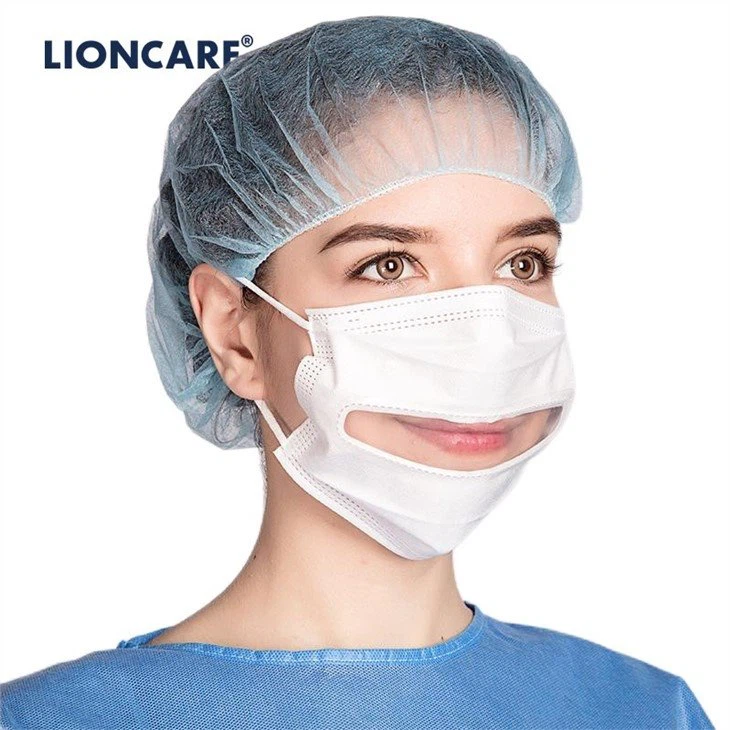
Our LIONCARE® Medical Face Mask with Clear Window is a great solution to the non - verbal communication problem. The clear window allows others to see the wearer's mouth, which is essential for lip - reading and observing facial expressions such as smiling. This type of mask is particularly useful in educational settings, healthcare facilities, and for people with hearing impairments. It helps to bridge the gap in communication and makes social interactions more natural.
Face Shields
LIONCARE® Face Shield offers a different approach. It provides full - face protection while still allowing for clear visibility of facial expressions. Face shields are often used in combination with masks for added protection. They are popular in workplaces where close - range interactions are common, such as in customer service or healthcare. The transparency of the face shield enables better non - verbal communication, making it easier for people to connect with each other.
Masks with Visors
The LIONCARE® Medical Face Mask with Visor combines the benefits of a mask and a visor. The mask provides the necessary protection against particles, while the visor offers additional coverage and visibility. This type of mask is suitable for a variety of settings, from outdoor events to workplaces. It allows for a balance between protection and social interaction, as it still lets some facial features be visible.
Looking Towards the Future of Social Interactions with Face Masks
As the world continues to navigate the post - pandemic era, face masks are likely to remain a part of our lives to some extent. Whether it's for protecting against seasonal illnesses or future pandemics, they will continue to impact social interactions.
In the future, we can expect to see further innovations in face mask design to reduce the negative impacts on social interactions. For example, masks may be developed with built - in technology to enhance communication, such as vibration sensors that can convey emotions or augmented reality features that project facial expressions.
We also need to continue to adapt our social norms. As a society, we should be more understanding and patient when communicating with others while wearing masks. Promoting awareness about the importance of alternative non - verbal cues and clear verbal communication can help us maintain positive social interactions.
Connect with Us for Your Face Mask Needs
If you're interested in learning more about our face masks or would like to discuss potential procurement opportunities, we're here to help. Our team of experts can provide you with detailed information about our products, including the LIONCARE® Medical Face Mask with Earloops and other high - quality options. We're committed to providing the best face masks to meet your specific requirements. Contact us to start a conversation about how we can work together.
References
- Centers for Disease Control and Prevention. (2021). How to Wear Masks. Retrieved from the CDC official website.
- World Health Organization. (2020). Advice on the use of masks in the context of COVID - 19.
- McNeill, D. (2020). The mask: A cultural history. Palgrave Macmillan.